
Monday, November 2, 2026Nov 2

This story is free to read.

UN: Eurovision victory ‘makes no difference’ for Tatars

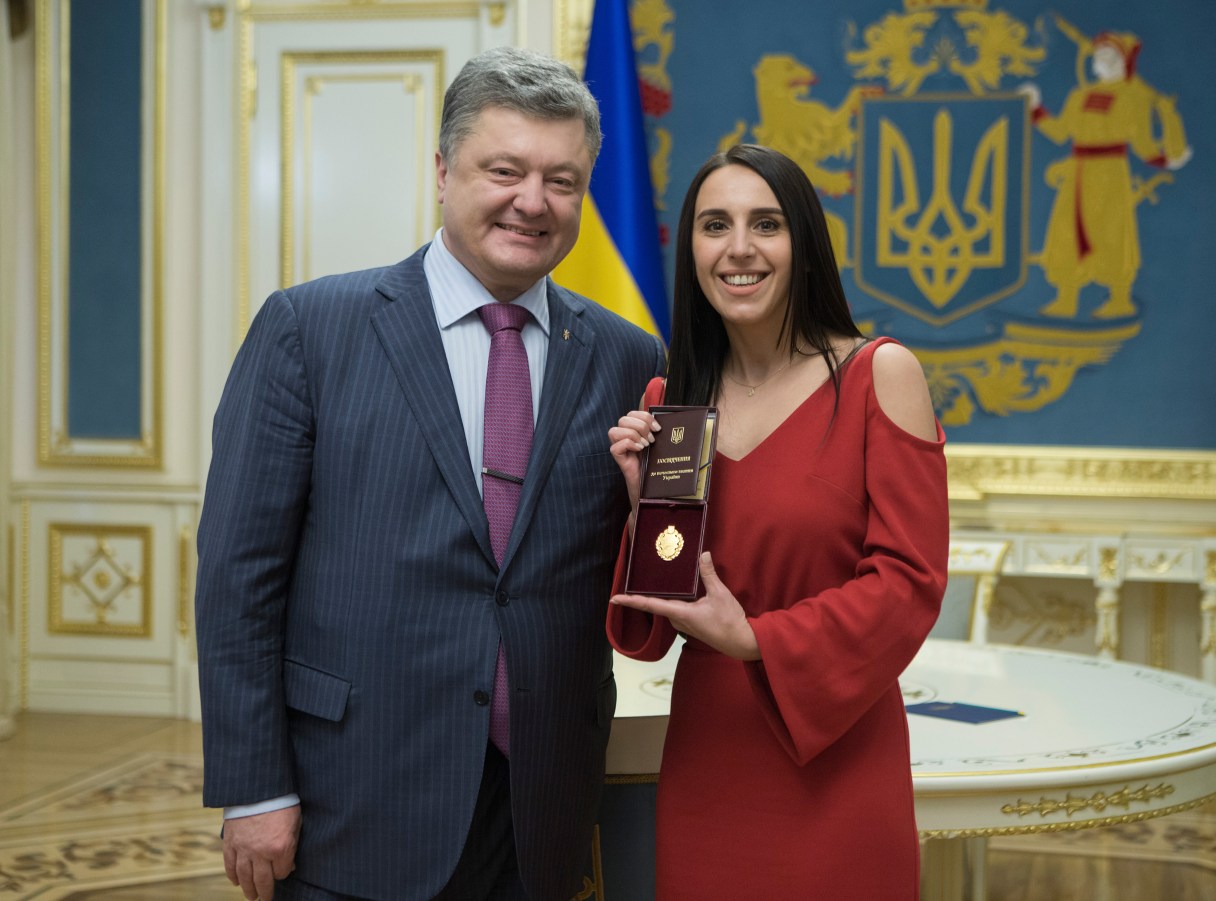
Ukraine's President Petro Poroshenko and Eurovision winner Jamala pose for a photograph after Poroshenko awarded the winner with a state award, in the Presidential Office in Kiev, Ukraine, Monday, May 16, 2016. Ukrainian singer Jamala's melancholic tune about Soviet dictator Josef Stalin's 1944 deportation of the Crimean Tatars, was crowned the winner of the 2016 Eurovision Song Contest early Sunday, an unusual choice for the kitschy pop fest. (Mykhailo Markiv/Pool Photo via AP)
Ukraine's President Petro Poroshenko and Eurovision winner Jamala pose for a photograph after Poroshenko awarded the winner with a state award, in the Presidential Office in Kiev, Ukraine, Monday, May 16, 2016. Ukrainian singer Jamala's melancholic tune about Soviet dictator Josef Stalin's 1944 deportation of the Crimean Tatars, was crowned the winner of the 2016 Eurovision Song Contest early Sunday, an unusual choice for the kitschy pop fest. (Mykhailo Markiv/Pool Photo via AP) Ukraine's President Petro Poroshenko and Eurovision winner Jamala pose for a photograph after Poroshenko awarded the winner with a state award, in the Presidential Office in Kiev, Ukraine, Monday, May 16, 2016. Ukrainian singer Jamala's melancholic tune about Soviet dictator Josef Stalin's 1944 deportation of the Crimean Tatars, was crowned the winner of the 2016 Eurovision Song Contest early Sunday, an unusual choice for the kitschy pop fest. (Mykhailo Markiv/Pool Photo via AP)

GENEVA (AP) – The U.N. human rights office says Ukrainian singer Jamala’s Eurovision victory “makes no difference on the ground” for Crimean Tatars, who have faced growing persecution since Russia annexed the Black Sea peninsula in 2014.

But Rupert Colville of the Office of the High Commissioner for Human Rights says some Tatars like Jamala “might take some solace that their story is not forgotten.”

At a U.N. briefing Tuesday, Colville highlighted the May 18 anniversary of the deportation of some 200,000 Tatars, including Jamala’s grandmother, from Crimea in 1994 during World War II. Tens of thousands returned since.

He said the situation of Tatars has “deteriorated” since the Russian annexation, citing issues like arbitrary searches, the shutdown of media outlets and a ban on a Tatar assembly.