
Tuesday, November 10, 2026Nov 10

Sailors’ nightmare in Rio Olympics: plastic bags, trash

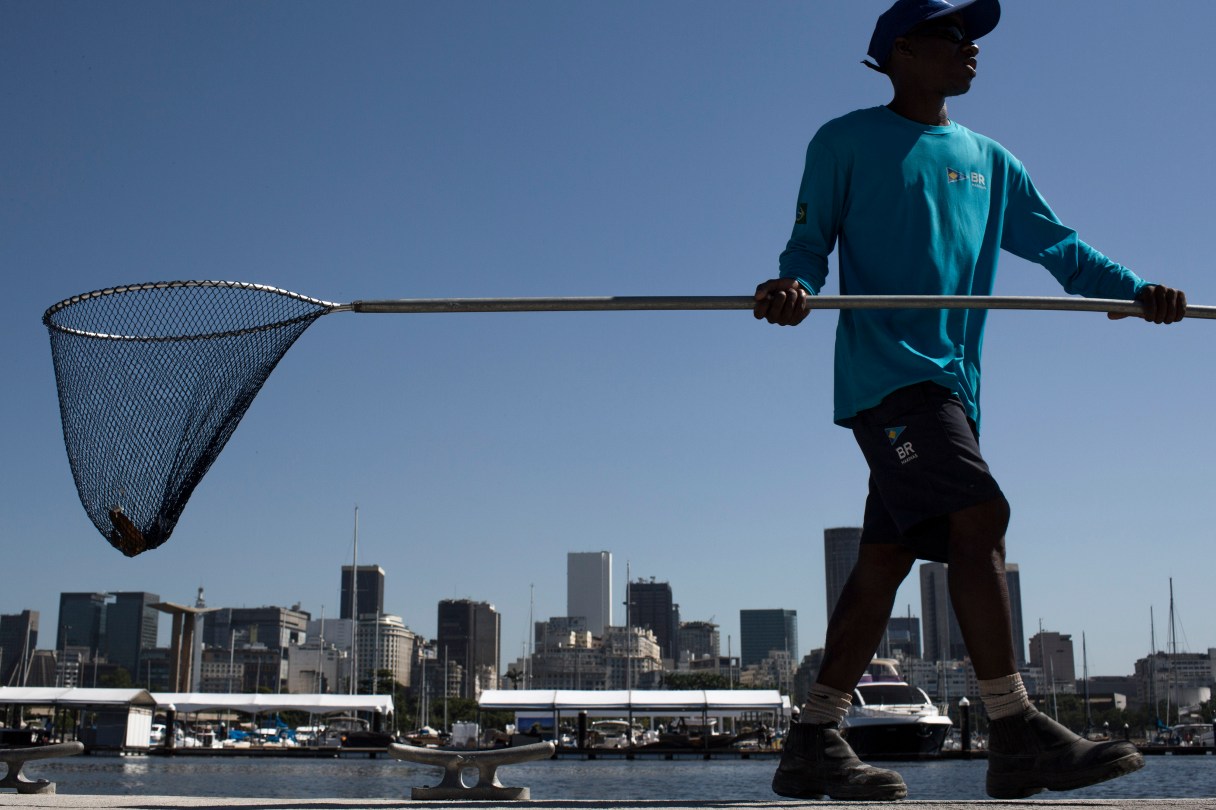
FILE - In this April 7, 2016 file photo, a worker collects floating trash from Guanabara Bay during the inauguration of the renovated Marina da Gloria in Rio de Janeiro, Brazil. Andy Hunt, the head of World Sailing, met with city, state, and organizing committee officials on Tuesday, May 24, 2016, pushing for what amounts to a superficial cleanup of Guanabara Bay. Rio state officials have acknowledged a real cleanup of Guanabara will take 20 years, with the city still pouring at least half of its untreated sewage into its surrounding waters including Guanabara. "We don't want to have any stories of sailors with plastic bags, or what every it might be, that in anyway impact performance," said Hunt. (AP Photo/Felipe Dana, File)
FILE - In this April 7, 2016 file photo, a worker collects floating trash from Guanabara Bay during the inauguration of the renovated Marina da Gloria in Rio de Janeiro, Brazil. Andy Hunt, the head of World Sailing, met with city, state, and organizing committee officials on Tuesday, May 24, 2016, pushing for what amounts to a superficial cleanup of Guanabara Bay. Rio state officials have acknowledged a real cleanup of Guanabara will take 20 years, with the city still pouring at least half of its untreated sewage into its surrounding waters including Guanabara. "We don't want to have any stories of sailors with plastic bags, or what every it might be, that in anyway impact performance," said Hunt. (AP Photo/Felipe Dana, File) FILE - In this April 7, 2016 file photo, a worker collects floating trash from Guanabara Bay during the inauguration of the renovated Marina da Gloria in Rio de Janeiro, Brazil. Andy Hunt, the head of World Sailing, met with city, state, and organizing committee officials on Tuesday, May 24, 2016, pushing for what amounts to a superficial cleanup of Guanabara Bay. Rio state officials have acknowledged a real cleanup of Guanabara will take 20 years, with the city still pouring at least half of its untreated sewage into its surrounding waters including Guanabara. "We don't want to have any stories of sailors with plastic bags, or what every it might be, that in anyway impact performance," said Hunt. (AP Photo/Felipe Dana, File)

RIO DE JANEIRO (AP) – If you’re the head of world sailing, this is your worst Olympic nightmare.

A sailor nears the finish line in Rio de Janeiro’s polluted Guanabara Bay, holding the lead with a coveted gold medal in sight. Suddenly, the boat loses speed. A plastic bag catches the rudder. Chasing boats overtake for all the medals, and millions on worldwide television watch a life-time dream being crushed.

“We want an absolutely fair playing field; getting the rubbish out of the water,” Andy Hunt, the CEO of World Sailing – the sport’s governing body – told the Associated Press. “We don’t want to have any stories of sailors with plastic bags, or whatever it might be that in anyway impacts performance.”

Hunt met in Rio on Monday and Tuesday with city, state, and Olympic organizing committee officials, pushing for what amounts to a superficial cleanup of Guanabara Bay.

Rio state officials have acknowledged a real cleanup of Guanabara will take 20 years – organizers promised to do it for the Olympics – with the city still pouring at least half of its untreated sewage into its surrounding waters, including Guanabara.