
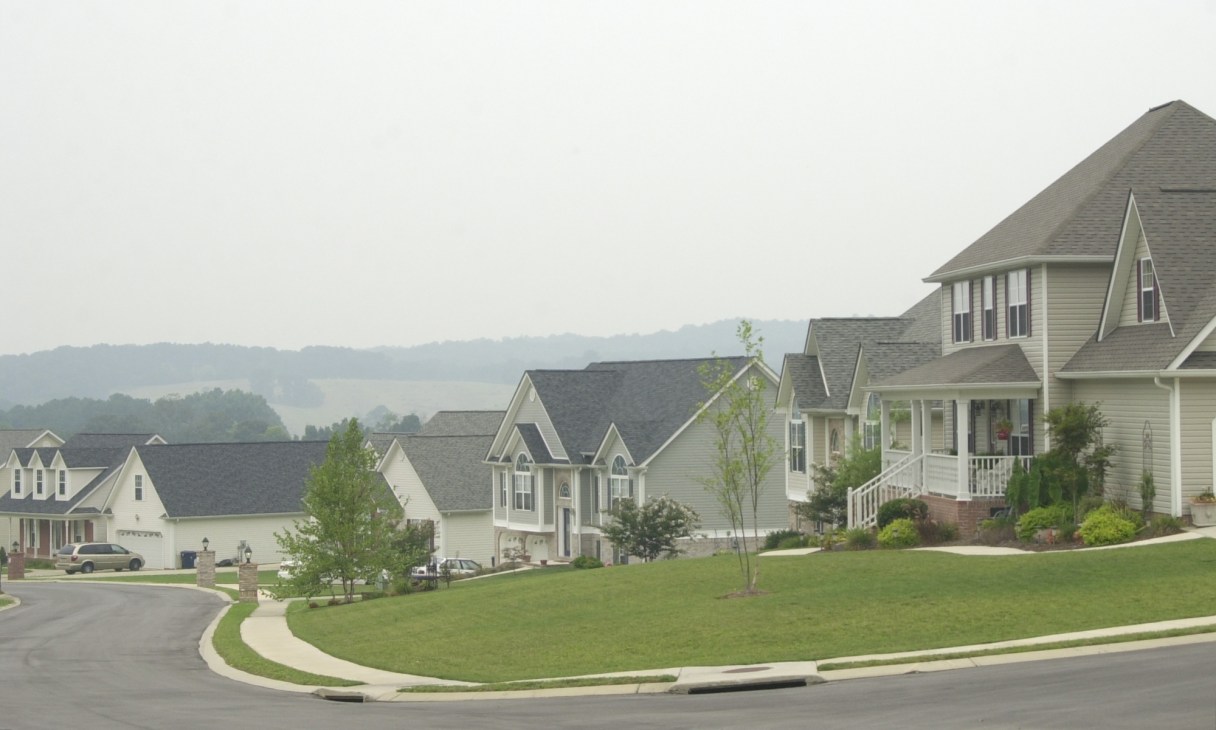
Residents of Catoosa County subdivision The Meadows expressed concern over the status of several of their roads at a recent County Commission meeting, citing a deteriorating road base which they say is making driving hazardous.
The roads – Lark Landing, Mallard Hill and Canary Circle – are currently privately owned by the land development company Meadows Investments III LLC. Since the residential roads are privately owned, the county has expressed trepidation at assuming the job of repairing them.
“We don’t want to take on some long-term maintenance obligation when it should be the job of the developer,” County Manager Jim Walker said at the meeting.
Estimations done by the county put the costs to repair and resurface the three roads in order to bring them up to county standards at about $116,000. Even if the county wanted to accept the roads as is to make them public, the county is barred from doing so until the roads meet those standards, Walker noted.
“We can’t right spend taxpayer money on private property,” Public Works Director Donald Brown said in a followup interview. “So we’re trying to get them to bring it up to code.”
The citizens who voiced their concerns at the meeting said that while they have tried to stay in constant contact with Meadows Investments since the roads have become a problem, they haven’t heard back from the company recently.
Brown said the county has been involved in this kind of situation before, but never when the developer was still around. When a land developer goes bankrupt, he said, the county attorney will try to go after the security bonds the developer has for recourse. However, since Meadows Investments is still active, the county is looking to apply pressure to the company to maintain the roads.
Commissioners at the meeting recommended “engaging our county attorneys to compel [Meadows Investments] in a court of law to make the repairs before the taxpayers accept the road.”
An attorney with Meadows Investments said the company built the roads beyond the county’s requirements when they were constructed in 2004, at which time they were approved by Catoosa’s Streets and Roads Division.
“Meadows met all of its obligations with respect to the construction and maintenance of the roads,” Jennifer Grippa, an attorney representing Meadows Investments, said in a statement.
Furthermore, she said, the lawsuit filed by Catoosa County against Meadows Investments in 2015 claimed a maintenance obligation from an ordinance that was not in effect at the time Meadows constructed the roads.
The lawsuit was voluntarily dismissed by Catoosa in November 2015. Meadows Investments denied any liability during the proceedings, and said they do not own the roads and have no maintenance obligation with respect to the roads.
“Any maintenance complaints should be directed to the County, not to Meadows,” Grippa’s followup statement said.
Brown and the county’s Public Works Department have created a pavement management system at the behest of the County Commission to help them collect data on Catoosa’s roads and understand which are the most efficient for the county to repair.
Commission Chairman Keith Greene said at the meeting that the county is striving to repave 20 miles of roadway each year. They’re currently tackling 12 miles of road each year, a significant step up from where they were previously, which was 5 miles of road each year.
“The longer you wait, the more expensive road repairs can get,” Brown said at the meeting. “Once they reach a certain point of disrepair, there’s no going back.”