
Tuesday, November 10, 2026Nov 10

Mount Vernon exhibit looks at Washington as slaveholder

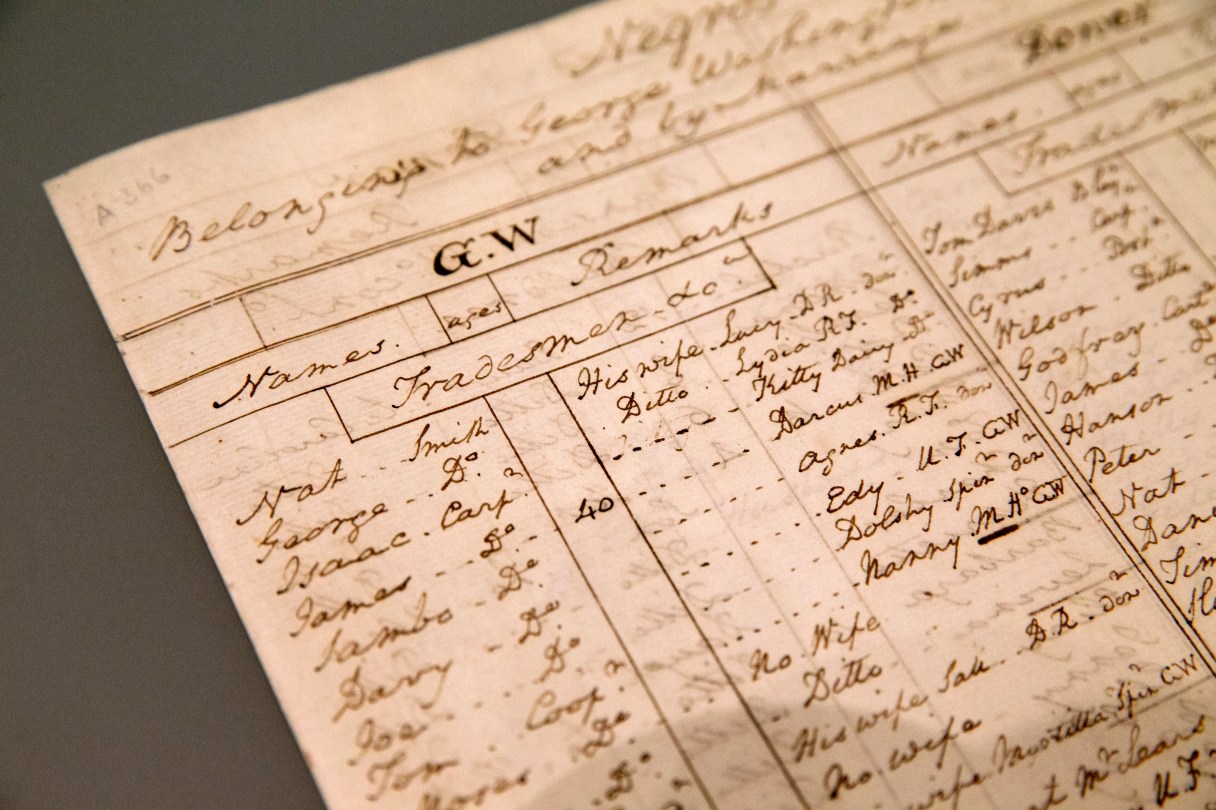
In this May 19, 2016, photo, a list of slaves at Mount Vernon written by George Washington around 1799 details marriages, children, and notes on individuals, is seen at the Fred W. Smith National Library for the Study of George Washington in Mount Vernon, Va. George Washington’s Mount Vernon estate is turning a museum space previously dedicated to the Founding Father’s furniture and fineries into an exhibit that takes a hard look at Washington’s life as a slave owner.  (AP Photo/Jacquelyn Martin)
In this May 19, 2016, photo, a list of slaves at Mount Vernon written by George Washington around 1799 details marriages, children, and notes on individuals, is seen at the Fred W. Smith National Library for the Study of George Washington in Mount Vernon, Va. George Washington’s Mount Vernon estate is turning a museum space previously dedicated to the Founding Father’s furniture and fineries into an exhibit that takes a hard look at Washington’s life as a slave owner. (AP Photo/Jacquelyn Martin) In this May 19, 2016, photo, a list of slaves at Mount Vernon written by George Washington around 1799 details marriages, children, and notes on individuals, is seen at the Fred W. Smith National Library for the Study of George Washington in Mount Vernon, Va. George Washington’s Mount Vernon estate is turning a museum space previously dedicated to the Founding Father’s furniture and fineries into an exhibit that takes a hard look at Washington’s life as a slave owner. (AP Photo/Jacquelyn Martin)

MOUNT VERNON, Va. (AP) – George Washington’s Mount Vernon estate is turning a museum space previously dedicated to the Founding Father’s furniture and fineries into an exhibit that takes a hard look at Washington’s life as a slave owner.

The $750,000 Lives Bound Together exhibition will open in October and explore the lives of hundreds of slaves who provided the labor that kept Mount Vernon running as a Southern plantation.

A centerpiece of the new exhibit is a display of Washington’s handwritten list of slaves on the estate from 1799, likely written in preparation for his will. Washington’s will freed the slaves that were under his control upon the death of his wife, Martha.

The exhibit also includes an acknowledgment that Washington’s adopted son likely fathered a child with one of the family’s slaves.