

An Associated Press report last week said an astonishing two-thirds of Americans would have trouble paying one unexpected bill of $1,000.
If that’s the case, imagine the angst the need for a new roof, a new heating and air conditioning system, or a new engine for the car would bring.
Three polls conducted over the last 20 years – during fatter times and leaner times – reported similar findings.
Evidently, we’re slow learners.
Three-quarters of people with household incomes of less than $50,000 a year said they’d have trouble coming up with the grand, and even two-thirds of Americans whose incomes range between $50,000 and $100,000 said it would difficult to find the money.
It’s no secret wages didn’t increase as employment did in the recovery from the 2007-2009 Great Recession. Indeed, 46 percent of survey respondents say their pay has stayed the same in recent years, and 16 percent have taken pay cuts. And retail prices didn’t take much of a pause in their inexorable rise, either.
But studies have shown even a modest emergency fund is critical to financial health. An Urban Institute study found, for instance, that families with non-retirement savings between $250 and $749 are less likely to be evicted from their homes or require public benefits.
Without that cushion, those families are an unfortunate step away from homelessness and other problems, problems that may require the taxpayer to help fund.
How Americans would remedy the emergency bill is no less economically healthy, according to the survey.
A fifth of respondents would be extremely or very likely to put it on a credit card and pay it off over time, 14 percent would borrow the money from family or friends, 6 percent would borrow it from the bank and 4 percent would borrow it from a payday lender.
Worse, 13 percent would skip paying other bills, and 11 percent wouldn’t pay the bill at all.
Perhaps we learned this behavior from the government, which has run deficits – with a few exceptions – since about 1930. If the federal government is not expected to balance its income and egress, we might say, why should we?
More likely, we are simply unable to discipline ourselves. We haven’t denied ourselves what we wanted as opposed to what we needed.
What would the neighbors say, after all, if they saw we still had a television deeper than it is wide? What would our coworkers think if we had a flip phone rather than an iPhone 16b? What would our children think if we denied them the opportunity to play on their traveling sports teams?
And wouldn’t a cruise be better than a trip to the Smokies? Or stainless steel appliances be better than our working avocado dinosaurs? Or a new Dodge Charger be better than our 100,000-mile Toyota Corolla?
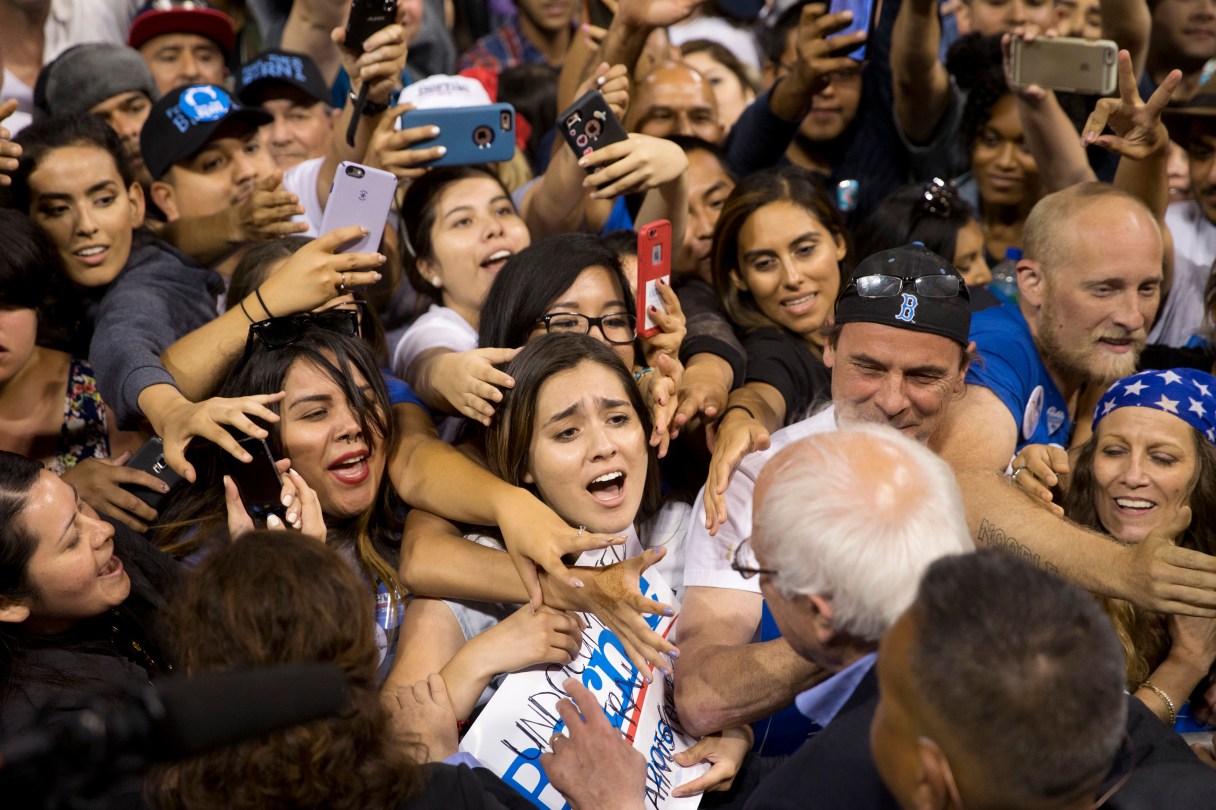
The inability to discipline ourselves is part of the reason for the rise of outlier presidential candidates Donald Trump and Bernie Sanders.
Stung by the inability of the hope and change mantra of the 2008 Barack Obama campaign to achieve its savior-like goals, and equally flummoxed by the ineffectiveness of Republican congressional majorities to roll back the president’s unpopular actions, voters looked elsewhere.
Trump has vowed to “Make America Great Again” with a number of unfleshed-out promises, while Sanders would put all the goodies he’s promising – free health care and college education, for starters – on the country’s credit card. Neither one, nor Hillary Clinton, the third candidate still standing, calls for sacrifice, fiscal discipline or putting off until tomorrow what you might have today.
If our individual discipline is bad, our forecast for retirement is even more dismal, according to the AP survey.
Only 14 percent of working Americans are either extremely confident or very confident they will have enough savings to retire when they want to. More than half, 54 percent, are not very confident or not at all confident they’ll have enough. And, as with the $1,000 emergency fund, even Americans with household incomes of $100,000 or more are not confident about their retirement prospects.
Unfortunately, people who preach sacrifice and savings today sound to those with the $1,000 problem like Charlie Brown’s teacher, Miss Oathmar. Wanh, wanh, wanh! The message just doesn’t get through.
But saving, according to Investopedia, offers peace of mind, expanded options and money working for you. Pretty soon, the $1,000 turns into a lot more. And yes, the jet ski has had to wait, but the new roof will be paid for without having to worry about where the money will come from.