
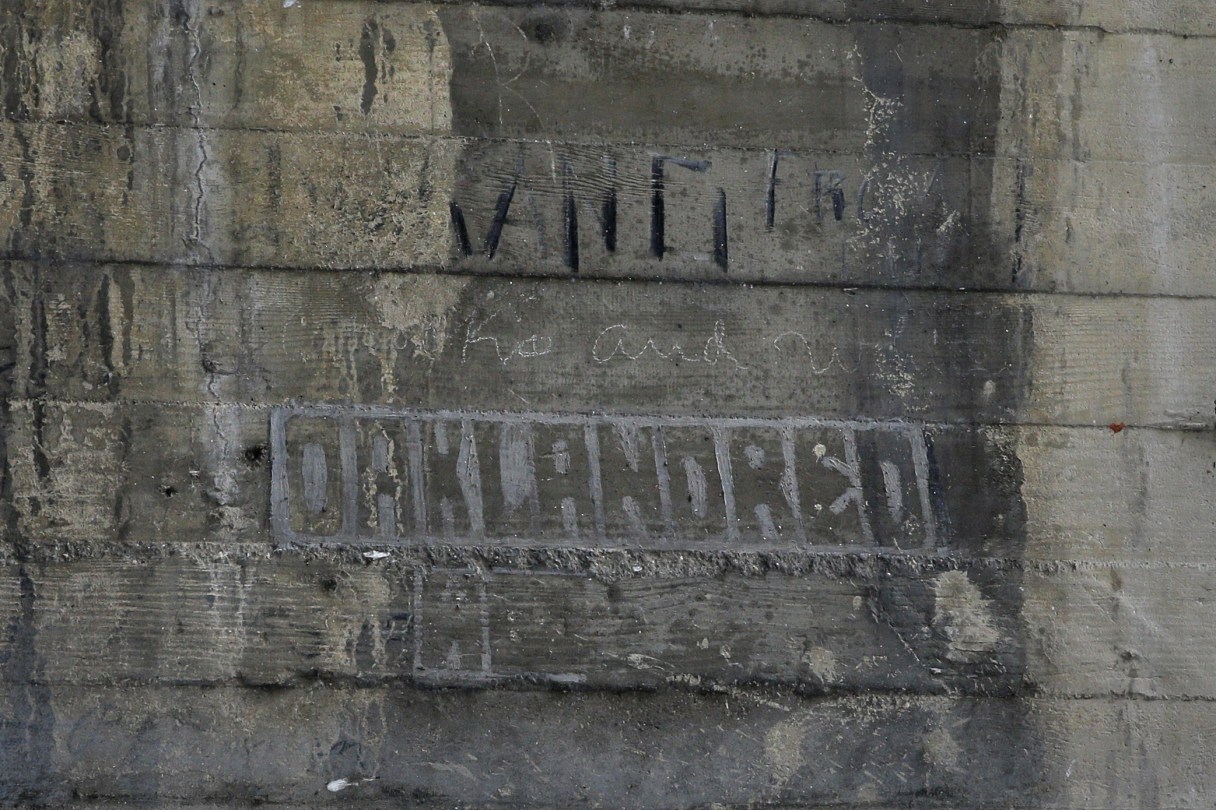
LOS ANGELES (AP) – Anthropologist Susan Phillips had spent a career examining the graffiti that covers urban walls, bridges and freeway overpasses.
But when she came across an unrecognizable collection made not of spray paint but substances like grease pencil and apparently left there for a century, she was stunned.
Phillips had uncovered a peculiar, almost extinct form of American hieroglyphics known as hobo graffiti, the treasure trove discovered under a nondescript, 103-year-old bridge spanning the Los Angeles River. At the time, she was researching her book, “Wallbangin’: Graffiti and Gangs in LA.”
“It was like opening a tomb that’s been closed for 80 years,” the Pitzer College professor of environmental analysis said of finding the writings and occasionally the drawings of people who once signed their names as Oakland Red, the Tucson Kid and A-No. 1.
“There’s an A-No. 1, dated 8/13/14,” she said, pointing to a scribbling during a recent visit to the bridge just around the bend from a modern-day homeless encampment.