



Jimi Hendrix’s soaring guitar and Eminem’s rap lyrics rang out inside downtown Chattanooga’s Tivoli Theatre the morning of Oct. 4 to introduce entrepreneurs from 10 companies who took turns on stage to pitch their budding logistics, transportation and supply chain startup businesses to potential investors.
The Lamp Post Group’s first-ever Dynamo Demo Day had a rock concert vibe. A light show flashed across the historic theater’s baroque interior to warm up the crowd. When entrepreneurs came on stage, they left their dress shirts untucked and, if they wore business suit blazers, it was over T-shirts and jeans.
Despite the dressed-down look, a whole lot of hard work went into the entrepreneurs’ concise, carefully-rehearsed, five-minute presentations.
“Eighteen-hour days for the last 10 weeks,” says Cameron Doody, the co-founder of an established Chattanooga-based startup furniture moving company, Bellhops, who watched from the audience.
I tell you folks, it’s harder than it looks – AC/DC sang those lyrics about the business of rock ‘n’ roll, and they apply to the startups, too.
Employees at startups enjoy such perks as a casual, flexible work environment and the glamour and potential wealth that come with working on what may be the next big thing.
But there can be downsides, too, such as a lack of work-life balance and an intense pressure to succeed in the face of unfavorable odds. (Studies have found up to nine of 10 startups fail in competitive or new industries).
Depression is common in the startup world, according to Michael Freeman, a medical doctor at the University of California at San Francisco. Freeman recently surveyed 242 entrepreneurs and found that 30 percent of them suffered from depression, compared to 7 percent in the general population.
“Being an entrepreneur is super-emotional,” says Ted Alling, one of the Lamp Post Group’s three founders.”They need people cheering them on.”
Beer on tap and skateboard racks
First, the good news: There are perks to working the startup world.
A keg of locally-made Bitter Alibi craft beer on tap is one perk that stokes potential tenants’ interest in moving into the Society of Work, a shared workspace in the 10-story Edney Building at 11th and Market streets that’s the hub of downtown Chattanooga’s Innovation District.
“People’s eyes light up. They’re like, ‘What?’ says Mary Stargel, the community manager at Society of Work.
Edney Building tenants also can drink from a keg of Blue Indian Kombucha, a nonalcoholic fermented tea, and have as much as they want of Velo Coffee Roasters NiteRider coffee through Edney Access Pass, which, for $15 a month, lets the building’s tenants consume those beverages along with unlimited soda pop, nuts and ice cream.
“I like it when it’s after hours, you can have a beer and hang out on the roof,” says Tim Moore, communications coordinator for the Company Lab, or Co.Lab, a nonprofit business accelerator on the Edney’s first floor.
Beer, kombucha and coffee aren’t the only perks for workers in Chattanooga’s startup scene.
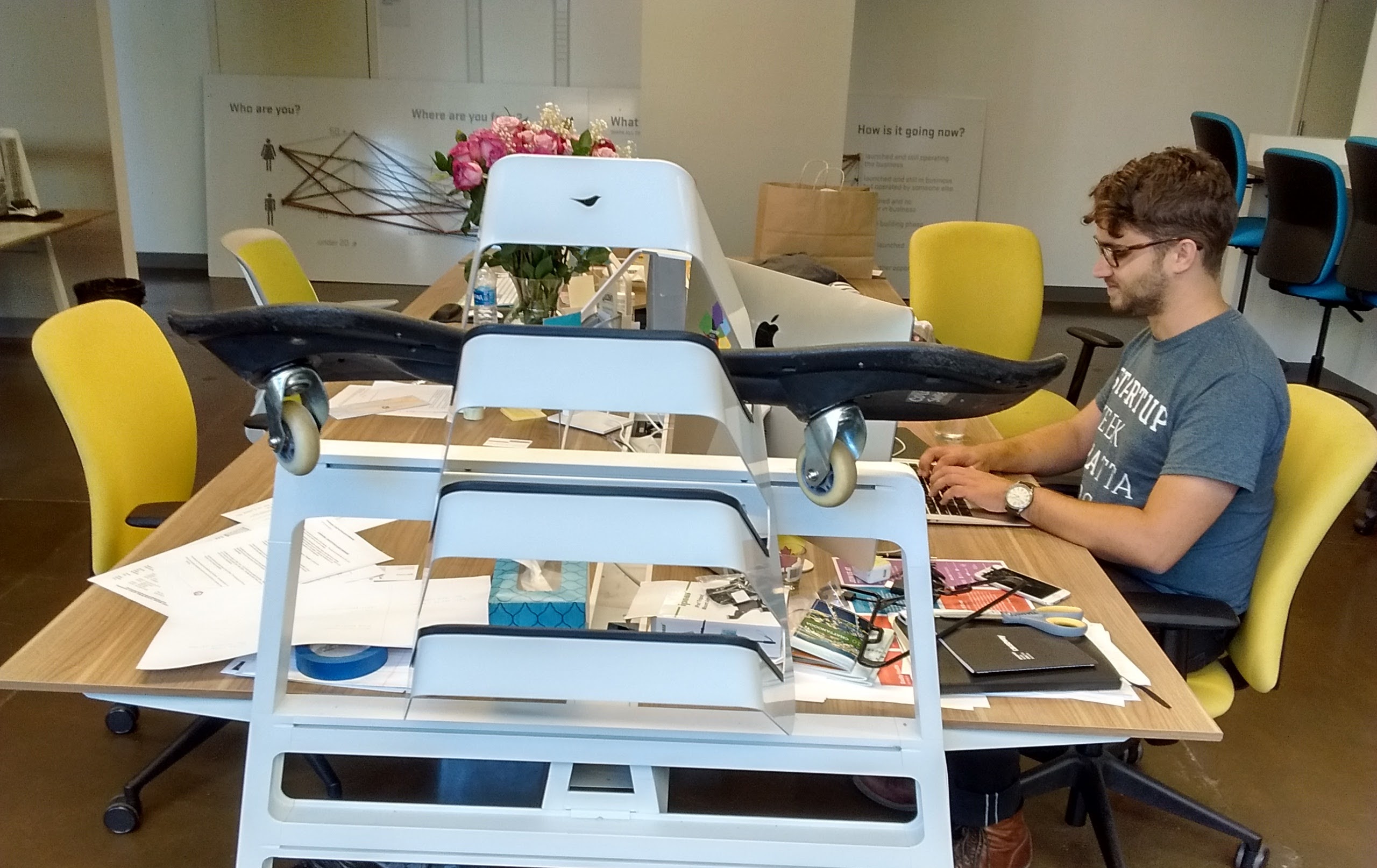
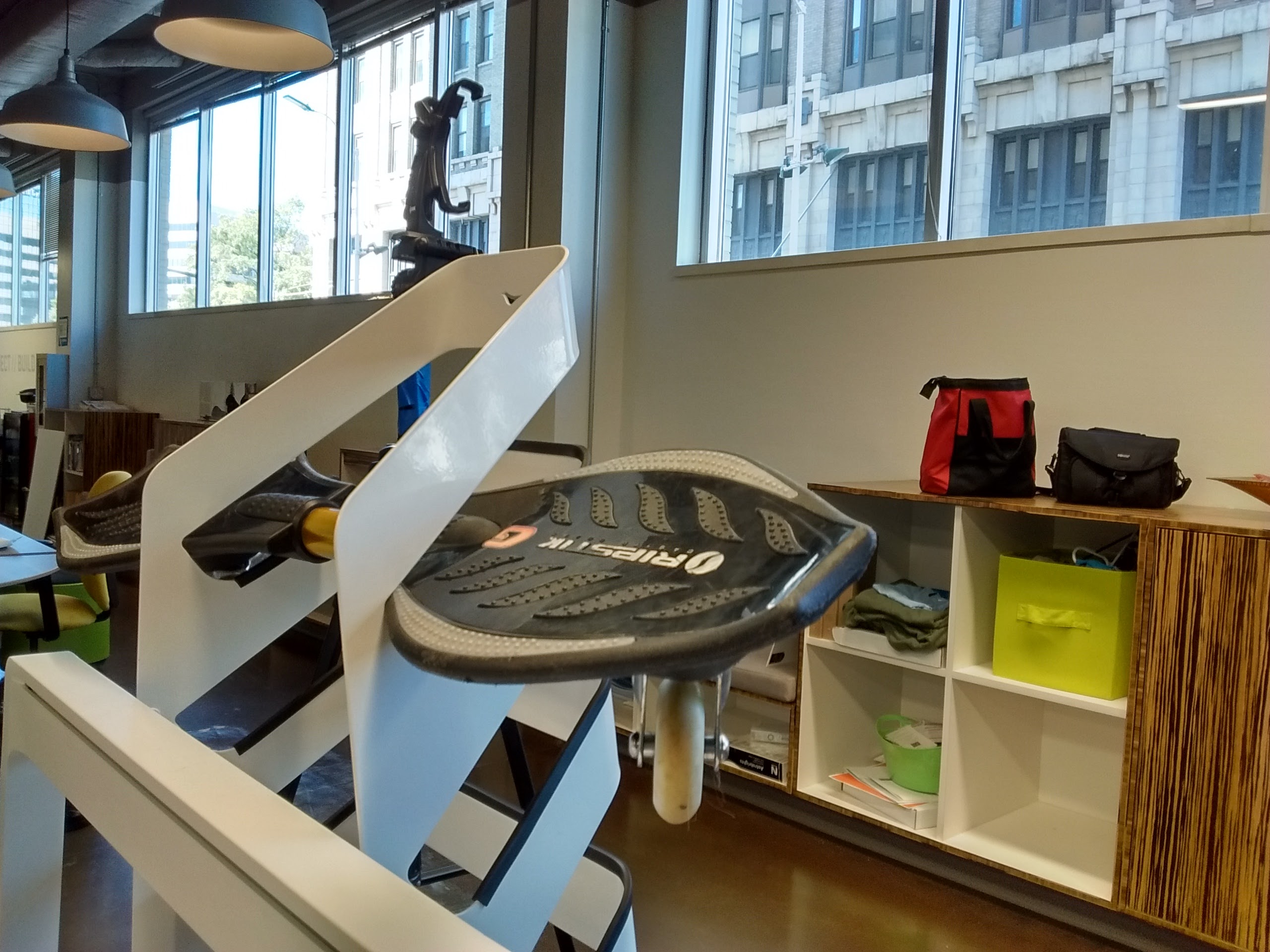
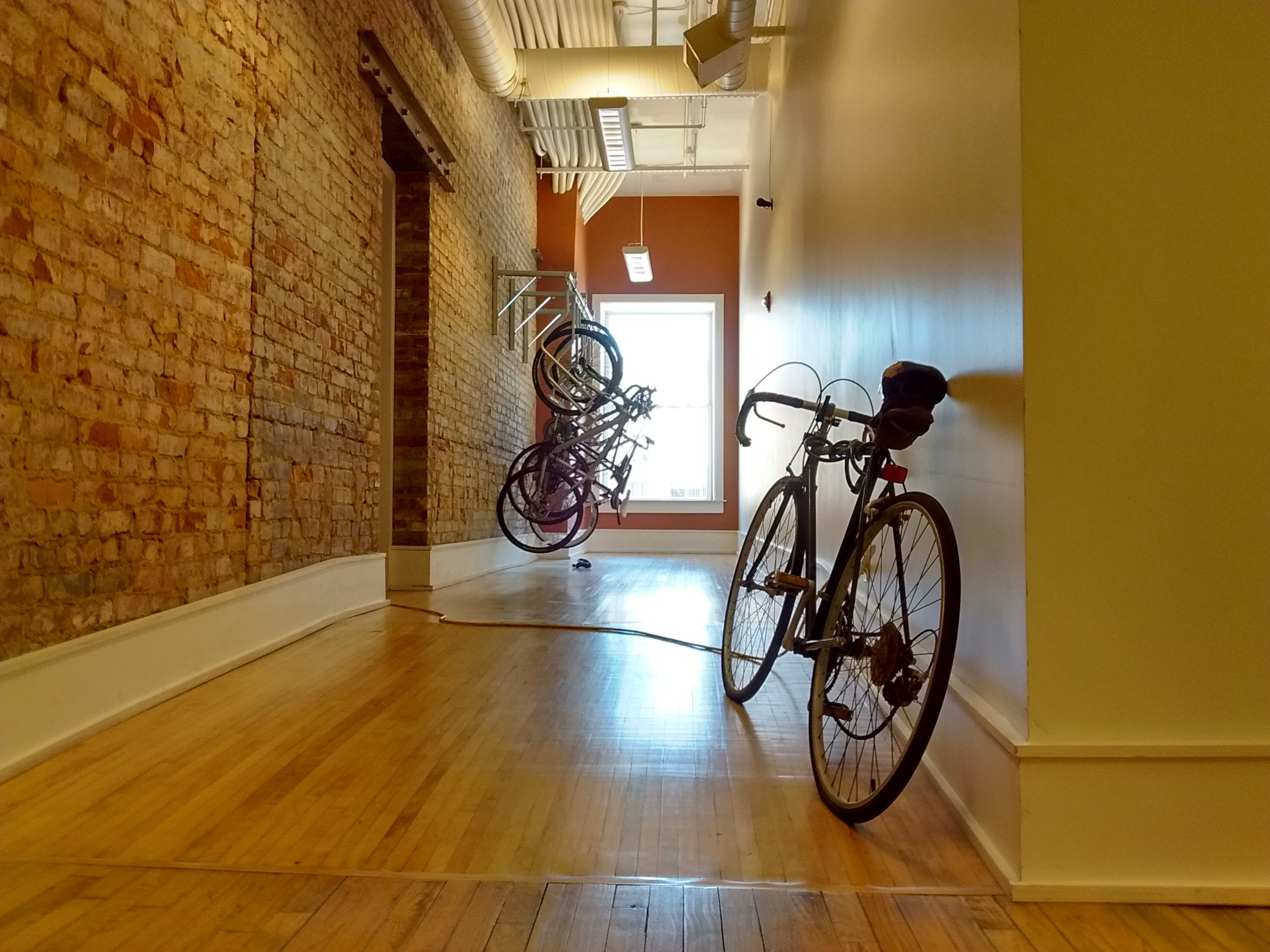
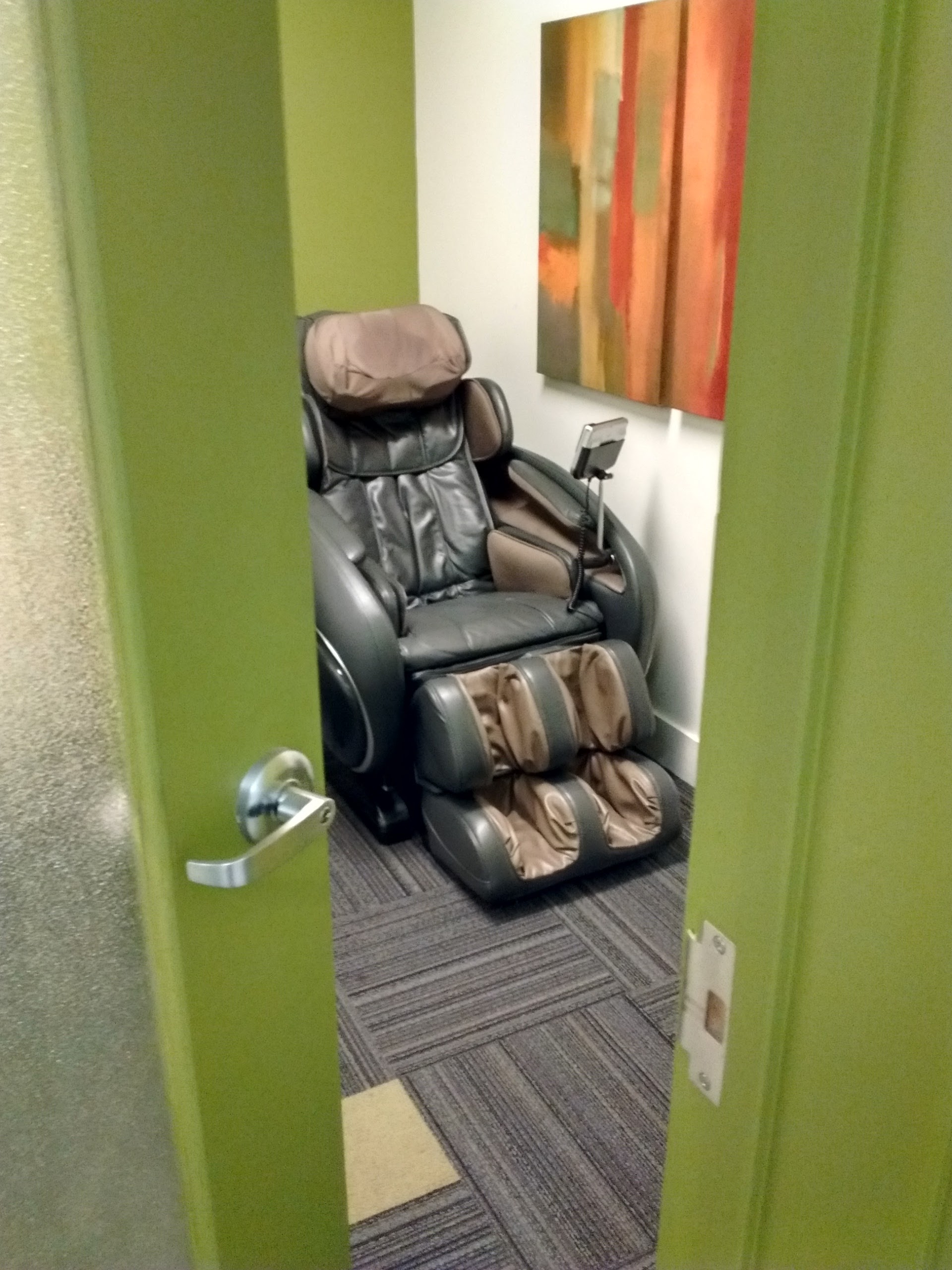
Electric massage chairs, skateboard racks and standing desks so employees don’t have to sit all day at their computers, can be found at tech-oriented workplaces here.
Companies in the startup world realize that breaks can workers more productive, Moore said.
“They understand that healthy ratio of work and breaks,” Moore says. “I think there’s that understanding when people need breaks, it’s better for them to take them.”
To create a sense of community for budding entrepreneurs and innovators, the Lamp Post Group is converting the long-vacant Ross Hotel into the Tomorrow Building, workforce housing that will include 43 “microapartments” about 300 square feet in size, communal living and “innovation spaces.”
‘Gut punches and glory’
But launching a startup business can be lonely, said Max Farrell, CEO of WorkHound, a startup that lets long-haul truckers vent their on-the-job frustrations anonymously via smartphone.
“It really is a lonely road,” he says.
Farrell agreed that getting a startup off the ground can feel a little like being a long-haul trucker.
“You do it out of pursuit of freedom, but at the same time, what we are trying to accomplish, a lot of it depends on other people,” Farrell said, such as finding customers and employees.
Launching a startup is definitely an emotional roller-coaster, said Farrell, whose formula for making it is “pain, plus passion, plus persistence, equals payoff.”
“There’s gut punches and glory.”
‘Ugly baby’ syndrome
One crushing blow for entrepreneurs in the startup world is when their long-dreamed of product or service comes into being – and people don’t like it.
“Call it the ‘ugly baby syndrome,'” says Mike Bradshaw, an entrepreneur who has started a number of companies and served as executive director of Co.Lab., for two years. “Look at this beautiful baby, and they say, ‘Damn, that’s an ugly baby.'”
It’s almost certain that a startup’s first try won’t hit the mark, Bradshaw said. So Co.Lab encourages entrepreneurs it works with to test the waters, limit how much money they sink into their idea – and keep their day jobs.
“They call this an accelerator, but we really do try to slow you down,” Bradshaw says.
Once a startup’s idea catches fire, and the product begins to sell, that’s a different story.
That’s when you press down the gas,” he says.
It can be a hard, “crazy” process, said Bradshaw, since entrepreneurs work in their spare time, or give up a good-paying job and take a financial hit to pursue their dream.
“Only passion’s going to get you through it,” says Bradshaw, who says it’s essential for entrepreneurs to have the support of their spouse or significant other.
He knows first-hand how topsy-turvy the startup world can be, since he gave up salary to get a startup company going that at first didn’t show big returns. But that story had a happy ending, since the $2o million company that bought Bradshaw’s startup is now a $200 million company, and it recently hired Bradshaw away from Co.Lab.
Just icing on the cake?
The perks offered in the startup world are nice, said Will Harper, a partner in likehumans.com, a business consulting firm that aims to help organizations increase employee engagement and happiness.
But he wonders how much difference they make.
“Think about kombucha on tap. That’s a really nice perk. But how much is that perk worth to you?” asks Harper. “Is it really changing the experience a big way? Or is it more just the icing on something good or something bad – but still icing.”
“Doing bad work where people don’t trust each other and you don’t like or care about what you’re doing, being able to have a beer may take the edge off, but it doesn’t make the work good,” Harper said.
Harper says the answer is to create organizations where work aligns with employee’s values.
“Work needs to be aligned with what matters to people,” he says.