
Saturday, November 7, 2026Nov 7

This story is free to read.

Cholesterol drug shows promise to help reverse heart disease

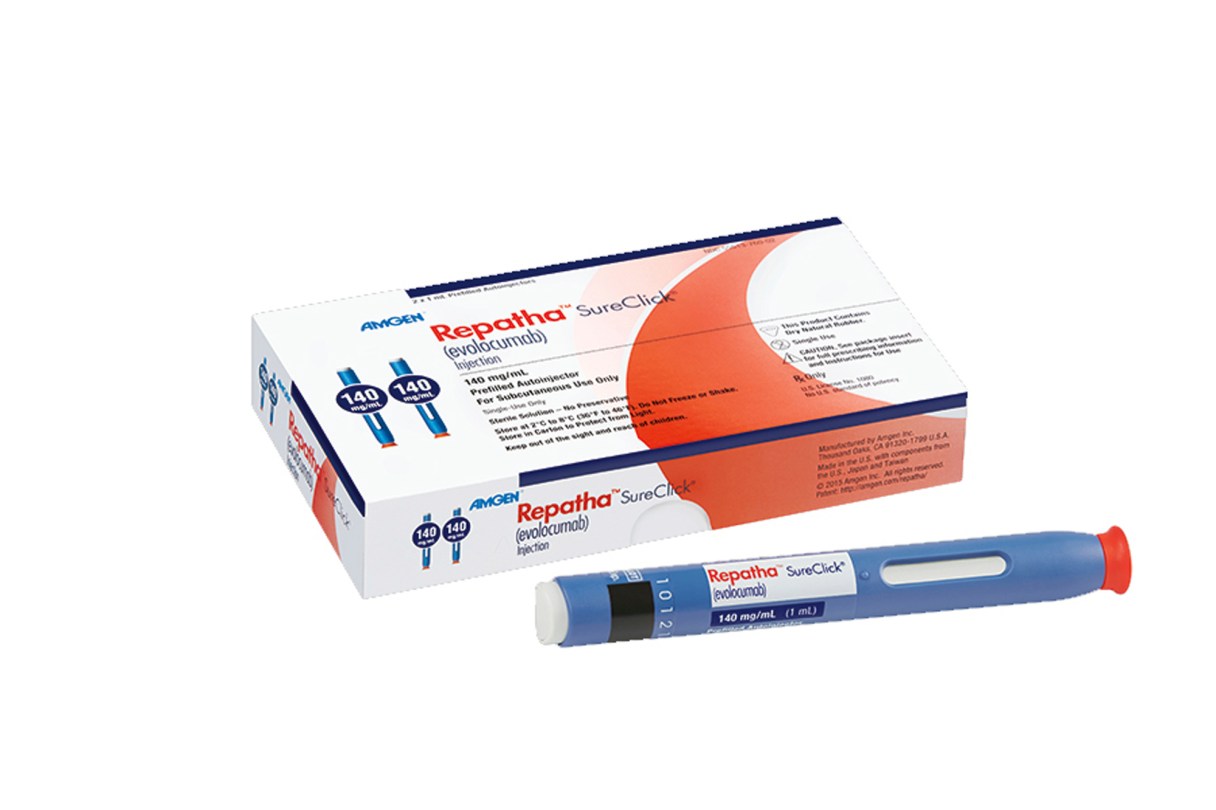
FILE - This undated image provided by Amgen Inc. shows the cholesterol-lowering drug Repatha. In a report published Tuesday, Nov. 15, 2016, by the Journal of the American Medical Association, this new drug added to cholesterol-lowering statins has proved able to shrink plaque that is clogging arteries, potentially giving a way to undo some of the damage of heart disease. (Robert Dawson/Amgen via AP, File)
FILE - This undated image provided by Amgen Inc. shows the cholesterol-lowering drug Repatha. In a report published Tuesday, Nov. 15, 2016, by the Journal of the American Medical Association, this new drug added to cholesterol-lowering statins has proved able to shrink plaque that is clogging arteries, potentially giving a way to undo some of the damage of heart disease. (Robert Dawson/Amgen via AP, File) FILE - This undated image provided by Amgen Inc. shows the cholesterol-lowering drug Repatha. In a report published Tuesday, Nov. 15, 2016, by the Journal of the American Medical Association, this new drug added to cholesterol-lowering statins has proved able to shrink plaque that is clogging arteries, potentially giving a way to undo some of the damage of heart disease. (Robert Dawson/Amgen via AP, File)

NEW ORLEANS (AP) – For the first time, a new drug given along with a cholesterol-lowering statin medicine has proved able to shrink plaque that is clogging arteries. That could potentially provide a way to undo some of the damage of heart disease.

The difference was very small but doctors hope it will grow with longer treatment. Any reversal or stabilization of disease would be a win for patients and a long-sought goal.

The drug, Amgen Inc.’s Repatha, also drove LDL, or bad cholesterol, down to levels rarely if ever seen in people before. Heart patients are told to aim for below 70, but some study participants got as low as 15.

Results were published Tuesday by the Journal of the American Medical Association and discussed at an American Heart Association conference.