
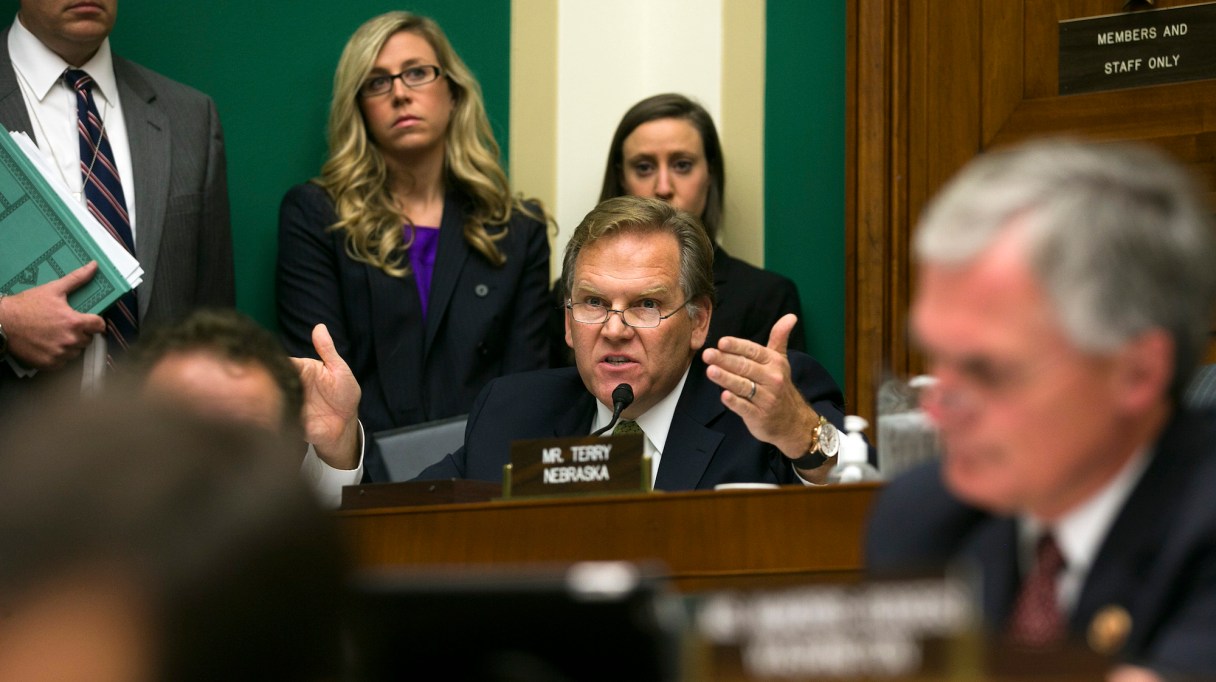
WASHINGTON – The ouster of former congressman Mike Rogers, R-Mich., from Donald Trump’s transition team is a worrisome sign of continuing internecine battles in the GOP and the ascendancy of Trump’s personal political allies in shaping the president-elect’s agenda.
Rogers, a widely respected former FBI agent who headed the House Intelligence Committee, had been seen as a figure of stability and continuity in intelligence matters. He was mentioned as a possible next director of the CIA or director of national intelligence.
But Rogers was told last weekend by Rick Dearborn, executive director of the transition team, that he was being removed from his role in the national-security group advising Trump. He was replaced by Rep. Devin Nunes, R-Calif., who took over as the committee’s chairman after Rogers left Congress in 2014 and has been a far more partisan chairman.
Rogers had angered House GOP hard-liners when his committee issued a bipartisan report in 2014 clearing Hillary Clinton of personal wrongdoing in the 2012 Benghazi incident. That report was characteristic of the way Rogers chaired the committee, in a working partnership with then-ranking Democrat, Rep. C.A. Dutch Ruppersberger of Maryland. (Rogers added “additional views” that criticized “senior State Department officials” for dismissing threat warnings, denying requests for extra security in eastern Libya and other errors.)
But this consensual approach clearly didn’t suit Trump’s inner circle. Rogers had been brought into the transition by New Jersey Gov. Chris Christie, another official with bipartisan credentials, who was ousted himself a week ago and replaced by Vice President-elect Mike Pence. Some GOP insiders see the real power behind Trump as his son-in-law Jared Kushner, and they argue there has been bad blood between Kushner and Christie for more than a decade. In 2005, when he was U.S. attorney, Christie obtained a guilty plea from Charles Kushner, Jared’s father, on charges of tax evasion, witness tampering and illegal campaign contributions.