

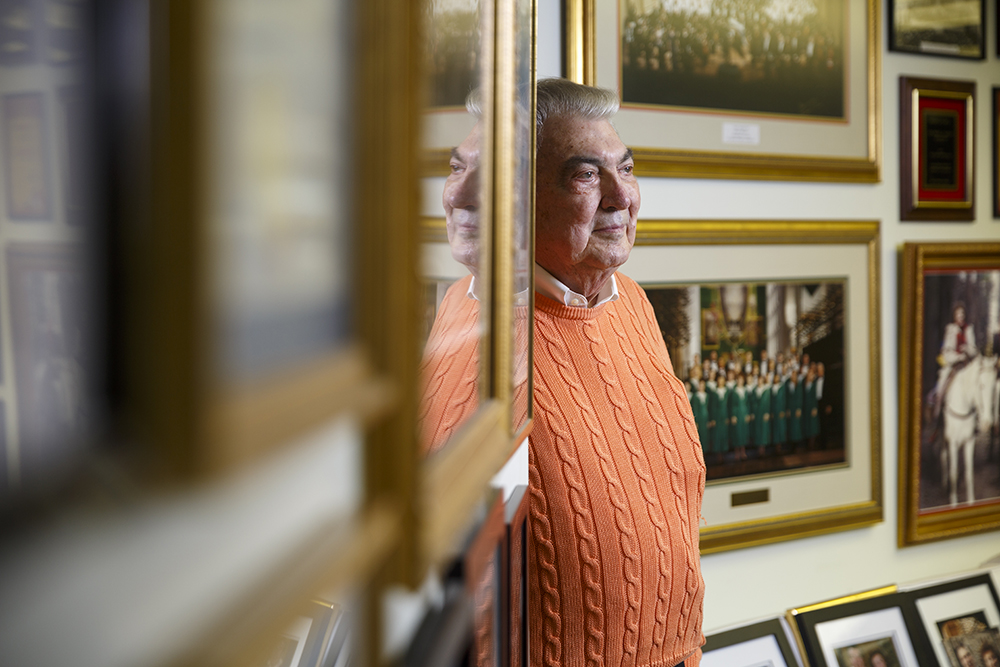
Six continents, 55 years, three jobs – with zero job interviews – and countless concerts.
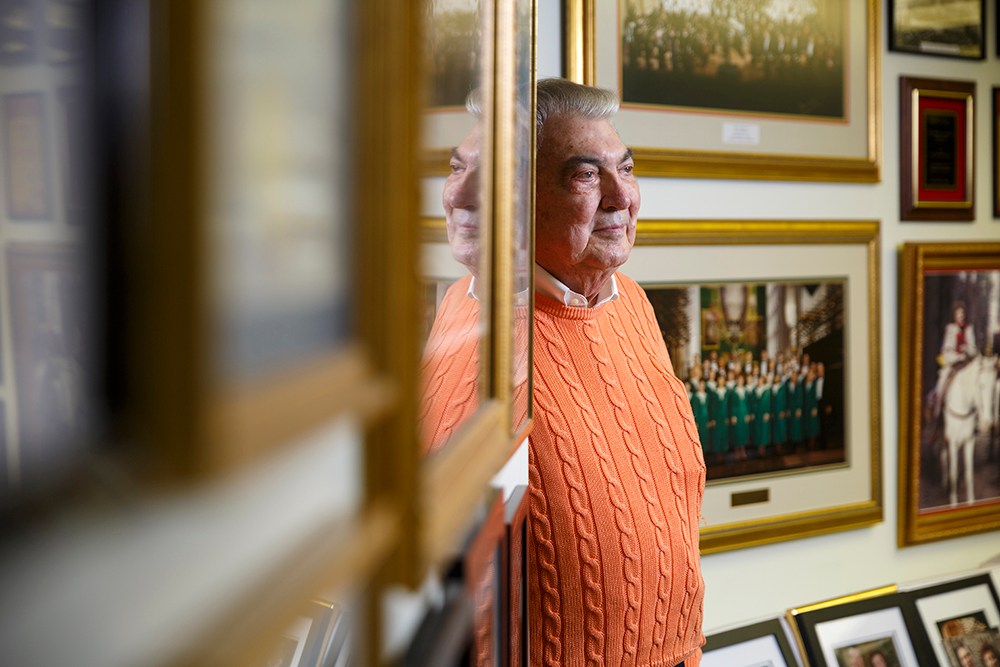
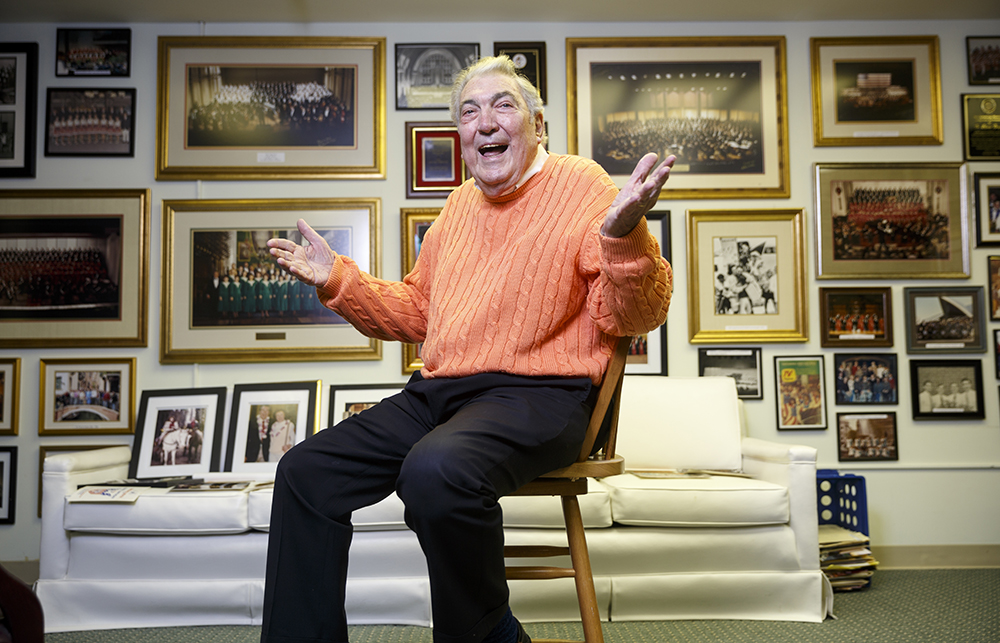
At 88 years old, Dr. Glenn Draper has seen more than most people will ever have the opportunity to. A choral director for over half a century, he’s worked with the military, University of Tennessee at Chattanooga, Lake Junaluska Methodist Center and the University of Miami, to name a few. He counts himself lucky for what he’s gotten to do.
He organized the military’s first performance of Handel’s Messiah during his time in the Air Force. His choirs performed on The Ed Sullivan Show, live on NBC Radio and for numerous presidents.
By any measurement, he’s had tremendous success. He says he is aware of just how fortunate he is, but his success is due to more than just talent or luck.
“You know, I don’t think I’m really all that good,” he laughs.
When it came to his chorus, Draper never took a “no” lying down. He put his chorus above all else, and to this day, claims never to have forgotten a singer, even as he approaches 90 years old.
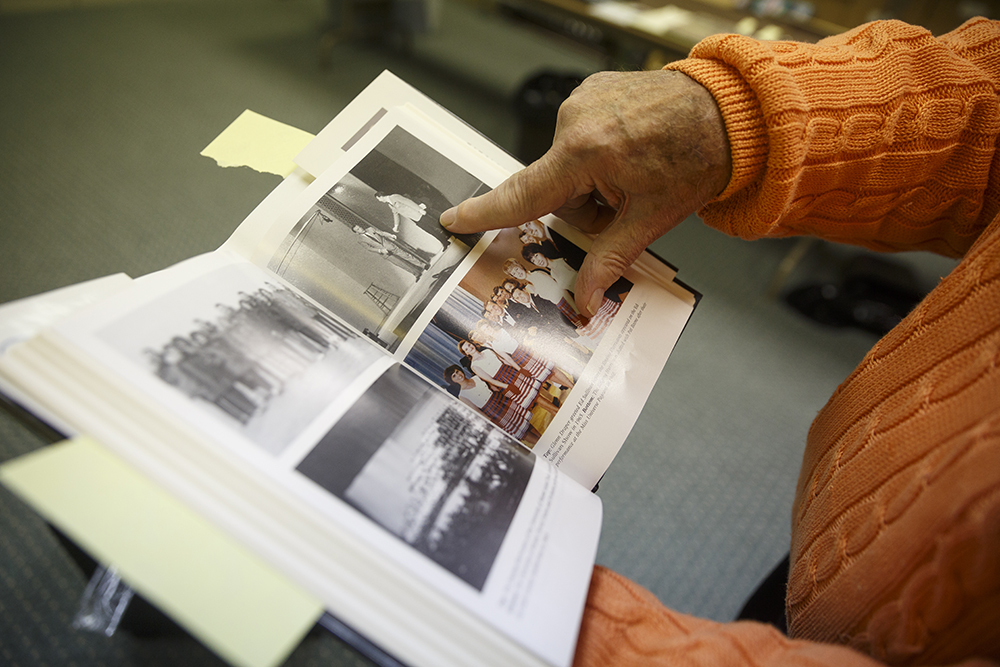
For years, he had been given space at the Four Squares Business Center on Mountain Creek Road to display the photos and memorabilia from his many tours and performances. However, he can’t afford to display them any longer. Chatter got the chance to speak with him about his life’s work just before everything had to be taken down last month.
Here are some of the highlights.
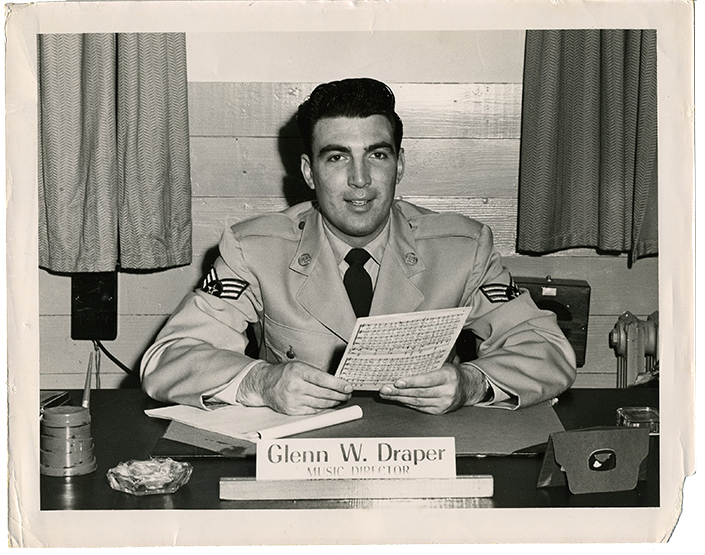
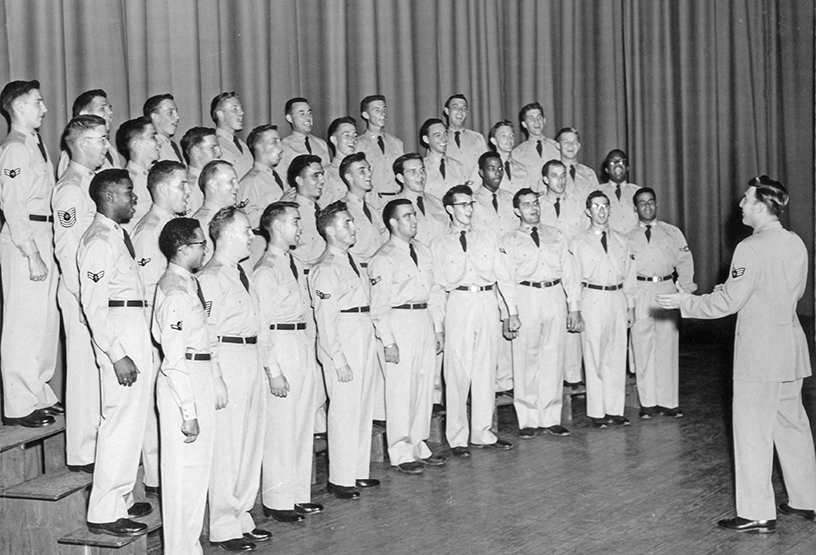
Keesler Air Force Base, 1952
Draper conducted quartets from his childhood through high school. Once he was in the Air Force, he knew exactly what he wanted to do: create the very best men’s chorus in the whole armed forces and perform Handel’s Messiah.
There was a hiccup, though. He had signed up to be in the Keesler Air Force Base’s band, too, and the band director wasn’t about to relinquish someone of Draper’s musical talents. It didn’t help that Keesler had made several prior attempts to get a chorus going – each of which ended in failure.
Draper fumed. He went to the base’s post exchange to relax when a woman approached him. His mind was still set on the chorus, though.
“I told her, ‘Ma’am, wouldn’t it be incredible to have the world’s best men’s chorus right here on this base?'” Draper recalls. The question caught the woman off guard, and she laughed and asked him who he was. When he told her he was just a member of the band, she pointed to another woman in the corner of the room, who just so happened to be the wife of the general of the base.
“We walked straight over and she introduced me,” says Draper. With appropriate theatrics, he explained his goal of having the world’s best male chorus on the base. He told the general’s wife she could help by getting him out of his trombone duties with the band and getting the soldiers some time to practice each week.
She laughed, then agreed, but there was one catch:
“She said she’d love to help as long as we came to her door and sang Christmas carols come December,” Draper says.
As promised, a few months later, on the 25th, Draper was at her door singing carols, and soon after, Messiah was being performed at Keesler for the first time.
Pascagoula, Mississippi, 1954
Draper and his barracks roommate, Bob Davis, were hitchhiking back to Keesler from New York City. They’d “borrowed” some of the chorus’s recordings and barged into the office of NBC Studios, where they somehow managed to convince the radio director to give them a listen. Though they were riding high, their excitement was tinged with desperation. They needed to get back before the chaplain who oversaw the chorus realized the recordings were missing.
With their thumbs extended, they were picked up on a bridge by a man in a pickup truck. The man stayed eerily silent during the ride. After pulling up to an abandoned gas station, two men jumped out from the bed of the truck and attacked Draper and Davis.
“They pulled Davis out and I jumped out the other side and ran up the road,” says Draper. “I waved cars down and we managed to rescue Bob from those guys.”
Apparently, the men had mistaken the pair for locals who were dating the women they were interested in, Draper recounts. Bruised and exhausted, he and Davis barely got back to Keesler before anyone noticed anything was awry.
Then they got a call from the general.
“Immediately I thought, ‘Oh, what have I done?'” says Draper. “The chaplain told me to meet the general in 30 minutes.”
For 30 minutes Draper contemplated his mortality. When the time came, he stood before the general in a crowd of people around his office. The general gave him one look, clapped his hand onto Draper’s shoulder and told him how proud he was.
The general had gotten the strangest call from NBC that morning requesting that Keesler’s male chorus travel to NBC’s studio in New Orleans every week for a live performance to be broadcast across the country. He asked Draper if he had any idea where NBC would have heard about his chorus.
Draper shrugged.
Europe, 1961
Draper had just taken a job at the University of Miami to head up its choral production. Within weeks, he had created several choral groups and was practicing every day with them. However, he had bigger plans. He wanted to go on tour.
Funding, though, was a bit of an issue. Flights, hotels and food weren’t cheap, and when the provost of the university asked Draper where he’d get the money, the best he could reply with was, “I don’t know, but we’re going to get it.”
After a concert Draper’s chorus gave in town, a choral director with South Miami United Methodist Church pointed him to the Intercollegiate Music Council in Washington, D.C., an organization that sends musical groups across the world as goodwill ambassadors. More importantly, the director said, it was backed with Defense Department money.
The application had three slots for references, so Draper put the general in charge of Keesler, the chief of all Air Force chaplains, and Billy Graham. During one summer in the ’50s, the evangelist minister – well-known even back then – had stayed at Lake Junaluska while Draper coached the Methodist retreat’s choruses. Draper said Graham was enamored with their singing and that he and Draper stayed in touch over the years.
The director of the council was stunned.
With references like those, Draper got a call not long after having submitted the application, and he and his singers were soon touring Europe on the Defense Department’s dollar. They even sang 600 miles from the North Pole in Greenland.
Two weeks after he left, the University of Miami granted Draper leave for the tour.
The Ed Sullivan Show, 1965
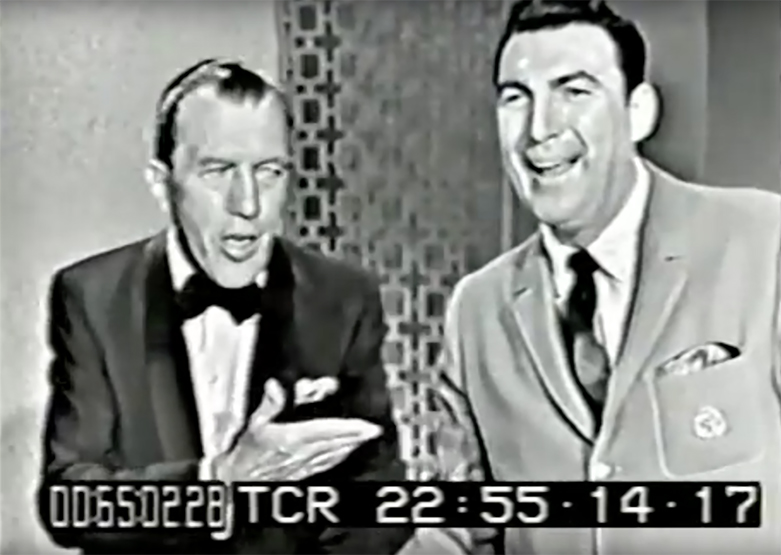
Almost a year to the day after Ed Sullivan introduced The Beatles and kickstarted America’s obsession with them, Glenn Draper and the University of Miami’s Singing Hurricanes were set to perform on the country’s favorite variety television show. His students would sing two pieces from the recently premiered smash hit film The Sound of Music.
It wasn’t the first time Draper and his singers had performed on live television, or even on The Ed Sullivan Show. His chorus at Keesler Air Force Base had sung on the show as well during the group’s heyday in the ’50s after attaining national recognition from NBC Radio. However, television performances were always a bit nerve-wracking.
In a traditional setting, if a choral number wasn’t going over well with the audience, Draper would shift gears as quickly as possible. “Sometimes I’ll change immediately after a song, and they [the chorus] didn’t even know what was coming up,” he says. “You have to read an audience like a book.”
On live television, though, he couldn’t change. He’d told the show’s producers what they were singing, and if he went off script, it would reflect very poorly on him and his singers, he thought. And since the performances were acapella, any mistakes would be clear as day.
Sullivan introduced the singers and dedicated the songs to the memory of Oscar Hammerstein II, who wrote the lyrics for the film’s songs before passing away in 1960.
Draper was typically brimming with confidence preceding a performance, but the unmistakable dampness of sweat under his collar betrayed him. Four minutes and one standing ovation later, he crossed the stage to shake Sullivan’s hand and wave to the camera.
Performances like that, Draper says, coupled with his can-do attitude toward choral production, are why he’s never had to apply for a job in his life. They were all the credentials he’s ever needed.
Chattanooga, 1971
It had been a long tour, but Draper was finally home.
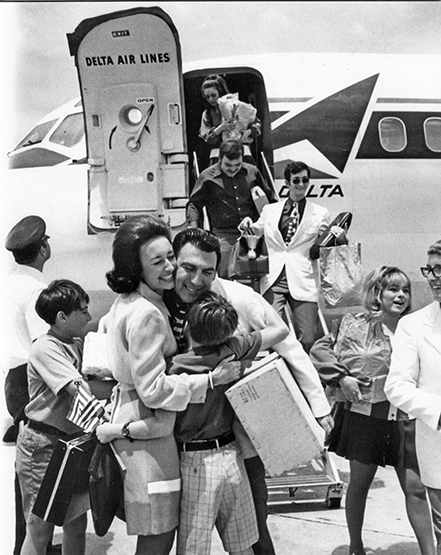
Once the plane had touched down and the Singing Mocs began pouring from the cabin doors, Draper saw his family waiting for him, full of smiles. While he’s seen much of the world through the power of his music and direction, he says coming home to a loving wife and children has always been the perfect capstone.
Draper had been with the University of Tennessee at Chattanooga for a few years, and was returning from a nine-week tour with the Singing Mocs as director of the group. The highlight of their trip had been singing for servicemen in West Berlin and getting to see the Berlin Wall. The tour had been extremely successful, but Draper was tired. The tour had been relentless, with singing engagements nearly every day, and he was ready to set foot back home.
When their last flight finally landed in Chattanooga, Draper’s wife Lounelle and sons Dean and Glenn Wright II were there eagerly awaiting his return. The smile Lounelle gave him was the same that he remembered from when they’d first started dating.
The first time he’d asked Lounelle to dinner, she’d apologized and said she had other plans.
“I told her that I hoped she had a miserable time,” he recounts with a laugh. He had tracked her down after seeing her in a fashion show on campus at Southern Methodist University in Texas where he was working with the school’s music program.
As it turns out, she did have a miserable time, and started dating Draper soon after. They were married within the year.
This year, they will celebrate their 60th wedding anniversary, on Nov. 24.
The White House, 1988
Draper had been conducting and practicing with the Lake Junaluska Singers, his choir from the Methodist retreat center of Lake Junaluska, for several years. The group had been on numerous tours throughout Europe already. A White House official who was a fan of Methodist revival music was a fan of the choir and had showed recordings of Draper’s music to President Ronald Reagan as a possible addition to the White House’s Christmas celebration.
Soon after, Draper’s singers earned an invitation to perform.
Singing for the president wasn’t new to Draper; the Singing Mocs had performed for President Gerald Ford during a visit to Chattanooga. Still, Draper jumped at this new opportunity.
The Lake Junaluska Singers were slated to perform several concerts throughout the day. After two performances, the Reagans were still not in the audience. Someone with the White House staff recommended to Draper that his group sing Battle Hymn of the Republic, God Bless America and the national anthem. Frustrated, Draper insisted it was a Christmas concert, but the staff member insisted harder.
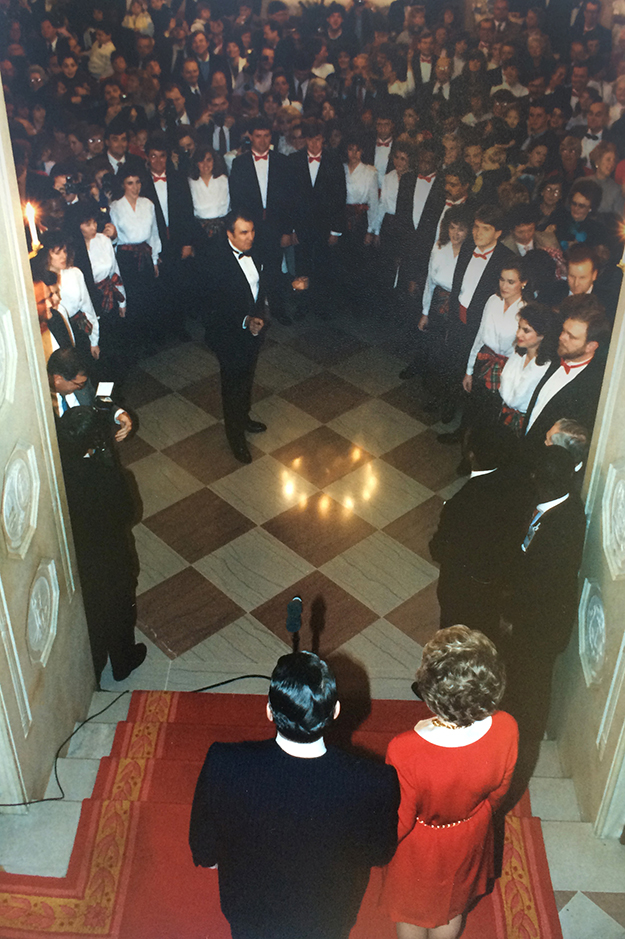
Begrudgingly, Draper changed gears. Within 30 seconds of the first notes of Battle Hymn of the Republic ringing through the halls of the White House, the Reagans appeared down the steps. The president shook hands with everyone for photos, but Draper he pulled aside.
“He [Reagan] said Nancy was gun-shy after [John] Hinckley’s attempt on his life, so he asked me if I could be center stage with the singers while [the Reagans] stood on the other side,” says Draper. Naturally he obliged. And thus, with the president and first lady at his back, and surrounded by the singers and party attendees, Draper conducted the rest of the concert to wild applause.
While Draper’s choirs had sung on international television and radio before, he says it was performing for the Reagans that Christmas that really propelled them to national fame. Draper’s choirs went on to sing for every president until his retirement from choral production, taking them all the way through the Obama administration.
Draper’s reputation still precedes him. He still gets invitations to direct concerts now and again.