
Thursday, October 29, 2026Oct 29

This story is free to read.

WHY IT MATTERS: Islamic State

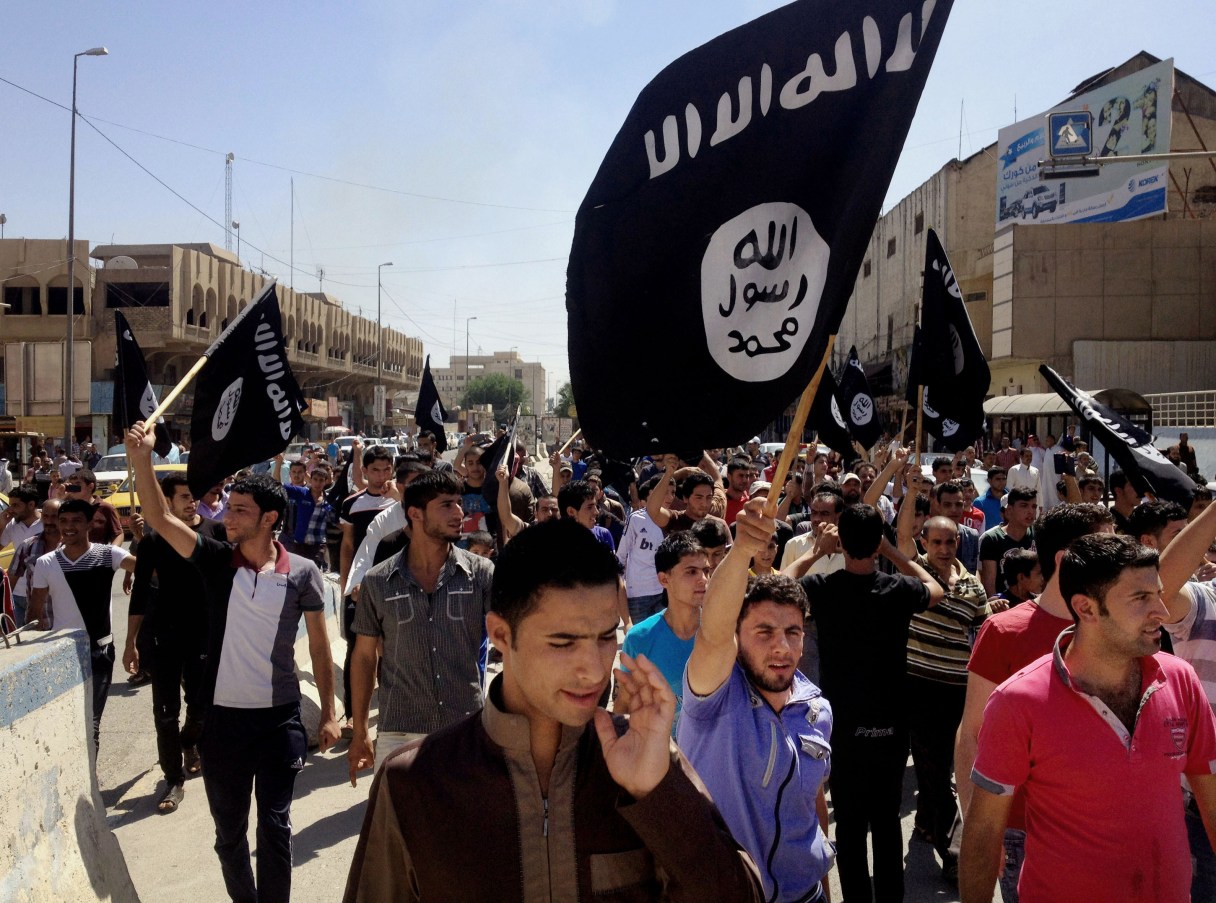
FILE - In this June 16, 2014. file photo, demonstrators chant pro-Islamic State group slogans as they carry the group's flags in front of the provincial government headquarters in Mosul, Iraq. The Islamic State group seized swaths of land in Iraq and expanded its territory in Syria in a dramatic blitz in 2014, taking advantage of unrest in both countries. The militant group slaughtered civilians in its march to try to establish a radical caliphate, and has spawned a string of deadly attacks across Europe, the Middle East and the United States. (AP Photo, File)
FILE - In this June 16, 2014. file photo, demonstrators chant pro-Islamic State group slogans as they carry the group's flags in front of the provincial government headquarters in Mosul, Iraq. The Islamic State group seized swaths of land in Iraq and expanded its territory in Syria in a dramatic blitz in 2014, taking advantage of unrest in both countries. The militant group slaughtered civilians in its march to try to establish a radical caliphate, and has spawned a string of deadly attacks across Europe, the Middle East and the United States. (AP Photo, File) FILE - In this June 16, 2014. file photo, demonstrators chant pro-Islamic State group slogans as they carry the group's flags in front of the provincial government headquarters in Mosul, Iraq. The Islamic State group seized swaths of land in Iraq and expanded its territory in Syria in a dramatic blitz in 2014, taking advantage of unrest in both countries. The militant group slaughtered civilians in its march to try to establish a radical caliphate, and has spawned a string of deadly attacks across Europe, the Middle East and the United States. (AP Photo, File)

WASHINGTON (AP) – THE ISSUE: The Islamic State group seized swaths of land in Iraq and expanded its territory in Syria in a dramatic blitz in 2014, taking advantage of unrest in both countries. The militant group slaughtered civilians in its march to try to establish a radical caliphate, and has spawned a string of deadly attacks across Europe, the Middle East and the United States.

In response, the U.S. and a coalition of allies launched a sustained campaign of airstrikes in Iraq and Syria in 2014, and have been training, advising and supporting local forces in both countries. Recently, the U.S. added Libya to its airstrike targets to root out extremists at the request of the Libyan government. While still a potent force, IS militants have lost much of the territory they overran. Meantime. they’ve stepped up attempts to inspire followers abroad to strike on their own, with some devastating results.

___

WHERE THEY STAND: Hillary Clinton, who was secretary of State from 2009 to 2013, has described a three-part strategy that involves crushing IS “on its home turf” in the Middle East, disrupting their infrastructure on the ground and online, and protecting America and its allies. All are current elements of the Obama administration’s strategy, so it’s not clear what would change or if she would accelerate any portions of it. She’s vowed: “We are not putting ground troops into Iraq ever again. And we’re not putting ground troops into Syria. We’re going to defeat ISIS without committing American ground troops.”

Donald Trump promises to “bomb the hell” out of IS, also known as ISIS, and level the oil facilities it controls.