
Monday, November 9, 2026Nov 9

Walrus begin arriving near Alaska village in annual event

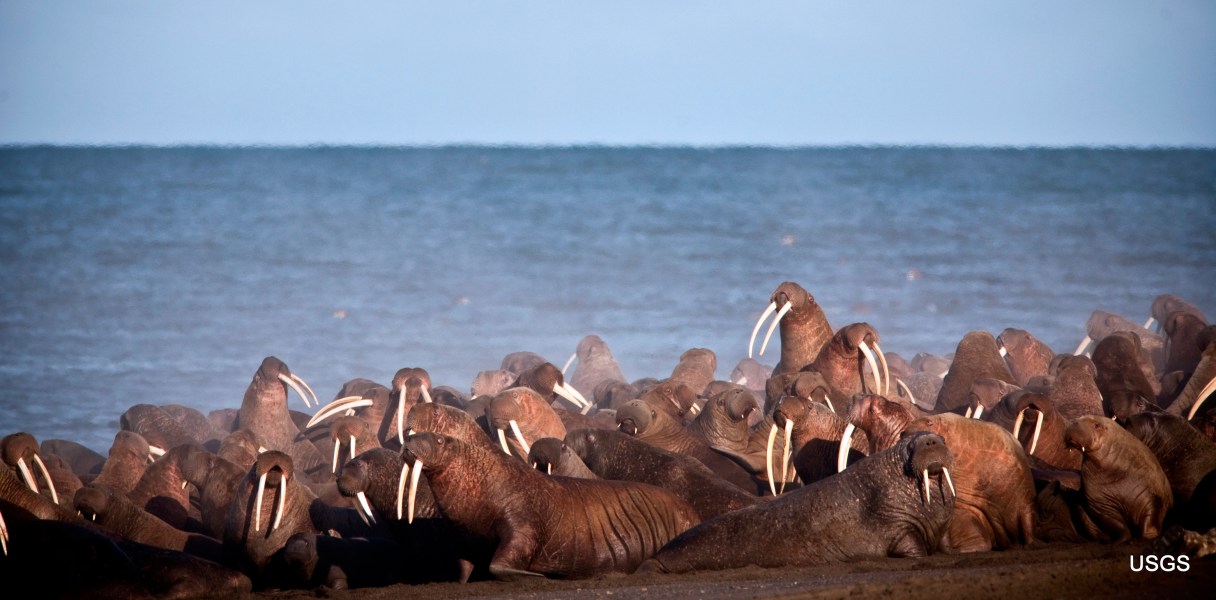
In this Sept., 2013, photo provided by the United States Geological Survey (USGS), walruses gather to rest on the shores of the Chukchi Sea near the coastal village of Point Lay, Alaska.  Pacific walrus are beginning to come ashore near the remote community on Alaska's northwest coast in what's become a marine mammal phenomenon caused by a warming climate. Walrus prefer resting on sea ice to look out for predators such as polar bears. But in 2007, they began coming ashore on the northwest Alaska coast because of receding summer sea ice as Arctic temperatures have warmed. (Ryan Kingsbery/USGS via AP)
In this Sept., 2013, photo provided by the United States Geological Survey (USGS), walruses gather to rest on the shores of the Chukchi Sea near the coastal village of Point Lay, Alaska. Pacific walrus are beginning to come ashore near the remote community on Alaska's northwest coast in what's become a marine mammal phenomenon caused by a warming climate. Walrus prefer resting on sea ice to look out for predators such as polar bears. But in 2007, they began coming ashore on the northwest Alaska coast because of receding summer sea ice as Arctic temperatures have warmed. (Ryan Kingsbery/USGS via AP) In this Sept., 2013, photo provided by the United States Geological Survey (USGS), walruses gather to rest on the shores of the Chukchi Sea near the coastal village of Point Lay, Alaska. Pacific walrus are beginning to come ashore near the remote community on Alaska's northwest coast in what's become a marine mammal phenomenon caused by a warming climate. Walrus prefer resting on sea ice to look out for predators such as polar bears. But in 2007, they began coming ashore on the northwest Alaska coast because of receding summer sea ice as Arctic temperatures have warmed. (Ryan Kingsbery/USGS via AP)

ANCHORAGE, Alaska (AP) – Pacific walrus are beginning to come ashore near a remote community on Alaska’s northwest coast in what’s become an annual marine mammal phenomenon caused by a warming climate.

The massive animals have gathered by the thousands each fall on a barrier island near the Inupiat Eskimo village of Point Lay in recent years. Last year, 35,000 walrus hauled out on the rocky beach.

Villagers notified the U.S. Fish and Wildlife Service Friday that the walrus have begun arriving and that about 1,000 are gathered on the island so far, said spokeswoman Andrea Medeiros.

Walrus prefer resting on sea ice to look out for predators such as polar bears. But in 2007, they began coming ashore on the northwest Alaska coast because of receding summer sea ice as Arctic temperatures have warmed.

Walrus are considered a major subsistence food for Point Lay residents.