
Saturday, November 7, 2026Nov 7

This story is free to read.

2 San Francisco-area earthquake faults found to be connected

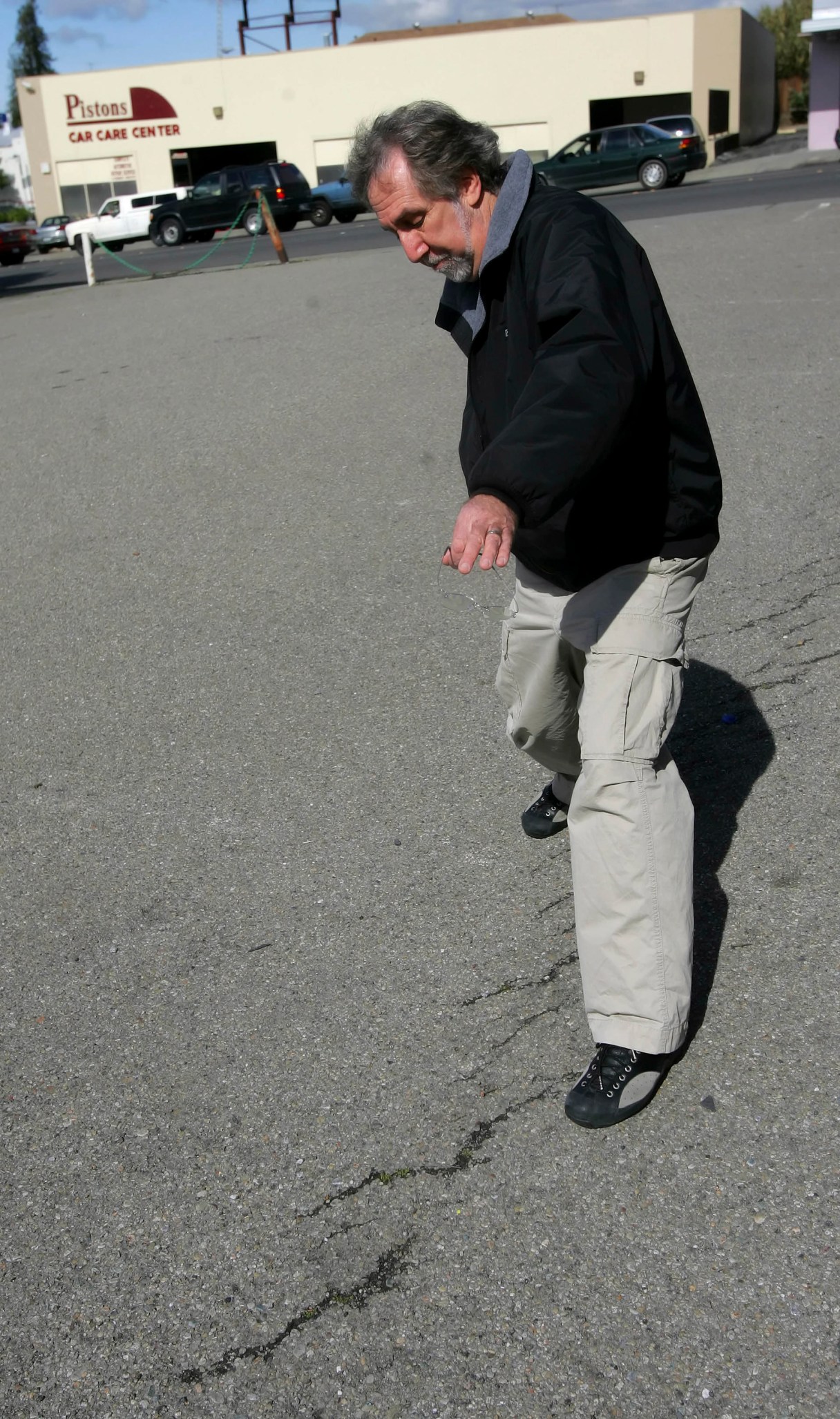
File - In this March 21, 2006, file photo, David Schwartz, geologist for the U.S. Geological Survey (USGS), walks along the Hayward Fault in a parking lot in Hayward, Calif. New research published in the journal Science Advances on Wednesday, Oct. 19, 2016, found that the Hayward Fault may be linked to another fault. (AP Photo/Jeff Chiu, File)
File - In this March 21, 2006, file photo, David Schwartz, geologist for the U.S. Geological Survey (USGS), walks along the Hayward Fault in a parking lot in Hayward, Calif. New research published in the journal Science Advances on Wednesday, Oct. 19, 2016, found that the Hayward Fault may be linked to another fault. (AP Photo/Jeff Chiu, File) File - In this March 21, 2006, file photo, David Schwartz, geologist for the U.S. Geological Survey (USGS), walks along the Hayward Fault in a parking lot in Hayward, Calif. New research published in the journal Science Advances on Wednesday, Oct. 19, 2016, found that the Hayward Fault may be linked to another fault. (AP Photo/Jeff Chiu, File)

LOS ANGELES (AP) – A new study finds the most dangerous earthquake fault in the San Francisco Bay Area is connected to another fault. Together, they could produce a major quake.

A team from the U.S. Geological Survey has discovered a previously unknown strand of the Hayward Fault that connects to a less active fault to the north.

It’s the first direct evidence that the two faults are linked. The discovery was published Wednesday in the journal Science Advances.

The Hayward Fault has long been considered a threat because it runs under densely populated neighborhoods east of San Francisco.

Scientists say if the Hayward and neighboring Rodgers Creek faults broke simultaneously along their combined 188 miles, they could produce a magnitude 7.4 quake.

___

Online:

Science Advances: http://advances.sciencemag.org