
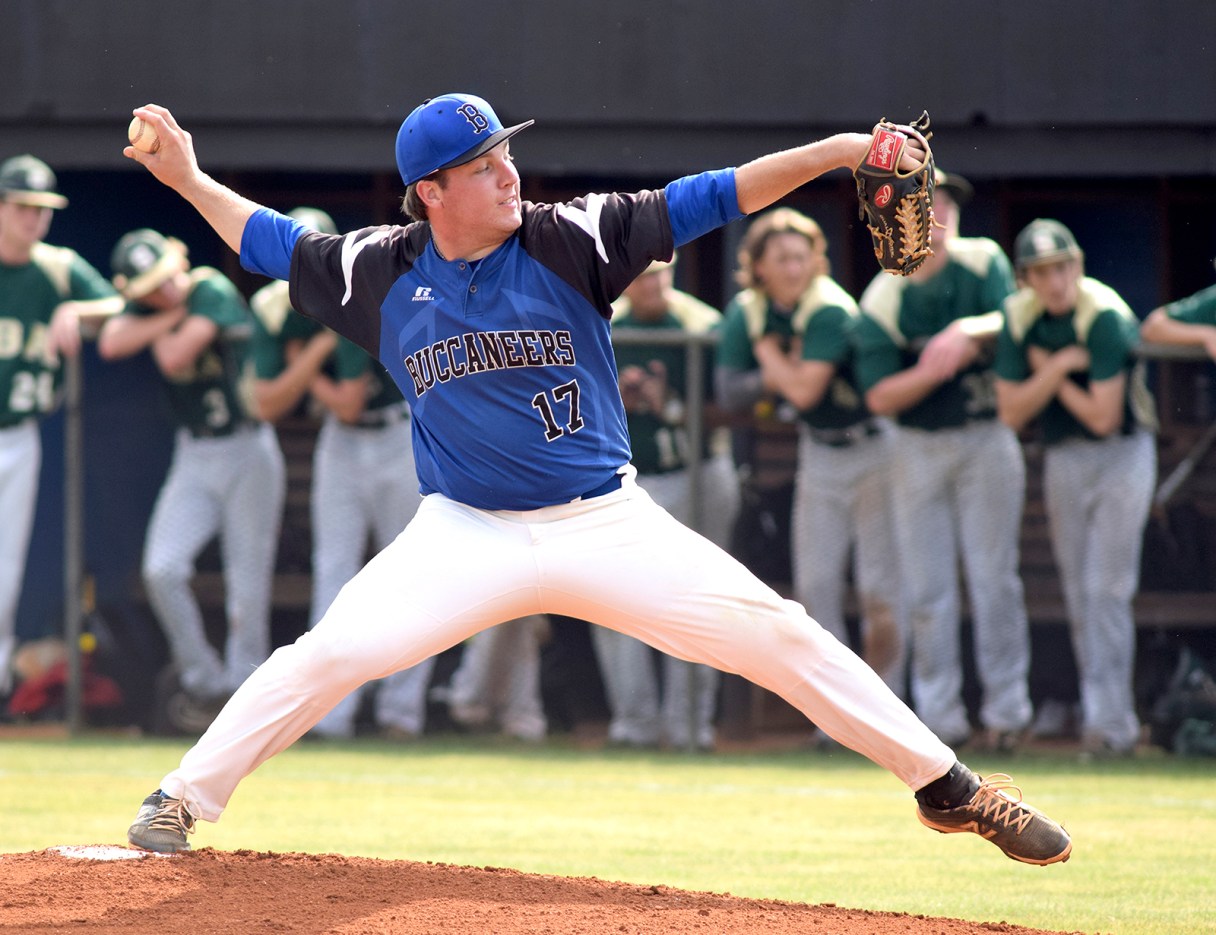
Baseball guidelines established this summer by the National Federation of High Schools are intended to protect young pitchers.
In Tennessee, there is now a limit of 120 pitches per appearance for high school pitchers and 85 for middle school pitchers, and if a player reaches those limits he is then required to have a minimum of four calendar days’ rest before returning to the mound.
“I think most coaches are conservative with pitch counts in the regular season and especially early in the season,” said East Hamilton coach Steve Garland, who noted the Tennessee Baseball Coaches Association had submitted pitch limit recommendations to the TSSAA the past seven or eight seasons.
The requirements don’t stop there. If a pitcher throws 26-55 pitches, one calendar day of rest is required; 56-75, two days; 76-119, three days. And when it comes to scrutiny and possible enforcement, a form tracking pitches for each school’s pitchers must be kept and signed by the opposing coach at the conclusion of each game.
“We already keep a record of who threw when and how many pitches for our team and our opponent,” Soddy-Daisy coach Jared Hensley said. “To some extent everybody is going to be policing themselves, but at the same time if a kid is not getting the proper rest then it gets down to playing an illegal player.”
Several years ago, an area high school coach allowed one pitcher to throw a complete game on a Saturday and then let him come back to pitch not only Monday but Tuesday. Shoulder and elbow problems in junior college ended his career.
“Most coaches in this area are educated baseball coaches that are trying to protect the kids, but there are guys out there who overthrow kids,” Hensley added. “These rules may curb the win-at-all costs mindset, and my hope is that it influences summer travel and youth programs.”
Georgia adopted similar rules after the NFHS announced in July that state associations had to change from using pitchers based on innings on the mound to number of pitches thrown. The NFHS did not establish specific pitch counts, leaving that to the states.
“When one of our guys throws 80 to 110 pitches, he most often doesn’t come back (to pitch) for five days,” Heritage coach Eric Beagles said. “These rules are good for the kids, and I think everybody will adapt. If there is more that can be done, I think it needs to be in those levels below high school.”
Most high school coaches would like to see tighter control on youth leagues and even high-level summer travel teams.
A proponent of pitcher protection long before he became Ooltewah’s coach, Brian Hitchcox has railed on the need for pitching protection. He wholly endorsed the moves that have now been made but questions if the rules are stringent enough.
“I’m glad they’ve taken the first step to at least doing something, but to me any system that allows a kid to throw 119 pitches every four days is not going far enough,” he said. “I don’t think it is restrictive enough. I know that 90 percent of the coaches in this state really value taking care of their guys, but there are also coaches that don’t know any better or just flat don’t care.”
Hitchcox played several years of pro ball and actually rose to be an everyday starter at the Triple-A level.
“You look – what are they doing in the big leagues with the best-conditioned athletes in the world? These are guys that are grown men with good mechanics and experienced pitching coaches, and you don’t see them throwing 105 pitches and coming back in three days,” he said.
Hitchcox also would like to see Tennessee’s playoffs changed, perhaps going to a three-game series similar to that used in Georgia, a system that has forced coaches to develop a pitching staff.
“You get to the region and Monday’s game means everything, and then you play again on Friday in a game that means everything. Then the first day of the state is the following Tuesday and that game means a lot, and then the championship game,” he said.
“You’re going to allow a kid to pitch four games in 11 days? That’s the current system, and there is pressure for coaches to do that.”
Contact Ward Gossett at wgossett@timesfreepress.com or 423-886-4765. Follow him on Twitter @wardgossett.