
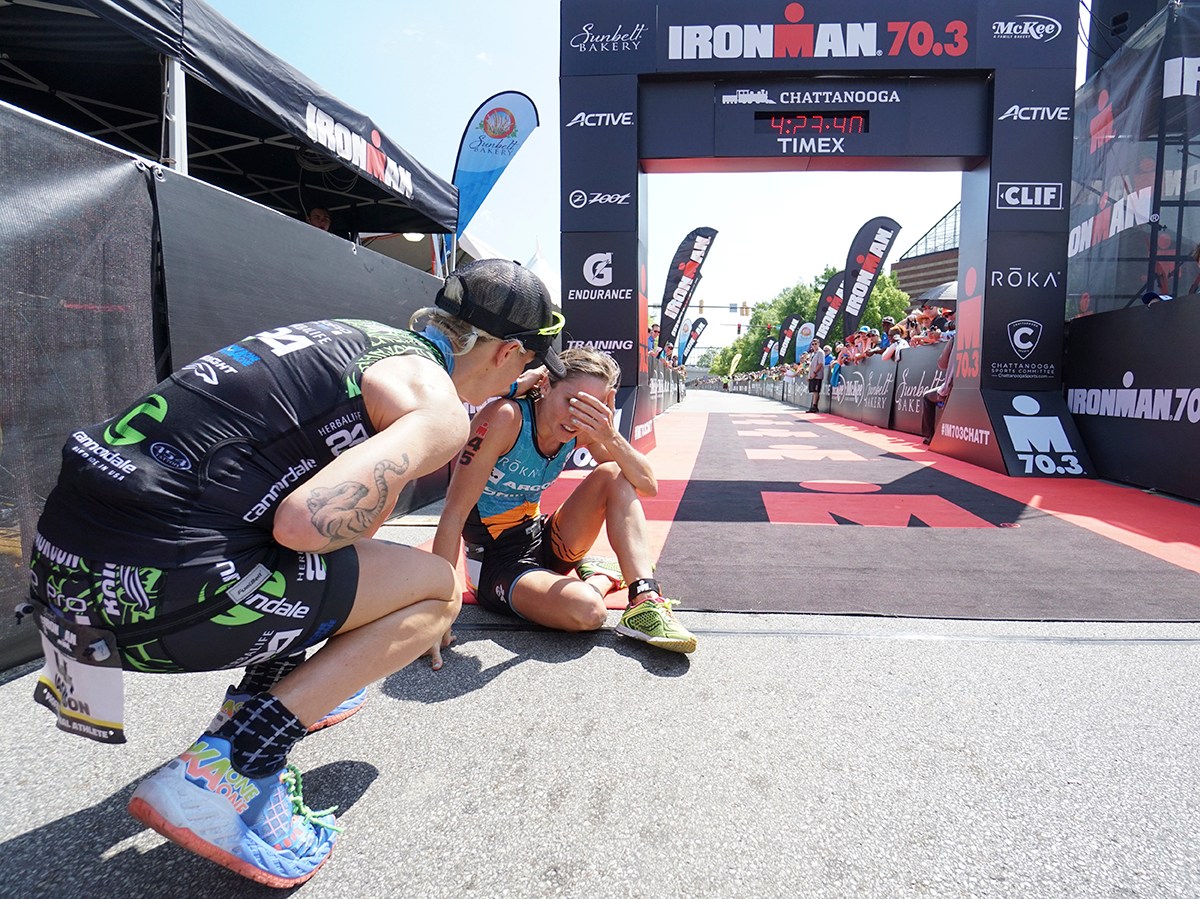
After crushing their latest marathon or conquering the Ironman, the last thing on most runners’ minds is taking a break. But it should be.
Whether you channeled your inner Usain Bolt or walked the entire race, 26.2 miles is hard on the body, and the resulting muscle damage can last up to two weeks.
“If you don’t let your body rest, you’re just asking for an injury,” says Dreama Campbell, a local ultra runner and personal trainer who has seen overeager runners fall victim to fractures, muscle strains, hamstring pulls and constant fatigue. “It’s almost like watching a train wreck in slow motion. You know it’s coming, it’s a matter of when.”
Taking time to recuperate can not only prevent a career-ending injury but also help you recover faster, so you can crush your next marathon sooner. Campbell offers a few guidelines for slowing down after the big race.
POST-FINISH LINE
Time: First 48 hours after race day
Rehydrate. Especially if you didn’t get enough fluids during the race. As soon as you cross the finish line, celebrate with adequate water and a sports drink to replenish electrolytes.
Refuel. It’s crucial to replace the nutrients your body lost during the race within an hour of crossing the finish line. “And I’m not talking about candy or cokes or anything like that,” Campbell says. “I’m talking about good solid nutrition. Good protein.” Stick to foods you ate during training until your stomach can handle a full meal.
Relax. It’s time to treat yourself. Schedule a massage for the day after the race to relax and release some of that built-up lactic acid.
RECOVERY PERIOD
Time: 2 weeks
Rest. Many serious athletes fear taking a day or two off will wreak havoc on their hard-earned fitness levels, but Campbell says there’s no reason to worry. “It gives your body time to heal itself and regroup,” she assures. “Laying low, doing the minimum for two weeks afterward, is usually the best recovery strategy.” In other words, don’t be afraid to kick your feet up!
Do light activity. Not only can it help alleviate soreness by flushing out lactic acid, it can also aid in recovery by increasing blood circulation, which delivers oxygen and nutrients to the muscles. Campbell suggests easy 1- to 2-mile walks or hikes, preferably on softer surfaces like wood or trail. Work your way up to low-intensity jogs the second week.
Practice yoga. Developing a post-marathon yoga routine has helped Campbell recover after some of her longer runs, and she advises runners to choose an easy technique, like vinyasa, to help stretch out overworked muscles.
RETRAINING PERIOD
Time: 4-6 weeks
Ease in. After your two weeks of rest, it’s time to hit the road again. Slowly. Start out with short runs – no more than 2 or 3 miles. Over time, gradually increase your distance, building up to 5 or 6 miles. Even if you feel revved and ready to go, Campbell suggests keeping the distance between 20 and 25 miles a week. After getting your body used to running again, you can start building back up to 8- to 10-mile runs.