
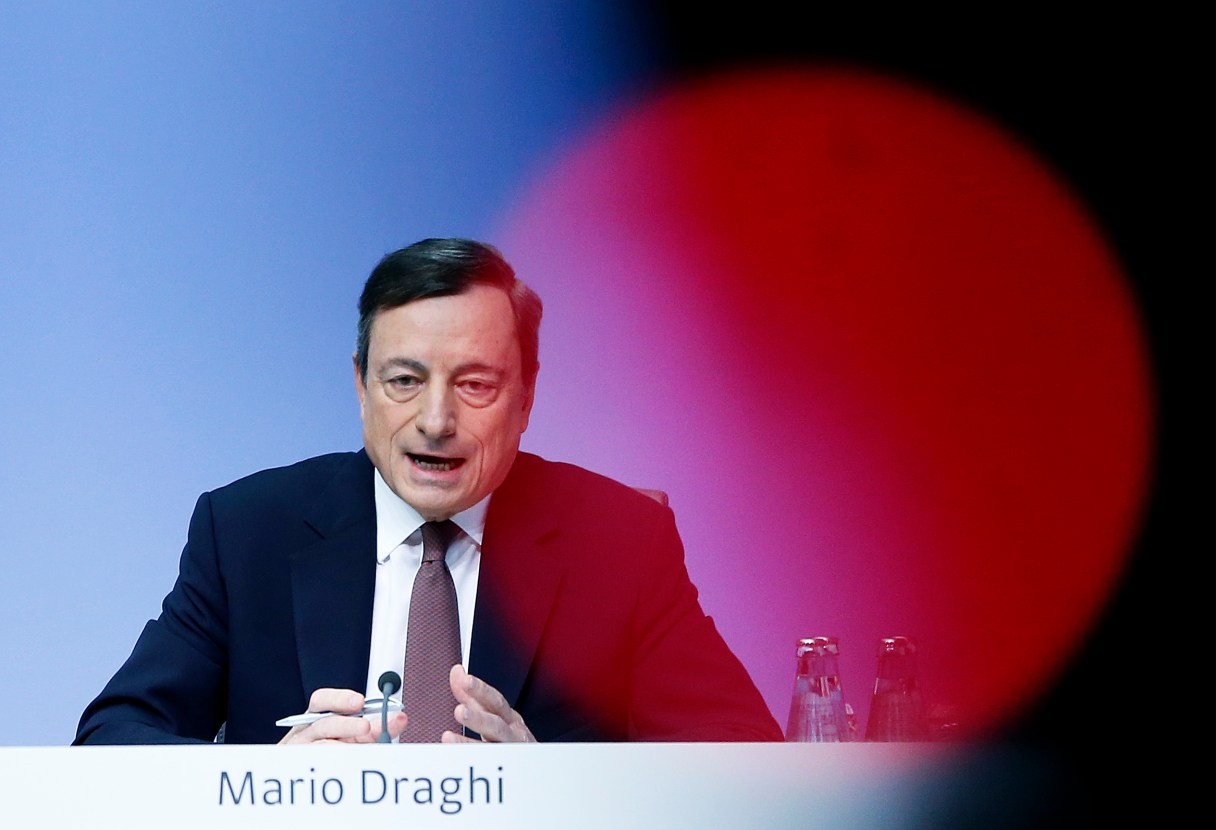
FRANKFURT, Germany (AP) – The European Central Bank is weighing whether to increase its efforts to boost stubbornly low inflation in the 19-country eurozone at Thursday’s meeting of its governing council.
The 25-member council led by President Mario Draghi could decide to extend its current bond-buying stimulus program, which is pumping newly printed money into the financial system.
Some analysts, however, think the bank is more likely to postpone action to its October or December meetings, or not act at all.
Draghi and the ECB are faced with inflation of only 0.2 percent annually, far below the bank’s target of just under 2 percent. Chronically low inflation suggests the economy is not hitting on all cylinders, even though the currency union is enjoying a moderate economic upswing. Low inflation also makes it harder for heavily indebted eurozone states such as Greece to become more price competitive relative to other economies.
New inflation projections compiled by ECB staff may give some hint about the bank’s future actions. In June, they forecast inflation of 1.3 percent for next year and 1.6 percent in 2018. Lowering them would support arguments for more action.