
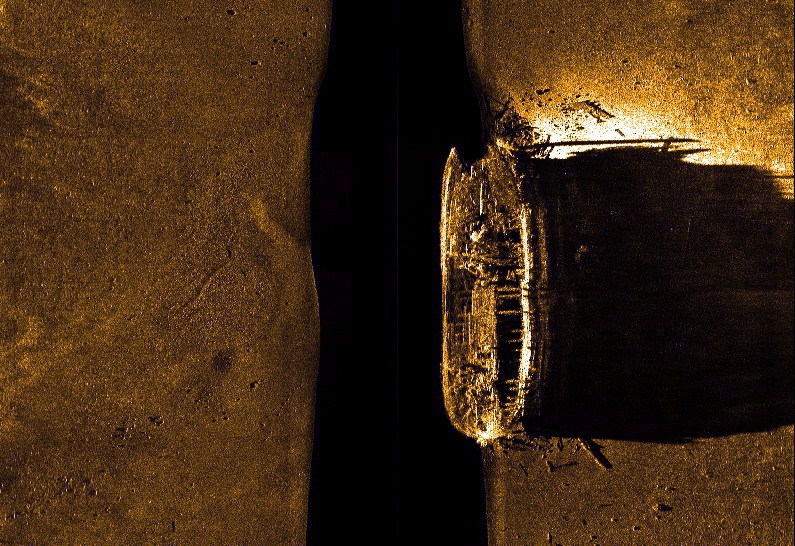
TORONTO (AP) – The second of two British explorer ships that vanished in the Arctic nearly 170 years ago during a storied expedition to find the fabled Northwest Passage has been found.
The Arctic Research Foundation said Monday that the HMS Terror has been located by a research ship. Last seen in the 1840s while under the command of Sir John Franklin, HMS Erebus and HMS Terror have long been among the most sought-after prizes in marine archaeology and the subject of songs, poems and novels. The wreck of the Erebus was found in 2014.
“The ship is in remarkable condition,” Adrian Schimnowski of the Arctic Research Foundation, one of the groups involved in the search, said Monday from the research ship that located the HMS Terror. “It looks like it gently slipped to the seabed floor.”
The Terror was discovered Sept. 3 in 24 meters of water in Terror Bay, a small indentation on the coast of King William Island west of the community of Gjoa Haven. It was located right where an Inuit hunter said it would be. Canadian Rear-Admiral John Newton said the Franklin ships were found about 50 kilometers apart from each other.
Franklin and 128 hand-picked officers and men had set out in 1845 to find the Northwest Passage, the long-sought shortcut to Asia that supposedly ran from the Atlantic to the Pacific by way of the harsh, ice-choked Arctic. The death of all 129 men made the Franklin expedition the worst tragedy in the history of Arctic exploration.