
Monday, November 9, 2026Nov 9

In long and bloody Syria war, this truce may be different

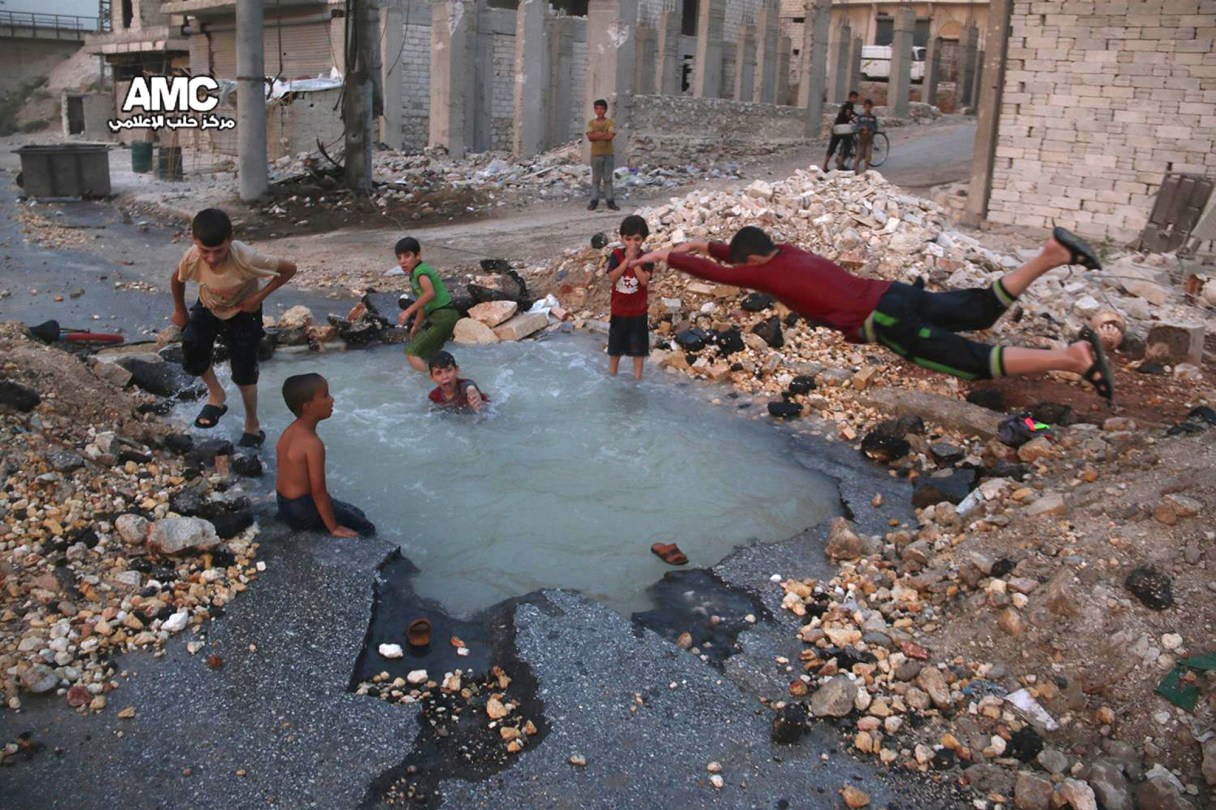
FILE -- This Aug. 31, 2016 file photo, provided by the Syrian anti-government activist group Aleppo Media Center (AMC), shows Syrian boys dive into a hole filled with water that was caused by a missile attack in the rebel-held neighborhood of Sheikh Saeed in Aleppo province, Syria. Five years of failed efforts to quell the fighting in Syria have persuaded many observers that the war, inconclusive and catastrophic on a historic scale, may be unresolvable. But a closer look at the landscape allows a glimmer of hope that a turning point may have been reached with the truce that took effect Monday, Sept. 12, 2016. (Aleppo Media Center via AP)
FILE -- This Aug. 31, 2016 file photo, provided by the Syrian anti-government activist group Aleppo Media Center (AMC), shows Syrian boys dive into a hole filled with water that was caused by a missile attack in the rebel-held neighborhood of Sheikh Saeed in Aleppo province, Syria. Five years of failed efforts to quell the fighting in Syria have persuaded many observers that the war, inconclusive and catastrophic on a historic scale, may be unresolvable. But a closer look at the landscape allows a glimmer of hope that a turning point may have been reached with the truce that took effect Monday, Sept. 12, 2016. (Aleppo Media Center via AP) FILE -- This Aug. 31, 2016 file photo, provided by the Syrian anti-government activist group Aleppo Media Center (AMC), shows Syrian boys dive into a hole filled with water that was caused by a missile attack in the rebel-held neighborhood of Sheikh Saeed in Aleppo province, Syria. Five years of failed efforts to quell the fighting in Syria have persuaded many observers that the war, inconclusive and catastrophic on a historic scale, may be unresolvable. But a closer look at the landscape allows a glimmer of hope that a turning point may have been reached with the truce that took effect Monday, Sept. 12, 2016. (Aleppo Media Center via AP)

BEIRUT (AP) – Five years of failed efforts to quell the fighting in Syria have persuaded many observers that the war, inconclusive and catastrophic on a historic scale, may not be resolvable. A truce earlier this year took effect, soon started to fray, then vanished. But some things are different this week as a cease-fire brokered by the United States and Russia took effect.

The reasons for pessimism are clear.

Syrian President Bashar Assad is deeply entrenched in Damascus and seems willing to do whatever it takes to stay in power. He enjoys support not only among his fellow Alawites, followers of an offshoot of Shia Islam, but from Christians and other minority groups. Many fear his authoritarian rule less than a scenario in which security services collapse and the country falls into the hands of Islamist Sunnis.

Meanwhile, the factions fighting Assad are beset by competing agendas and visions for a future Syria. Gradually Sunni Islamists have overshadowed the original “moderates” of the Free Syria Army and its splinter groups. That lends some resonance to Assad’s message that, in effect, he is the least bad option.

The United States has not been eager to wade into this quagmire. The Obama administration and its allies have lightly armed and trained some of the supposedly moderate rebel groups but have refused a more robust intervention and have not supported calls for a no-fly zone in the country’s north. Vladimir Putin’s Russia was able to step in, bolster Assad and carve out a leadership role.