
Wednesday, November 11, 2026Nov 11

Under 3 percent of US athletes in Rio had medical exemptions

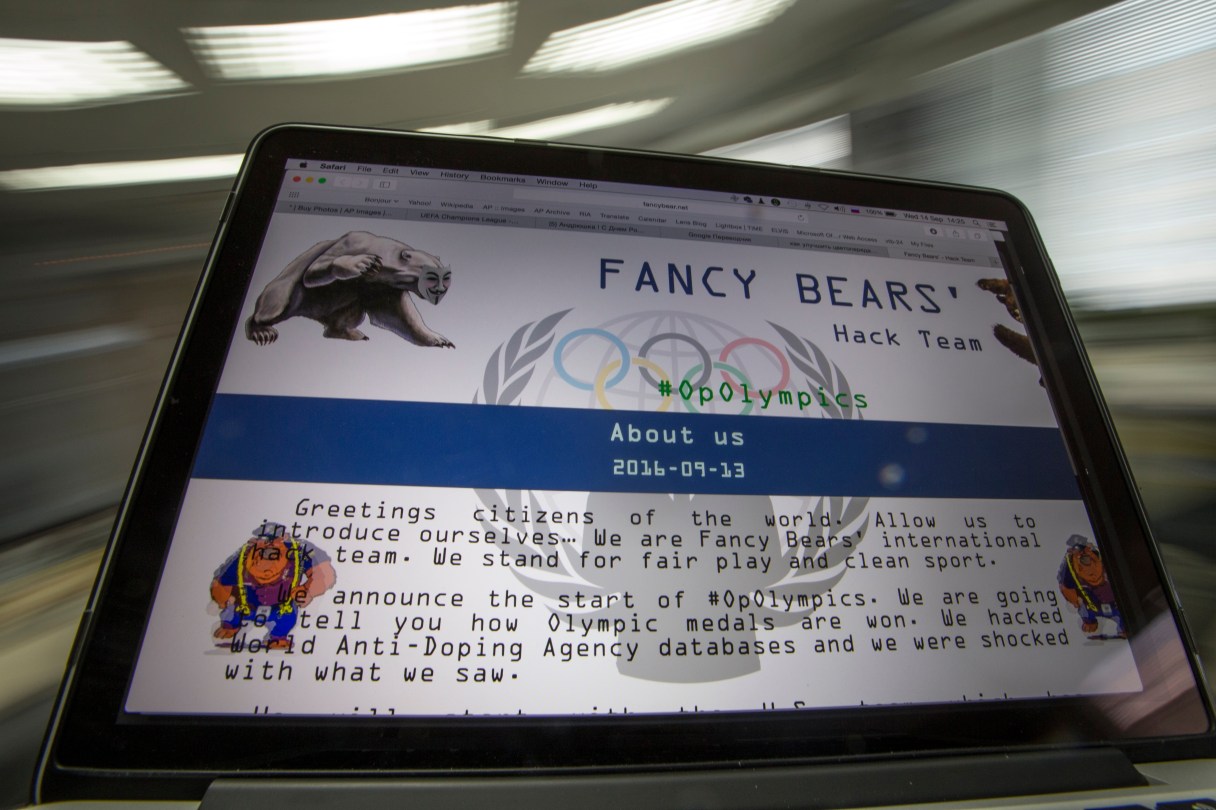
A screenshot of the Fancy Bears website fancybear.net seen on a computes screen in Moscow, Russia, Wednesday, Sept. 14, 2016. Confidential medical data of gold medal-winning gymnast Simone Biles, seven-time Grand Slam champion Venus Williams and other female U.S. Olympians was hacked from a World Anti-Doping Agency database and posted online Tuesday Sept 13, 2016.
WADA said the hackers were a "Russian cyber espionage group" called Fancy Bears. (AP Photo/Alexander Zemlianichenko)
A screenshot of the Fancy Bears website fancybear.net seen on a computes screen in Moscow, Russia, Wednesday, Sept. 14, 2016. Confidential medical data of gold medal-winning gymnast Simone Biles, seven-time Grand Slam champion Venus Williams and other female U.S. Olympians was hacked from a World Anti-Doping Agency database and posted online Tuesday Sept 13, 2016. WADA said the hackers were a "Russian cyber espionage group" called Fancy Bears. (AP Photo/Alexander Zemlianichenko) A screenshot of the Fancy Bears website fancybear.net seen on a computes screen in Moscow, Russia, Wednesday, Sept. 14, 2016. Confidential medical data of gold medal-winning gymnast Simone Biles, seven-time Grand Slam champion Venus Williams and other female U.S. Olympians was hacked from a World Anti-Doping Agency database and posted online Tuesday Sept 13, 2016. WADA said the hackers were a "Russian cyber espionage group" called Fancy Bears. (AP Photo/Alexander Zemlianichenko)

Fifteen of the 558 athletes in the U.S. delegation at the Rio Olympics – or slightly less than 3 percent – had therapeutic-use exemptions in force during the games.

The exemptions, known as TUEs, came under increased scrutiny last week after Russian hackers broke into the database of the World Anti-Doping Agency and posted confidential medical information online from some athletes.

TUEs let athletes use otherwise-banned substances to treat long-standing medical conditions, such as attention-deficit disorder and asthma. Proponents argue those exemptions only level the playing field; critics say they can give competitors an edge.

The hackers largely targeted U.S. female Olympians, among them tennis stars and sisters Serena and Venus Williams, and gold medal-winning gymnast Simone Biles. All three, as well as several other prominent athletes whose medical records were posted, said the data strongly supported their use of a TUE.

“I am one of the strongest supporters of maintaining the highest level of integrity in competitive sport and I have been highly disciplined in following the guidelines,” Venus Williams said in a statement.