
Thursday, November 12, 2026Nov 12

Stone Age cannibals: Hunting each other not worth the hassle

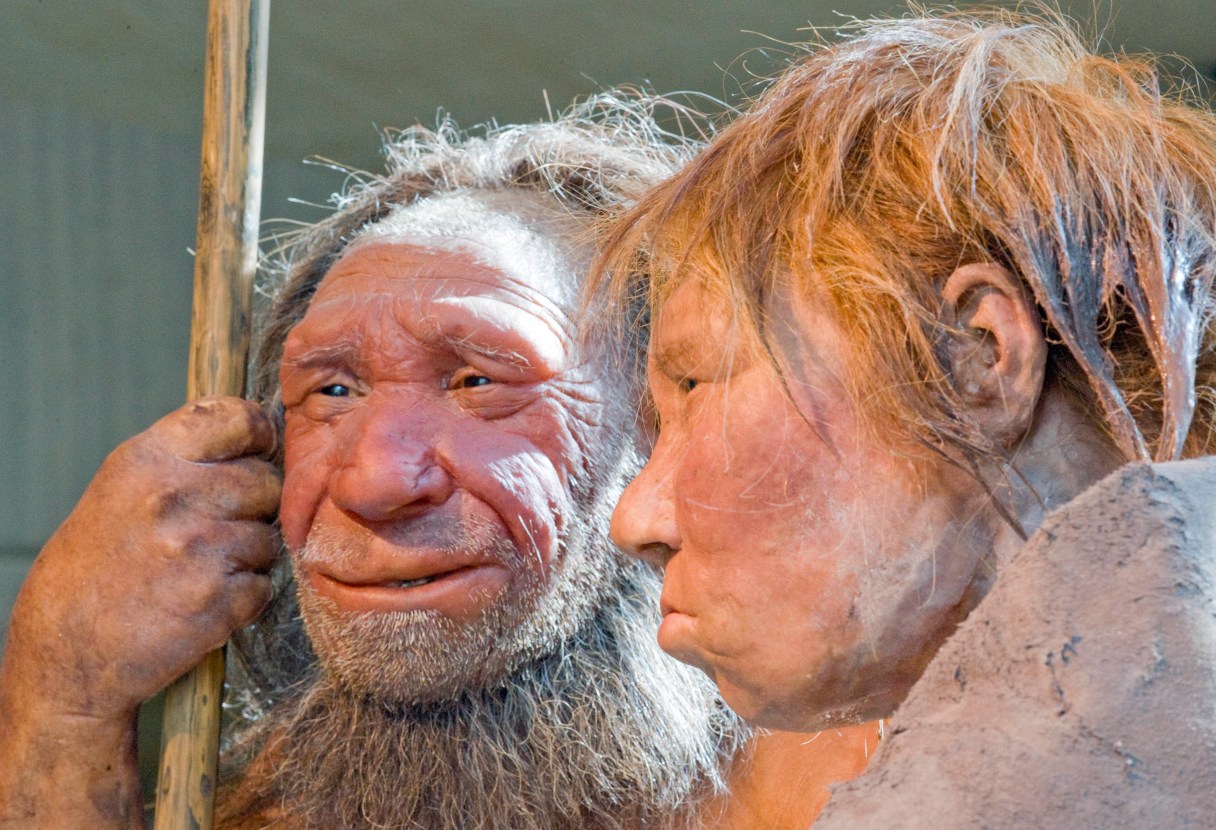
FILE - This Friday, March 20, 2009 file photo shows reconstructions of a Neanderthal man named "N", left, and woman called "Wilma", right, at the Neanderthal museum in Mettmann, Germany. Trying to explain cases of ancient cannibalism among our evolutionary forerunners is a vexing scientific challenge. A new study released Thursday, April 6, 2017 in the Journal Scientific Reports suggests that whatever the reasons, they were probably not hunting each other just for food. (AP Photo/Martin Meissner)
FILE - This Friday, March 20, 2009 file photo shows reconstructions of a Neanderthal man named "N", left, and woman called "Wilma", right, at the Neanderthal museum in Mettmann, Germany. Trying to explain cases of ancient cannibalism among our evolutionary forerunners is a vexing scientific challenge. A new study released Thursday, April 6, 2017 in the Journal Scientific Reports suggests that whatever the reasons, they were probably not hunting each other just for food. (AP Photo/Martin Meissner) FILE - This Friday, March 20, 2009 file photo shows reconstructions of a Neanderthal man named "N", left, and woman called "Wilma", right, at the Neanderthal museum in Mettmann, Germany. Trying to explain cases of ancient cannibalism among our evolutionary forerunners is a vexing scientific challenge. A new study released Thursday, April 6, 2017 in the Journal Scientific Reports suggests that whatever the reasons, they were probably not hunting each other just for food. (AP Photo/Martin Meissner)

NEW YORK (AP) – You know those snacks that are OK if they’re handy, but not worth the bother if you have to go track them down? Our Stone Age forerunners may have felt the same way about eating each other.

Neanderthals and prehistoric members of our own species occasionally practiced cannibalism and explaining that is a scientific challenge. Generally, it has been attributed to factors like starvation, violence between groups or ceremonial practices following a death.

Now a new study suggests they were probably not hunting each other just for food.

That’s because “we are not very nutritious, on a calorie level,” compared to large game animals, says James Cole of the University of Brighton in England. Next to a mammoth, even a dozen burly Neanderthals would be slim pickings.

Cole presented his argument Thursday in the journal Scientific Reports .