
Wednesday, November 11, 2026Nov 11

US jobless aid applications fell to 234,000 last week

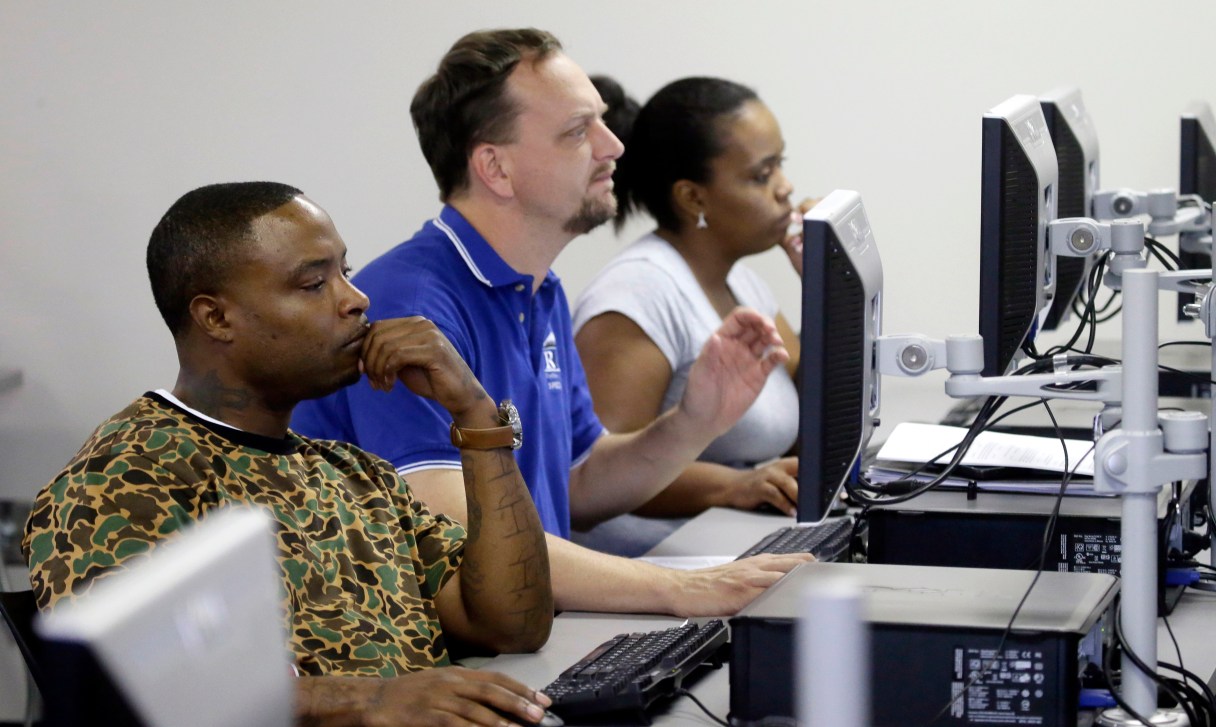
FILE - In this Friday, March 10, 2017, file photo, job seekers look at their respective computer screens during a resume writing class at the Texas Workforce Solutions office in Dallas. On Thursday, April 13, 2017, the Labor Department reported that fewer Americans sought unemployment benefits the week before, which is evidence of a stable job market and greater security for workers. (AP Photo/LM Otero, File)
FILE - In this Friday, March 10, 2017, file photo, job seekers look at their respective computer screens during a resume writing class at the Texas Workforce Solutions office in Dallas. On Thursday, April 13, 2017, the Labor Department reported that fewer Americans sought unemployment benefits the week before, which is evidence of a stable job market and greater security for workers. (AP Photo/LM Otero, File) FILE - In this Friday, March 10, 2017, file photo, job seekers look at their respective computer screens during a resume writing class at the Texas Workforce Solutions office in Dallas. On Thursday, April 13, 2017, the Labor Department reported that fewer Americans sought unemployment benefits the week before, which is evidence of a stable job market and greater security for workers. (AP Photo/LM Otero, File)

WASHINGTON (AP) – Fewer Americans sought unemployment benefits last week, which is evidence of a stable job market and greater security for workers.

THE NUMBERS: Weekly applications for jobless aid dipped 1,000 to a seasonally adjusted 234,000, the Labor Department said Thursday. Requests for benefits in the prior week were revised up 1,000 to 235,000. The four-week average, a less volatile measure, fell to 247,250 from 250,250.

Over the past year, the number of people collecting unemployment benefits has fallen 6.9 percent to 2 million.

THE TAKEAWAY: Applications are a proxy for layoffs. They have stayed below 300,000, a level linked with broader job growth, for 110 weeks. That’s the longest period at such a low level since 1970, when the U.S. population was much smaller.

By holding onto workers, employers are also more likely to expect the economy to grow and potentially hire.