
Tuesday, November 10, 2026Nov 10

US housing starts fell in March; still stronger than in 2016

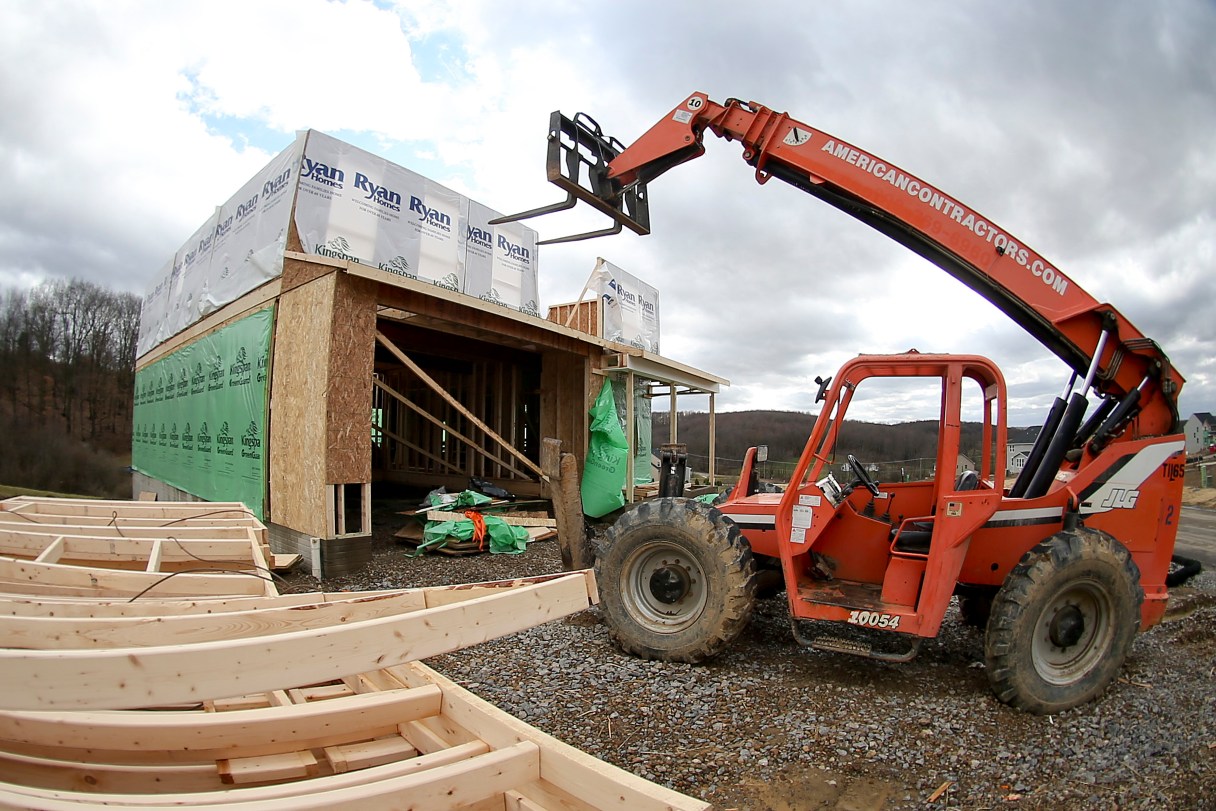
In this Wednesday, March 1, 2017, photo, made with a fisheye lens, a forklift is parked in front of one of the houses under construction in a housing plan in Zelienople, Pa. U.S. builders broke ground on fewer homes in March, but the pace of construction so far this year remains stronger than in 2016, according to information released Tuesday, April 18, 2017, by the Commerce Department. (AP Photo/Keith Srakocic)
In this Wednesday, March 1, 2017, photo, made with a fisheye lens, a forklift is parked in front of one of the houses under construction in a housing plan in Zelienople, Pa. U.S. builders broke ground on fewer homes in March, but the pace of construction so far this year remains stronger than in 2016, according to information released Tuesday, April 18, 2017, by the Commerce Department. (AP Photo/Keith Srakocic) In this Wednesday, March 1, 2017, photo, made with a fisheye lens, a forklift is parked in front of one of the houses under construction in a housing plan in Zelienople, Pa. U.S. builders broke ground on fewer homes in March, but the pace of construction so far this year remains stronger than in 2016, according to information released Tuesday, April 18, 2017, by the Commerce Department. (AP Photo/Keith Srakocic)

WASHINGTON (AP) – U.S. builders broke ground on fewer homes in March, but the pace of construction so far this year remains stronger than in 2016.

Housing starts fell 6.8 percent last month to a seasonally adjusted annual rate of 1.22 million, the Commerce Department said Tuesday. The setback came after strong gains in a warmer-than-usual February. Groundbreakings on new homes are still 8.1 percent higher through the first three months of this year compared with 2016.

More Americans are seeking homes as job security has improved with low unemployment. But even with a wave of construction, a dwindling supply of new and existing homes across much of the country has threatened to become a major drag on the housing market.

Jennifer Lee, a senior economist at BMO Capital Markets, suggested that the March decline was likely temporary.

“Is it the start of a trend? Likely not, given the strong demand for housing and the low levels of inventory to choose from,” Lee said.