
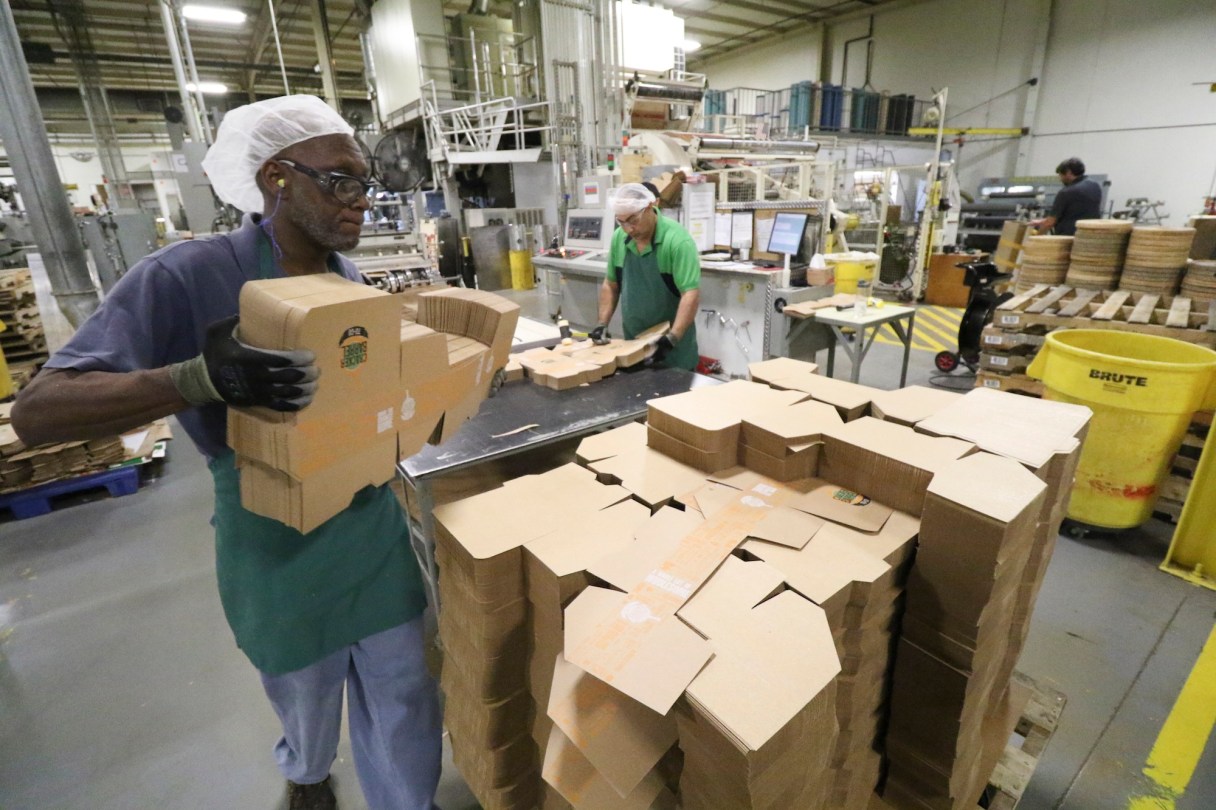
 Denise Rice, director of Cleveland operations and development at Cormetech, is photographed in her office in the company’s manufacturing facility.
With one of every four factory workers retiring in the next decade, Tennessee manufacturers say their biggest worry is getting enough qualified workers for the future for increasingly technology-based factories, even with an average manufacturing wage in the state of $66,000.
Despite the labor challenge, however, manufacturers are more optimistic since Donald Trump was elected president and the state revamped its tax system this year.
Among major manufacturers in the Volunteer state surveyed by the Tennessee Manufacturers Association earlier this year, workforce challenges were identified as their biggest concern, ahead of concerns over regulations, taxes and roads. Denise Rice, director of the Tennessee Manufacturers Association (TMA) division of the Tennessee Chamber of Commerce and Industry, told Chattanooga business leaders last week that factory operators are generally optimistic about Tennessee’s economy but increasingly worried about filling jobs as the labor market tightens and skill demand for manufacturers increase.
“As I travel across the state, different regions have different needs,” Rice said. “But the one thing that I hear that is consistent everywhere is the concern over the skills gap and the challenge of getting a qualified workforce. I think this problem is at an all-time high and this is not a short-term problem. We’re going to be looking at workforce problems probably for the next five to 10 years at least as Baby Boomers retire from manufacturing and our state continues to grow its manufacturing output.”
Rice estimates 75,000 workers at manufacturing plants in Tennessee will retire between 2015 and 2025, or nearly one quarter of the entire manufacturing workforce. At the same time as the most experienced workers are leaving the labor market, the skill demands for manufacturing will become greater, requiring certifications or advanced training for most jobs.