
Wednesday, November 11, 2026Nov 11

Charlottesville violence revives painful past for minorities

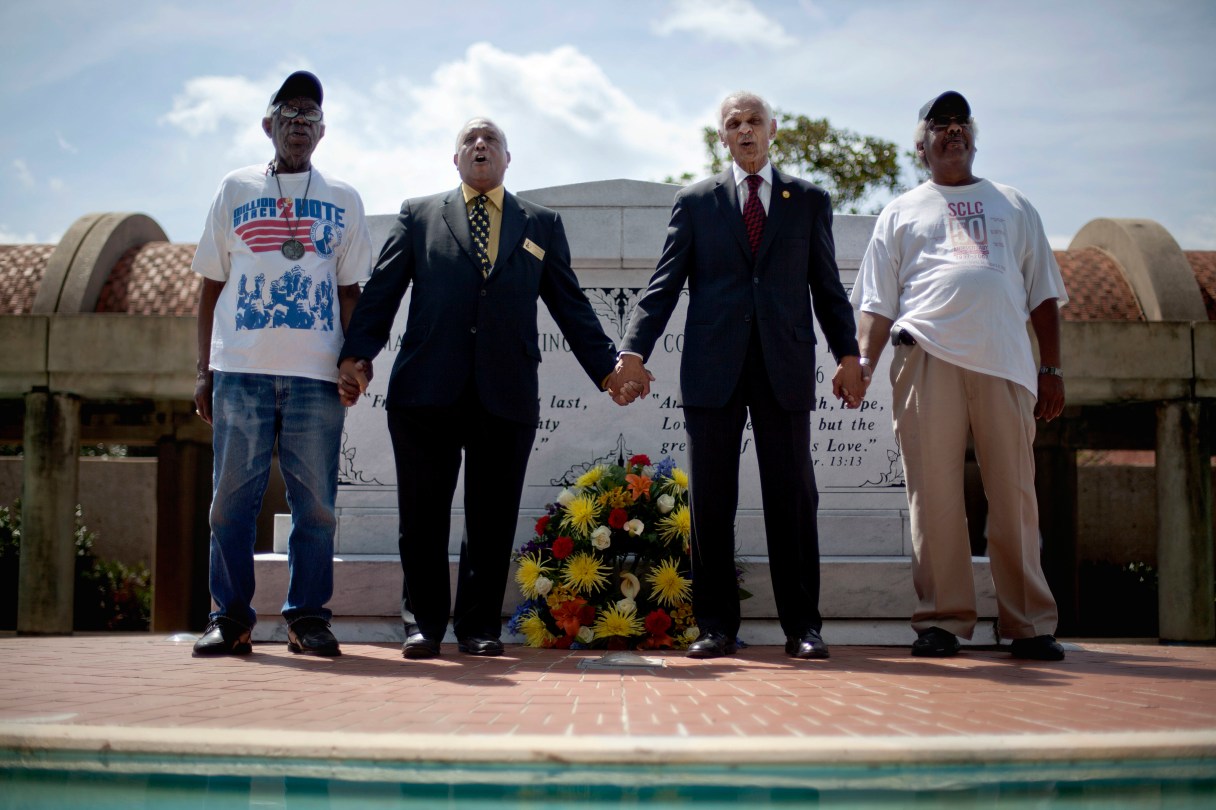
FILE - In this Wednesday, April 4, 2012 file photo, civil rights activists and Southern Christian Leadership Conference members from left, Ralph Worrell, Dr. Bernard Lafayette, Jr., C.T. Vivian and Frederick Moore, join hands and sing "We Shall Overcome" at the Atlanta gravesite of Rev. Martin Luther King Jr., marking the 44th anniversary of his assassination. Lafayette fought to end segregation during the Civil Rights Movement. But watching the events of Charlottesville, Va., in August 2017 and days later hearing President Donald Trump blaming both sides for the deadly violence, Lafayette realized that his work to change laws has not changed enough hearts and minds in America. (AP Photo/David Goldman)
FILE - In this Wednesday, April 4, 2012 file photo, civil rights activists and Southern Christian Leadership Conference members from left, Ralph Worrell, Dr. Bernard Lafayette, Jr., C.T. Vivian and Frederick Moore, join hands and sing "We Shall Overcome" at the Atlanta gravesite of Rev. Martin Luther King Jr., marking the 44th anniversary of his assassination. Lafayette fought to end segregation during the Civil Rights Movement. But watching the events of Charlottesville, Va., in August 2017 and days later hearing President Donald Trump blaming both sides for the deadly violence, Lafayette realized that his work to change laws has not changed enough hearts and minds in America. (AP Photo/David Goldman) FILE - In this Wednesday, April 4, 2012 file photo, civil rights activists and Southern Christian Leadership Conference members from left, Ralph Worrell, Dr. Bernard Lafayette, Jr., C.T. Vivian and Frederick Moore, join hands and sing "We Shall Overcome" at the Atlanta gravesite of Rev. Martin Luther King Jr., marking the 44th anniversary of his assassination. Lafayette fought to end segregation during the Civil Rights Movement. But watching the events of Charlottesville, Va., in August 2017 and days later hearing President Donald Trump blaming both sides for the deadly violence, Lafayette realized that his work to change laws has not changed enough hearts and minds in America. (AP Photo/David Goldman)

Bernard Lafayette fought to end segregation during the civil rights movement. But after watching events in Charlottesville, Virginia, last weekend and hearing President Donald Trump blame both sides for the deadly violence, he realized that changing laws did not change enough hearts and minds.

“It was below the surface,” said Lafayette, the 77-year-old chairman of the Southern Christian Leadership Conference. “It was always there. It never left. People are coming out again and expressing their racist feelings.”

Minorities who came to the United States in search of a better life or who fought for equality were dispirited to see their fellow citizens fighting to preserve the legacy of the Confederacy and displaying Nazi symbols. And they said Trump’s response to the deadly violence only fanned racial flames.

Trump’s initial statements on Saturday blamed violence on “many sides.” Two days later, he condemned white supremacists. On Tuesday, he lashed out at the counter-protesters who had been in Charlottesville. He also questioned whether removing public tributes to Confederate figures would result in similar treatment for statues of George Washington or Thomas Jefferson – both slave owners.

On the day of the Virginia rally, Lafayette was in Lowndes County, Alabama, marking the anniversary of the death of Jonathan Daniels, a white civil rights volunteer who gave his life to save 17-year-old black girl Ruby Sales. Lafayette, who worked alongside the Rev. Martin Luther King Jr., was stunned to see young whites marching with torches and swastikas in 2017.