
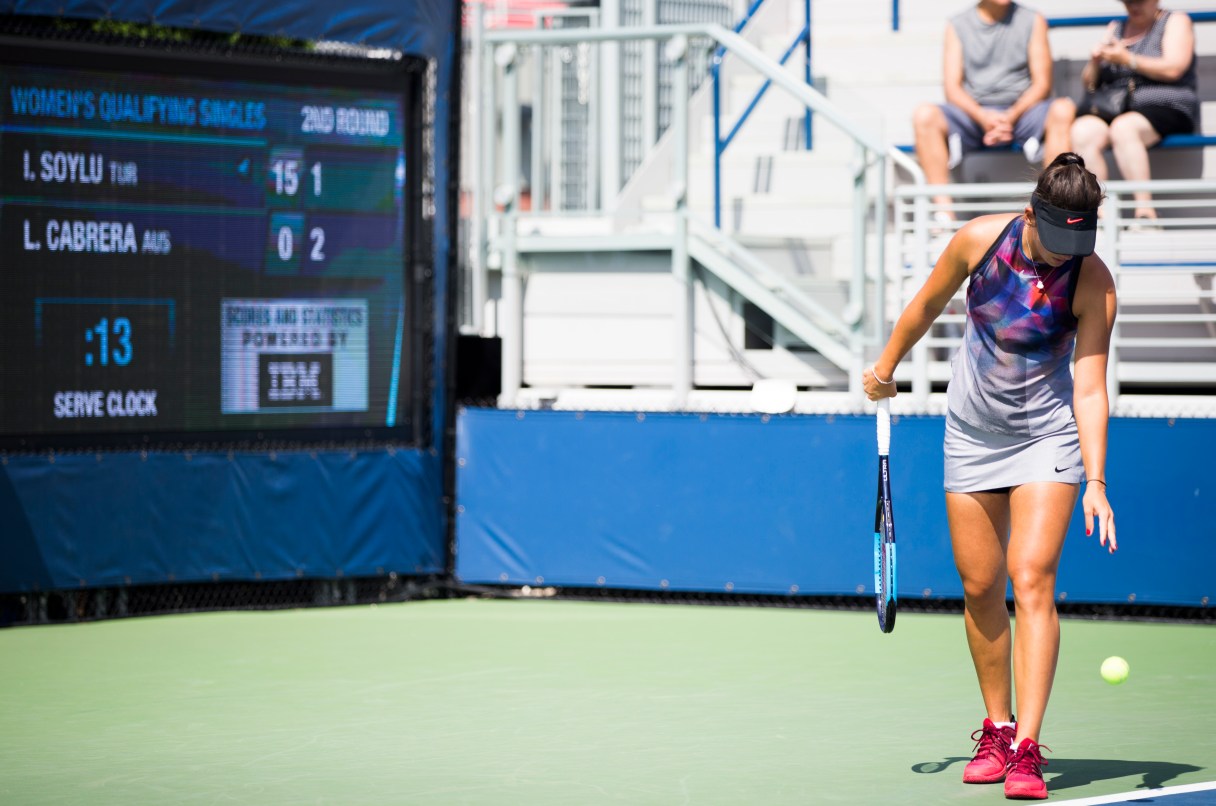
NEW YORK (AP) – Right there on Court 4’s electronic scoreboard at the U.S. Open, blue numbers counted down the 25 seconds allowed before a player was required to serve. When the readout dropped all the way to zero, the chair umpire announced a warning for a time violation.
This happened during the Grand Slam tournament’s second round of qualifying. Standing at courtside right then was Stacey Allaster, the U.S. Tennis Association’s chief executive for professional tennis, discussing that serve clock and other innovations such as in-match coaching being tested in qualifying this week.
If Allaster has her way, these changes could be used in the U.S. Open’s main draw next year. That means Rafael Nadal would need to abide by the 25-second limit between points. Serena Williams would be allowed to wander over near her coach to get advice. Roger Federer would get exactly 5 minutes to change his outfit between sets.
“What is this about? This isn’t what Stacey Allaster wants or USTA wants or what television wants. This is all about the fans. We’re in the business of promoting tennis and we have to stop looking inside, at what we like, and look at what fans want,” she said Thursday. “We have to, in order to be competitive with other sports, deliver the product as quickly, as consistently, as we can, to keep fans engaged. Particularly younger fans.”
The USTA could decide unilaterally to adopt some – or all – of these measures for its main event in 2018, but would prefer to do so in collaboration with the sport’s governing bodies. For now, Allaster is keeping tabs on how the experiment in qualifying goes, via data and feedback from players, coaches, chair umpires and other officials.