
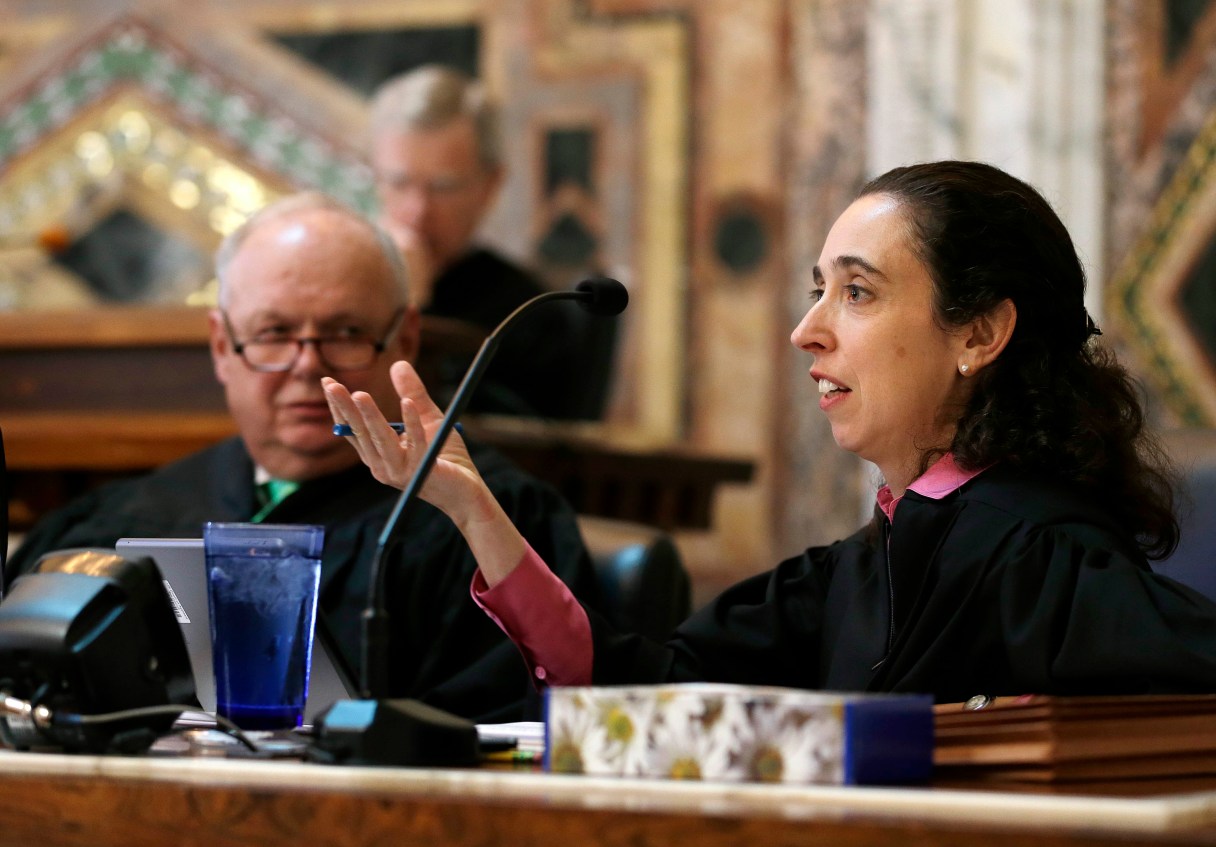
SAN FRANCISCO (AP) – Three judges on the San Francisco-based 9th Circuit Court of Appeals will decide as soon as Thursday whether to immediately reinstate President Donald Trump’s travel ban, which temporarily suspended the nation’s refugee program and immigration from seven mostly Muslim countries that have raised terrorism concerns. Here’s a look at their backgrounds, judicial decisions and questioning during arguments in the case this week:
WILLIAM CANBY
Canby rarely hears cases anymore. Now 85, he told The Associated Press two years ago that he felt sharp and healthy, but didn’t want to risk a job hazard that federal judges with lifetime appointments face: age-related mental decline. So it was unusual for the judge to hear oral arguments over the Trump travel ban.
Canby – a former U.S. Air Force lieutenant and Peace Corps worker in Africa who was appointed to the 9th Circuit by President Jimmy Carter in 1980 – is known to have a polite and respectful courtroom demeanor. He encourages attorneys to have interests outside the law and told a reporter in 2005 he was running two to three miles before starting his day. He has written extensively about Native American law. Among his more high-profile decisions was a 1988 ruling declaring the U.S. Army’s ban on gay soldiers unconstitutional and a 2000 decision that said the PGA Tour is covered by federal disability law and must provide a cart to golfer Casey Martin.
During oral arguments, he challenged the administration’s justification for the ban. Later, Canby appeared to come to the rescue of the attorney challenging the ban when another judge was grilling him about what evidence he had that the travel ban was motivated by anti-Muslim sentiment. Canby asked the attorney who had the legal burden of showing the likelihood of succeeding on their arguments in the case. The attorney responded that that burden was on the administration.