
Wednesday, November 11, 2026Nov 11

Armyworm invasion threatening southern Africa’s crops

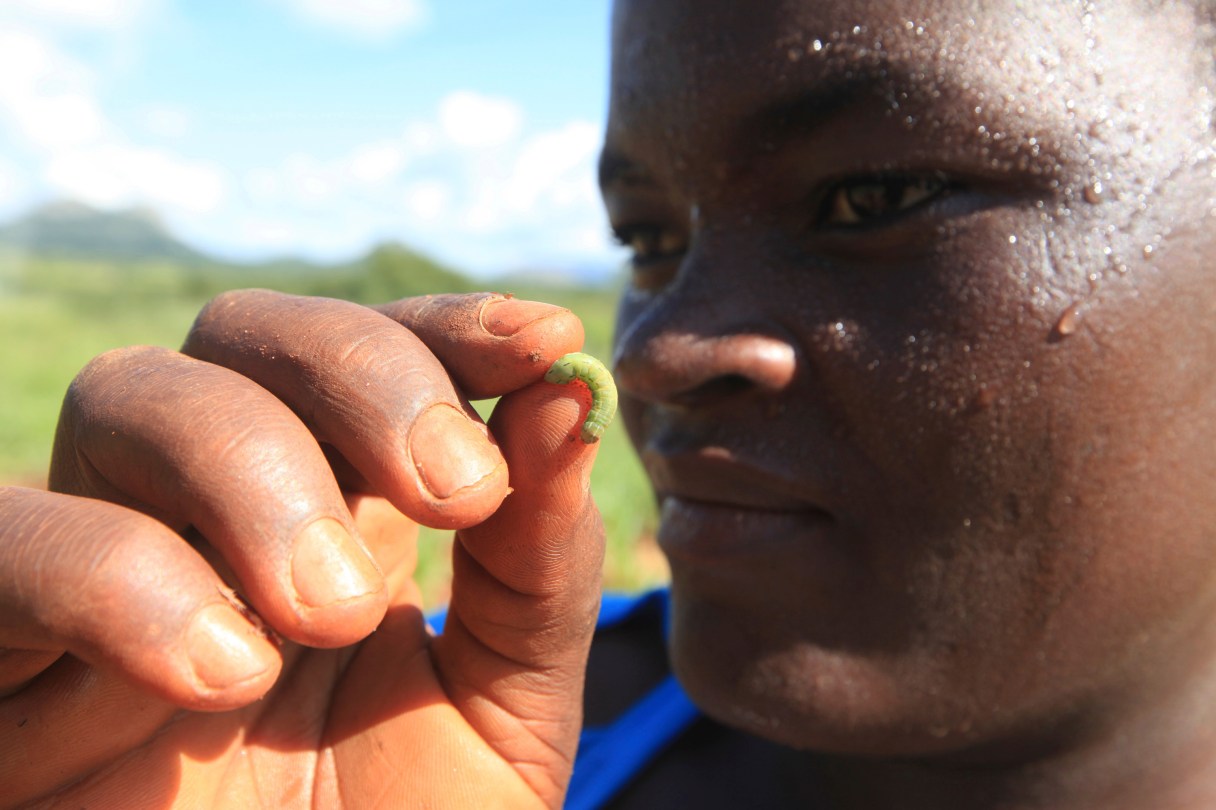
A woman holds an army worm she found feeding on her maize crop at a Farm on the outskirts of Harare, Tuesday, Feb. 14, 2017.  The U.N. Food and Agriculture Organization coordinator for the region David Phiri, warns that an invasion of armyworms is stripping Southern Africa of key food crops and could spread to other parts of the continent, during an emergency meeting Tuesday of 16 African nations. (AP Photo/Tsvangirayi Mukwazhi)
A woman holds an army worm she found feeding on her maize crop at a Farm on the outskirts of Harare, Tuesday, Feb. 14, 2017. The U.N. Food and Agriculture Organization coordinator for the region David Phiri, warns that an invasion of armyworms is stripping Southern Africa of key food crops and could spread to other parts of the continent, during an emergency meeting Tuesday of 16 African nations. (AP Photo/Tsvangirayi Mukwazhi) A woman holds an army worm she found feeding on her maize crop at a Farm on the outskirts of Harare, Tuesday, Feb. 14, 2017. The U.N. Food and Agriculture Organization coordinator for the region David Phiri, warns that an invasion of armyworms is stripping Southern Africa of key food crops and could spread to other parts of the continent, during an emergency meeting Tuesday of 16 African nations. (AP Photo/Tsvangirayi Mukwazhi)

HARARE, Zimbabwe (AP) – An invasion of armyworms is stripping southern Africa of key food crops and could spread to other parts of the continent, experts warned Tuesday at an emergency meeting of 16 African nations.

South Africa, Zimbabwe, Malawi and Zambia are among the countries where the fall armyworm has invaded fields of maize, a staple crop throughout the region.

The fall armyworm is a new threat in southern Africa. It is mostly associated with the Americas, where it has been since 1957, said David Phiri, the U.N. Food and Agriculture Organization coordinator for the region.

The pest is devastating to crops and so far impossible to eradicate.

“They have not managed to control it because it keeps evolving,” Phiri said. “But we have to find a plan for managing it.”