
Thursday, November 12, 2026Nov 12

Critics: Trump should not ignore domestic terrorist threats

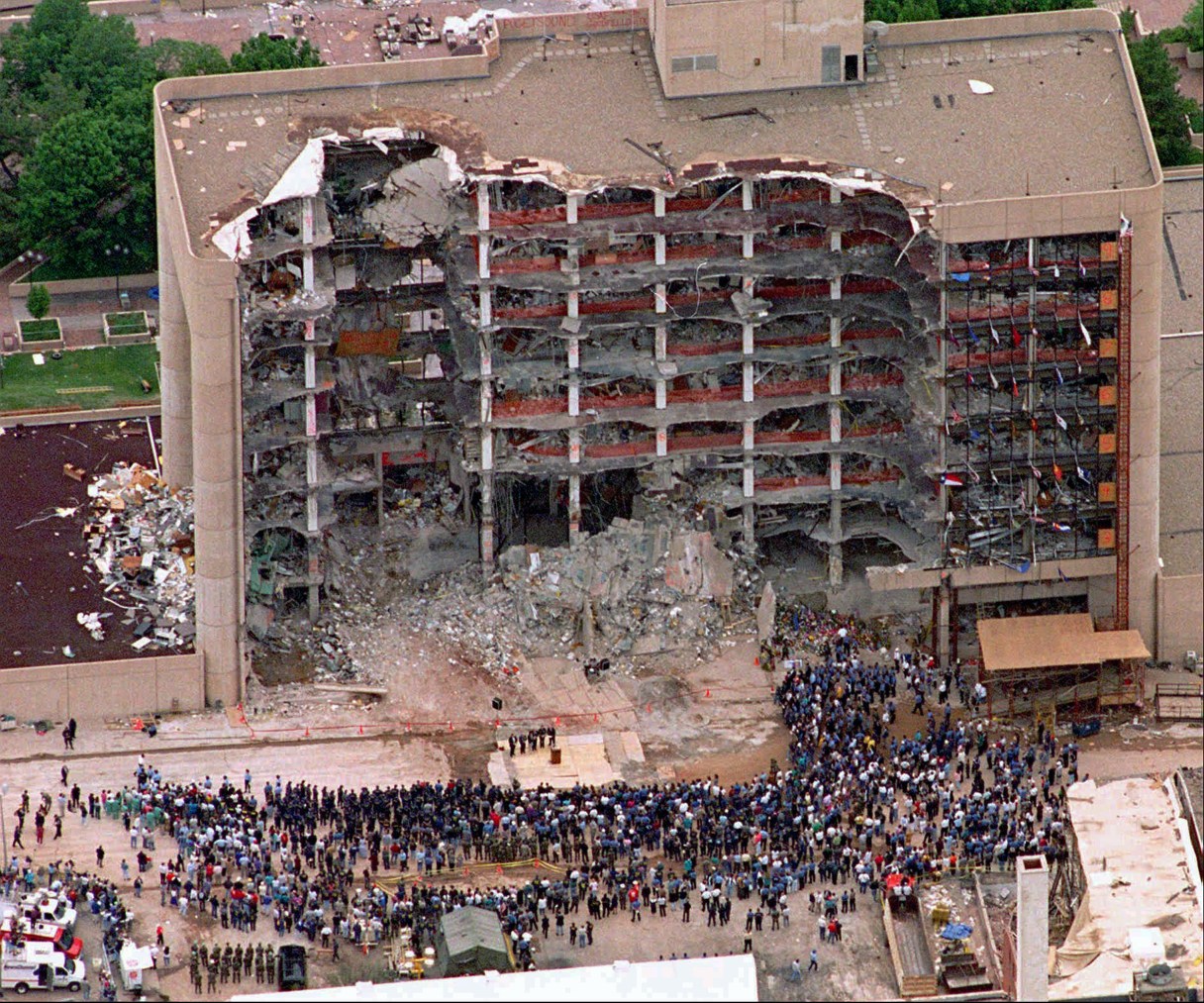
FILE - In this May 5, 1995 file photo, a large group of search and rescue crew attends a memorial service in front of the Alfred P. Murrah Federal Building in Oklahoma City. In 1995, domestic terrorism seemed to be the most immediate threat to Americans. Now President Donald Trump and his supporters say the nation’s greatest security risk lies in attackers who potentially sneak into the U.S. from abroad. But a list of worldwide attacks recently released by the administration left off many that were carried out by right-wing extremists and white supremacists. (AP Photo/Bill Waugh, File)
FILE - In this May 5, 1995 file photo, a large group of search and rescue crew attends a memorial service in front of the Alfred P. Murrah Federal Building in Oklahoma City. In 1995, domestic terrorism seemed to be the most immediate threat to Americans. Now President Donald Trump and his supporters say the nation’s greatest security risk lies in attackers who potentially sneak into the U.S. from abroad. But a list of worldwide attacks recently released by the administration left off many that were carried out by right-wing extremists and white supremacists. (AP Photo/Bill Waugh, File) FILE - In this May 5, 1995 file photo, a large group of search and rescue crew attends a memorial service in front of the Alfred P. Murrah Federal Building in Oklahoma City. In 1995, domestic terrorism seemed to be the most immediate threat to Americans. Now President Donald Trump and his supporters say the nation’s greatest security risk lies in attackers who potentially sneak into the U.S. from abroad. But a list of worldwide attacks recently released by the administration left off many that were carried out by right-wing extremists and white supremacists. (AP Photo/Bill Waugh, File)

OKLAHOMA CITY (AP) – Bud Welch knows something about the human cost of terrorism. His 23-year-old daughter was killed when a rental truck packed with explosives destroyed the Oklahoma City federal building.

That was in 1995, when domestic terrorism seemed to be the nation’s most immediate security threat. Now President Donald Trump sees the greatest risk in potential attackers who sneak into the U.S. from abroad. But Welch and others say the administration can’t ignore threats from home.

“ISIS, to me, is really not a hell of a lot different than the militia movement in the U.S.,” he said, referring to anti-government groups that were provoked by deadly standoffs with federal agents in Ruby Ridge, Idaho, and Waco, Texas – two flashpoints cited by Oklahoma City bomber Timothy McVeigh.

A list of worldwide attacks recently released by Trump’s administration left off many that were carried out by right-wing extremists and white supremacists. And organizations that track terrorist and hate groups say the government focuses too narrowly on threats from the outside instead of adopting a broader approach.

In a move that the administration described as an anti-terrorism measure, Trump last month suspended the nation’s refugee program and banned travel from seven predominantly Muslim nations, although a federal court soon halted his executive order.