
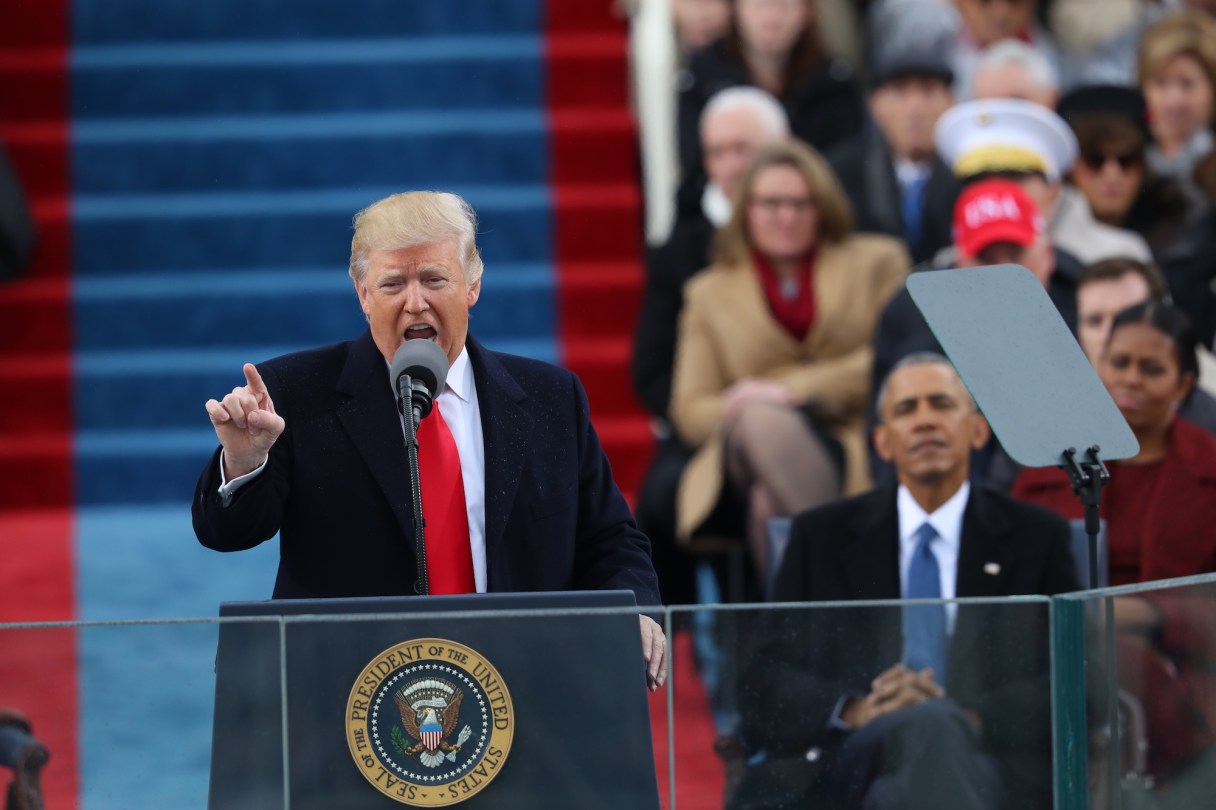
WASHINGTON – Donald John Trump intends to govern as the same fiercely angry man who inspired the discontented but aroused the worries and fears of so many other Americans.
In his inaugural address, he offered no outreach to those who had opposed him. There was no acknowledgment of the achievements of any of his predecessors and he spoke as if he were taking over a country on the verge of ruin. He blamed an ill-defined “establishment” for all of the nation’s troubles, and pretended that the progress of the last eight years, from the Great Recession to recovery, had never occurred.
Instead, he put forward an unrelievedly bleak view of current conditions, casting the richest nation on Earth as a victim of the rest of the world. “We must protect our borders from the ravages of other countries making our products, stealing our companies, and destroying our jobs,” he said. He would rescue us from this horror. “This American carnage,” he said, “stops right here and stops right now.”
Trump invoked a radical nationalism not heard from any president of either party in the post-World War II era. His doctrine owes far more to the ideology of European far-right movements favored by his senior adviser Steve Bannon than to the views of American presidents from Harry Truman, Dwight Eisenhower and John F. Kennedy to Ronald Reagan, both George Bushes and Barack Obama.
“We will seek friendship and goodwill with the nations of the world,” Trump said, “but we do so with the understanding that it is the right of all nations to put their own interests first.” Some might see this as refreshing honesty about the true nature of foreign relations. But it is hard to escape that this sentiment suggests a man prepared to destroy international systems, built in large part by the United States, that have, on the whole, protected us and advanced our values.