
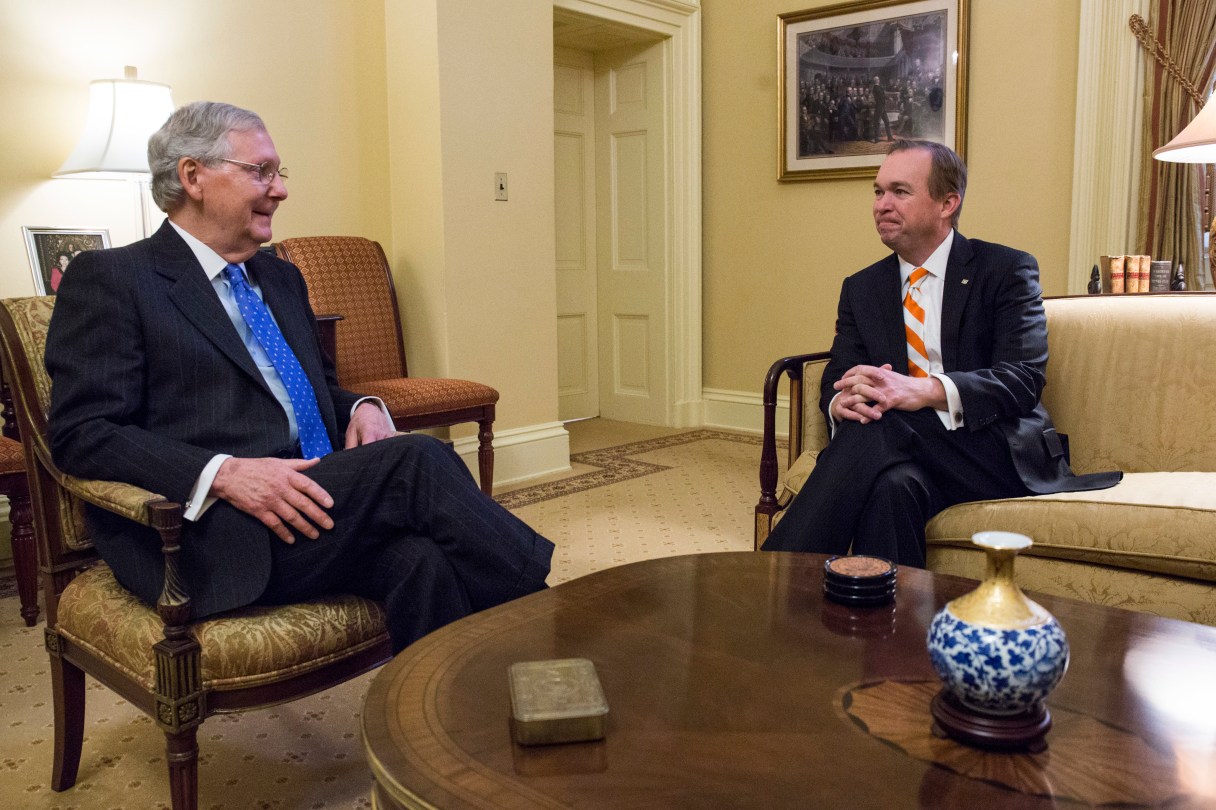
WASHINGTON (AP) – Rep. Mick Mulvaney, President Donald Trump’s staunchly conservative choice to lead the White House budget office, faces a Senate panel on Tuesday where lawmakers will seek clues on the new administration’s plans for tackling intractable budget deficits.
The South Carolina Republican will appear as the Congressional Budget Office reveals new estimates about the deficits the administration will inherit. The government ran a $587 billion deficit last year and that level of red ink is predicted to rise steadily.
Mulvaney was elected in the 2010 tea party wave and is among the purest of deficits hawks on Capitol Hill. He’s been a supporter of the House GOP’s controversial plan to cut back Medicare by turning it into a voucher-like program for future retirees. Trump opposes the idea and has made it clear he doesn’t support dealing now with the program’s financial shortfalls.
Mulvaney is also sure to face questions from Democrats on his failure to pay more than $15,000 in payroll taxes for a household worker more than a decade ago. The lapse doesn’t appear likely to derail his nomination, however. Tax issues failed to derail some past Cabinet nominees, including former Treasury Secretary Tim Geithner, a Democrat, but have claimed others like former Sen. Tom Daschle.
Trump’s budget goals aren’t known, though he’s promised sizable increases for the Pentagon and repealing the Affordable Care Act, including its tax increases on the wealthy. The new administration has also endorsed a controversial proposal to cut the Medicaid program for the poor, elderly, and disabled, and turning its funding into a block grant given to the states.
It’s also unclear if Trump has the stomach for reprising past budget controversies such as cutting Amtrak subsidies, eliminating funding for the National Endowment for the Arts, or cutting law enforcement grants to local governments.
Trump on Monday signed an order imposing a hiring freeze at the federal government, however, and Press Secretary Sean Spicer on Monday said: “We’ve got to look at how we’re spending the American people’s tax money.”
At the budget office, Mulvaney will be responsible for drawing up Trump’s budget submission, likely to come in April. Then would come a budget debate in the House and Senate and follow-up legislation to fund agency budgets, reform the tax code, and perhaps cut benefit programs like Medicaid. Actually balancing the budget, as Republicans have promised in past years, is highly unlikely, given the size of the cuts that would be required.