

Marion van Binsbergen, a student in social work, was 20 in 1941 when she had her first encounter with Nazi authorities in her native Amsterdam. Although not actively involved, she was rounded up with students who were printing banned materials. Six months of jail time ensued during which she was tortured.
Continuing her studies following her release, Marion was profoundly shocked during the following spring of 1942 when she observed Jewish children being forcibly removed from a home and thrown into the back of a truck. She determined at that point that she would become a rescuer of such children.
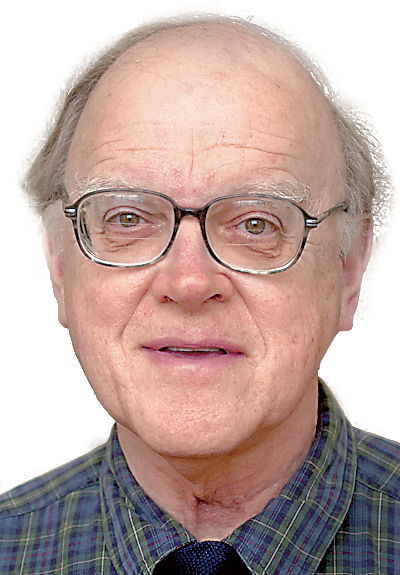 Dr. Clif Cleaveland
Nazi forces had invaded the Netherlands in May 1940 despite that nation’s declaration of neutrality. The government surrendered five days later. At the outbreak of the war, there were 140,000 Dutch Jews. Twenty-one thousand survived the war. More than 100,000 were deported to death camps where only 5,000 survived.
Marion, a gentile, carefully concealed her work within a network of rescuers of Dutch Jews. Neither her family nor close friends were aware of her activity, which carried the risk of immediate execution.
On one occasion, Marion secretly entered a medical clinic at night to abduct a Jewish child who would have been taken by the Nazis upon her discharge from medical care. She bicycled the child to safety. On another occasion, she was given a newborn by parents who would soon be arrested and murdered. Pretending the baby was her own, she took it by train to an adoptive family who raised the child.
She sheltered other children, claiming them as her own. Sometimes she functioned as a link in a chain that moved Jewish children to safety. She assisted with the counterfeiting of identity papers and ration books for other Jews in hiding.
Her most dangerous assignment began in late 1942. She was asked to shelter a Jewish man and his three young children. This necessitated Marion’s relocation to a cottage on an estate several miles outside Amsterdam. A concealed trapdoor in a living area led to a cramped space beneath. The family could disappear into their shelter in a matter of seconds. The cottage became Marion’s base of operations.
One night in 1944, three Nazi officers, accompanied by a collaborating Dutch policeman, pounded on the door. The family quickly disappeared into their shelter before Marion opened the door. A subsequent search by the officers yielded nothing. Upon the departure of the foursome, the family emerged from their refuge whereupon the Dutch policeman suddenly burst into the cottage. Arrest meant death. Marion pulled a pistol from a hiding place and killed the policeman with three shots.
The next challenge was disposing of the corpse. Ignoring the nighttime curfew, Marion bicycled to the shop of a baker who was part of the network of rescuers. She arranged for the baker to drive his van to the cottage early the following morning to collect the body. The next stop was a cooperative undertaker who hid the dead policeman in a coffin containing another body scheduled for burial. Nazis never solved the mystery of the missing policeman.
The Dutch were liberated in the spring of 1945. By that time, Marion had saved the lives of an estimated 150 Jewish children and adults.
Post-war, Marion worked for two years for a United Nations agency that dealt with resettlement of refugees. She met and married a former U.S. Army officer, Anton Pritchard. Upon immigrating to America, the Pritchards settled in Vermont, where they raised three children. Marion pursued a career as a psychoanalyst.
In 1981, Marion was honored by Yad Vashem, Israel’s memorial to the Holocaust, as one of the Righteous Among Nations, a distinction for gentiles who rescued Jews. In 1996, the University of Michigan awarded her its Wallenberg Medal for her humanitarian work. The video of her acceptance speech may be seen at www.wall enberg.umich.edu/medal-recipients/1996- marion-pritchard. She appeared as a slender, gray-haired woman who calmly recounted her story and the stories of other Jews and gentiles who collaborated to save lives during murderous times. She radiated both strength and gentleness.
This astonishing woman died Dec. 11, 2016.
People who commit vile and violent acts dominate our news. Hate groups here and around the world demonize people who are different from them. Brutal governments wage genocide against people because of their race, ethnicity or religion. We can become numbed by atrocities. Scientists search for explanations of such sociopathic behavior.
The life of Marion van Binsbergen Pritchard reminds us of a powerful strain of goodness that flows within our species. Altruism linked with courage forms a bulwark against brutality and despair. Let us celebrate our saints.
Contact Clif Cleaveland at ccleaveland@timesfreepress.com.