
Friday, November 6, 2026Nov 6

This story is free to read.

US defenses get pressured by North Korean missile advances

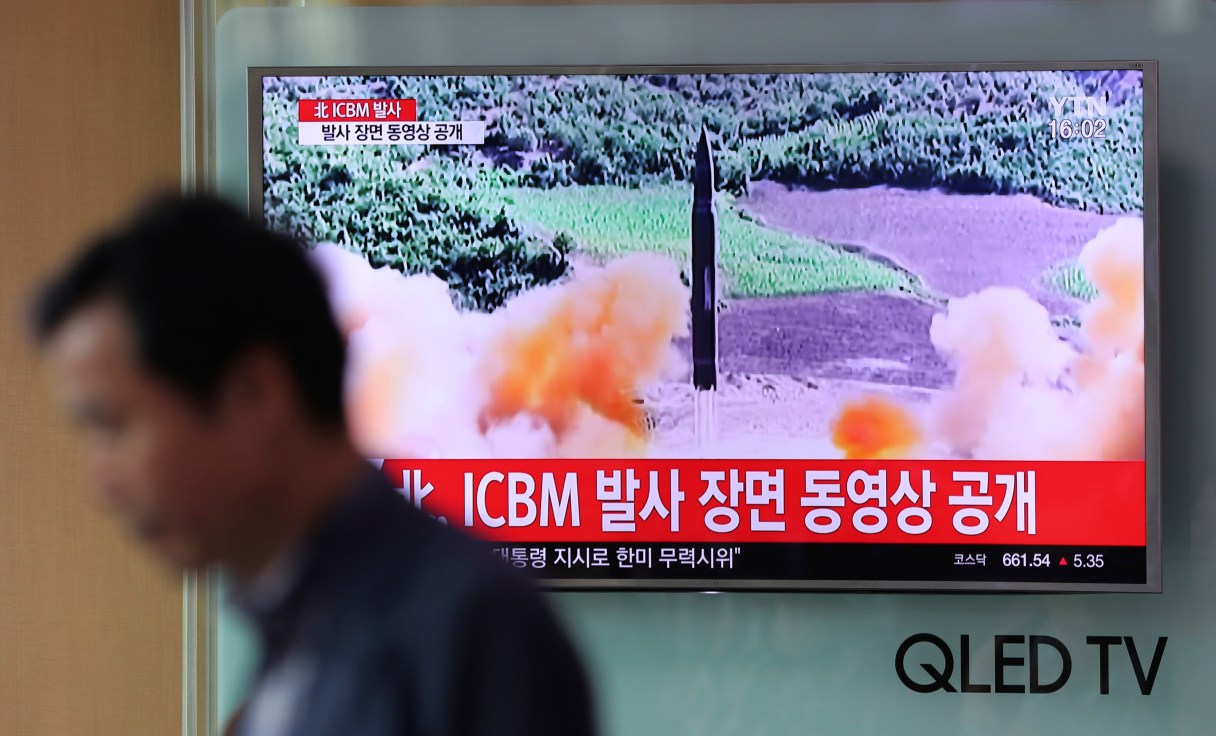
A man walks by a TV screen showing a local news program reporting about North Korea's missile firing at Seoul Train Station in Seoul, South Korea, Wednesday, July 5, 2017. North Korea’s newly demonstrated missile muscle puts Alaska within range of potential attack and stresses the Pentagon’s missile defenses like never before. Even more worrisome, it may be only a matter of time before North Korea mates an even longer-range ICBM with a nuclear warhead, putting all of the U.S. at risk.  (AP Photo/Lee Jin-man)
A man walks by a TV screen showing a local news program reporting about North Korea's missile firing at Seoul Train Station in Seoul, South Korea, Wednesday, July 5, 2017. North Korea’s newly demonstrated missile muscle puts Alaska within range of potential attack and stresses the Pentagon’s missile defenses like never before. Even more worrisome, it may be only a matter of time before North Korea mates an even longer-range ICBM with a nuclear warhead, putting all of the U.S. at risk. (AP Photo/Lee Jin-man) A man walks by a TV screen showing a local news program reporting about North Korea's missile firing at Seoul Train Station in Seoul, South Korea, Wednesday, July 5, 2017. North Korea’s newly demonstrated missile muscle puts Alaska within range of potential attack and stresses the Pentagon’s missile defenses like never before. Even more worrisome, it may be only a matter of time before North Korea mates an even longer-range ICBM with a nuclear warhead, putting all of the U.S. at risk. (AP Photo/Lee Jin-man)

WASHINGTON (AP) – North Korea’s newly demonstrated missile ability stresses the Pentagon’s missile defenses like never before. It puts their missiles within range of Alaska.

Even more worrisome, it may be only a matter of time before North Korea mates an even longer-range intercontinental ballistic missile with a nuclear warhead, putting all of the United States at risk.

The Pentagon has spent tens of billions to develop what it calls a limited defense against missiles capable of reaching U.S. soil. The system has never faced combat or been fully tested. The system succeeded May 30 in its first attempted intercept of a mock ICBM, but it hasn’t faced more realistic conditions.