
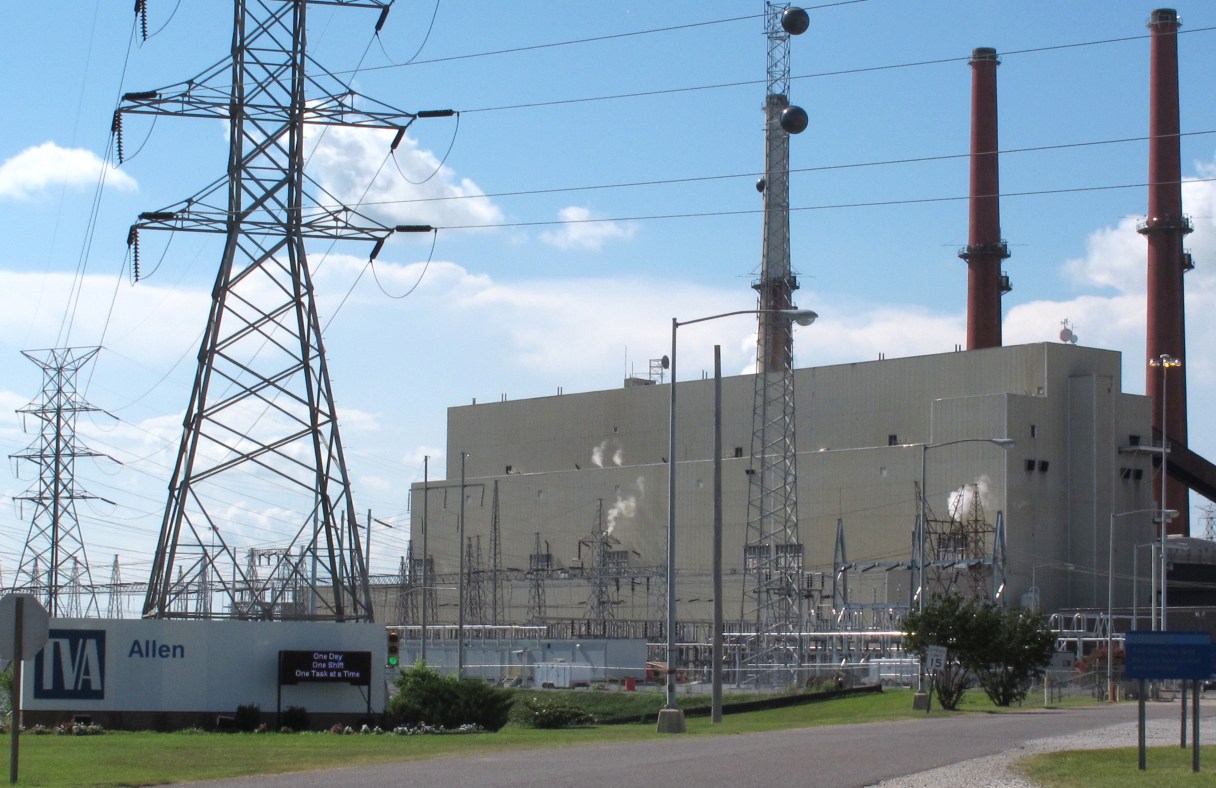
MEMPHIS, Tenn. (AP) – Memphis residents are as proud of their sweet-tasting water as their barbecue and blues. The water – drawn from the Memphis Sand aquifer beneath this Tennessee city – is so revered that a city utility called it a “community treasure” in an online report on its cleanliness.
So alarms went off after state environmental officials and the Tennessee Valley Authority revealed this week that high levels of arsenic and lead had been found in groundwater beneath the coal-fired Allen Fossil Plant in southwest Memphis. The toxins were detected in wells where pollution is monitored from ponds that hold coal ash – the dirty byproduct left from burning coal to generate electricity.
One well had arsenic at levels more than 300 times the federal drinking-water standard. The monitoring wells run about 50 feet (15 meters) deep and are about a half-mile (.8 kilometer) from far deeper wells drilled by the TVA directly into the Memphis Sand aquifer. Next year, the TVA plans to pump 3.5 million gallons (13.2 million liters) of water out of the aquifer per day to cool a natural gas power plant that is replacing the aging Allen coal plant.
A layer of clay lies between the groundwater and the aquifer. This prompted the Tennessee Department of Environment and Conservation, through spokesman Eric Ward, to state that it is “confident the contaminants found in TVA wells at the Allen Fossil Plant are not impacting drinking water.”
Nonetheless, the department has asked Memphis Light, Gas & Water – the city’s water utility – to test treated drinking water. It also told the TVA, which has a history of difficulties handling coal ash, to pinpoint where the toxins came from.