
Saturday, November 7, 2026Nov 7

This story is free to read.

World’s plastic waste could bury Manhattan 2 miles deep

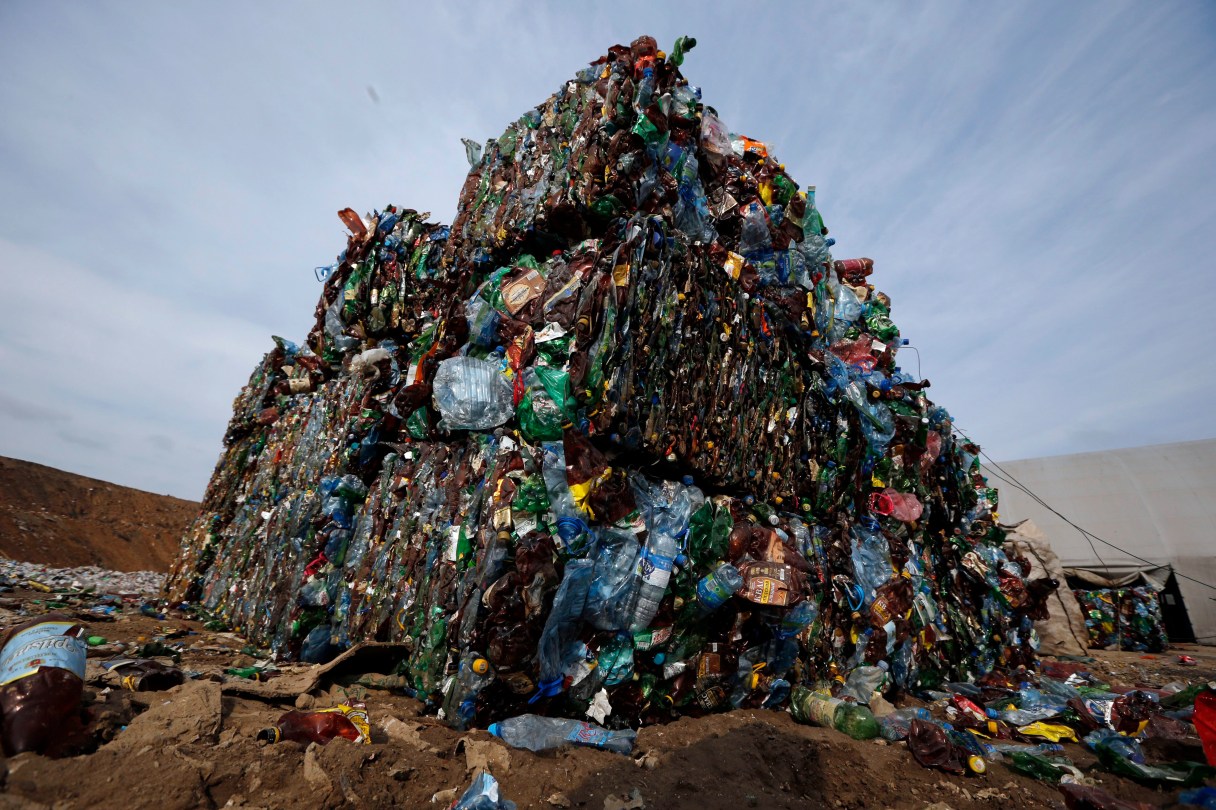
FILE - In this March 12, 2015 file photo, plastic trash is compacted into bales ready for further processing at the waste processing dump on the outskirts of Minsk, Belarus. A new massive study finds that production of plastic and the hard-to-breakdown synthetic waste is soaring in huge numbers. The study says since 1950, industry has made more than 9 billion tons of plastics. That’s enough to cover the entire country of Argentina ankle deep in the stuff. (AP Photo/Sergei Grits)
FILE - In this March 12, 2015 file photo, plastic trash is compacted into bales ready for further processing at the waste processing dump on the outskirts of Minsk, Belarus. A new massive study finds that production of plastic and the hard-to-breakdown synthetic waste is soaring in huge numbers. The study says since 1950, industry has made more than 9 billion tons of plastics. That’s enough to cover the entire country of Argentina ankle deep in the stuff. (AP Photo/Sergei Grits) FILE - In this March 12, 2015 file photo, plastic trash is compacted into bales ready for further processing at the waste processing dump on the outskirts of Minsk, Belarus. A new massive study finds that production of plastic and the hard-to-breakdown synthetic waste is soaring in huge numbers. The study says since 1950, industry has made more than 9 billion tons of plastics. That’s enough to cover the entire country of Argentina ankle deep in the stuff. (AP Photo/Sergei Grits)

WASHINGTON (AP) – A cradle-to-grave study of global plastics finds industry has made more than 9 billion tons of plastic since 1950.

The research shows there’s enough left over to bury Manhattan under more than two miles of trash.

Plastics don’t break down like other man-made materials, so three-quarters of the stuff ends up as waste in landfills, littered on land and floating in oceans, lakes and rivers. The study calculates that only 9 percent of plastic waste ends up recycled.

Study lead author Roland Geyer at the University of California, Santa Barbara, says the world is fast becoming a plastic planet. The study was published Wednesday by the journal Science Advances.