
Monday, November 16, 2026Nov 16

Supreme Court rulings reshape penalties for young offenders

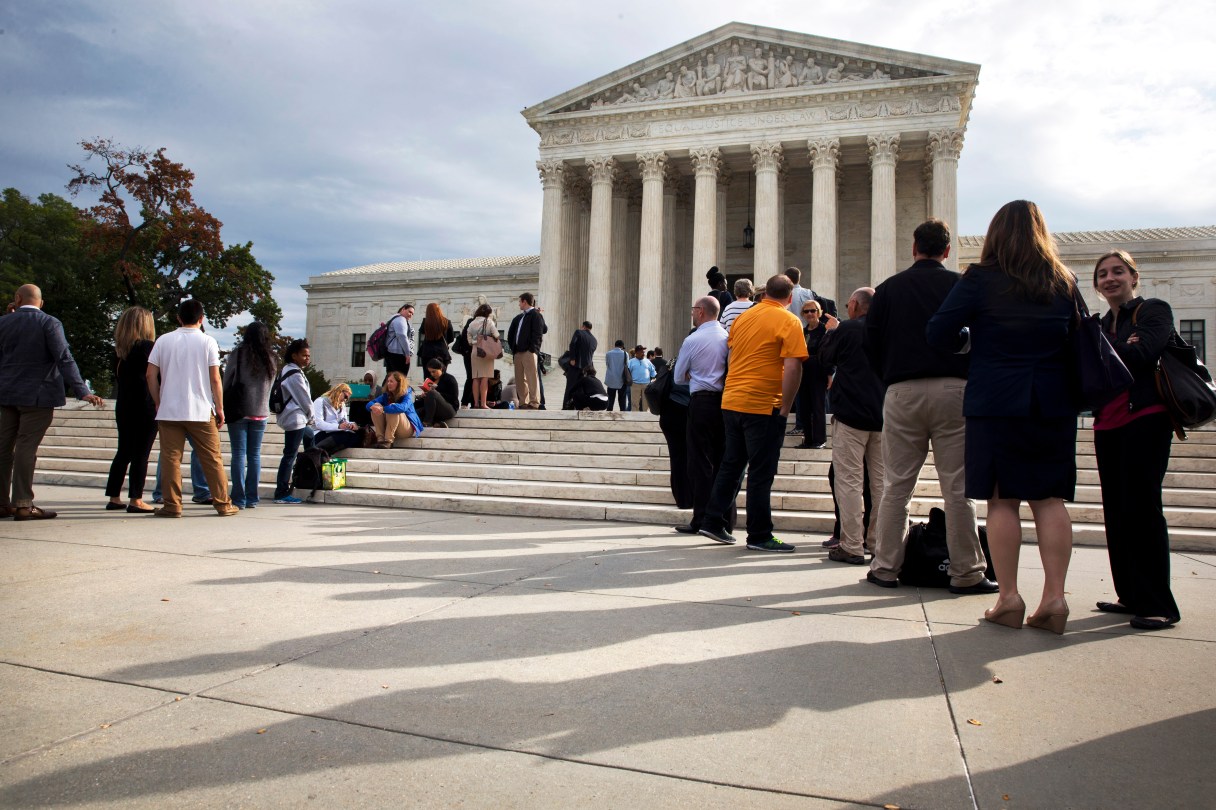
ADVANCE FOR USE MONDAY, JULY 31, 2017 AND THEREAFTER-FILE - In this Tuesday, Oct. 13, 2015 file photo, people line up outside of the Supreme Court in Washington as the justices began to discuss sentences for juvenile prison 'lifers.' In the Monday, Jan. 25, 2016 decision for Montgomery v. Louisiana, the court ruled that people serving mandatory life-without-parole terms for murders they committed as teenagers must have a chance to seek their freedom. The plaintiff, Henry Montgomery, recently learned he will get a chance at parole, 54 years after the killing.
 (AP Photo/Jacquelyn Martin, File)
ADVANCE FOR USE MONDAY, JULY 31, 2017 AND THEREAFTER-FILE - In this Tuesday, Oct. 13, 2015 file photo, people line up outside of the Supreme Court in Washington as the justices began to discuss sentences for juvenile prison 'lifers.' In the Monday, Jan. 25, 2016 decision for Montgomery v. Louisiana, the court ruled that people serving mandatory life-without-parole terms for murders they committed as teenagers must have a chance to seek their freedom. The plaintiff, Henry Montgomery, recently learned he will get a chance at parole, 54 years after the killing. (AP Photo/Jacquelyn Martin, File)

Among the U.S. Supreme Court’s many rulings on juveniles and crime, several big cases over the last dozen years have narrowed the instances in which those who commit offenses under age 18 can be subject to the harshest penalties. A look at these recent cases:

___

ROPER V. SIMMONS

This decision banned the death penalty for those under the age of 18. Prior to the ruling, 16- and 17-year-olds were eligible for capital punishment in some states.

THE CASE: