
Thursday, October 29, 2026Oct 29

This story is free to read.

Consumers increased borrowing by smallest amount since 2011

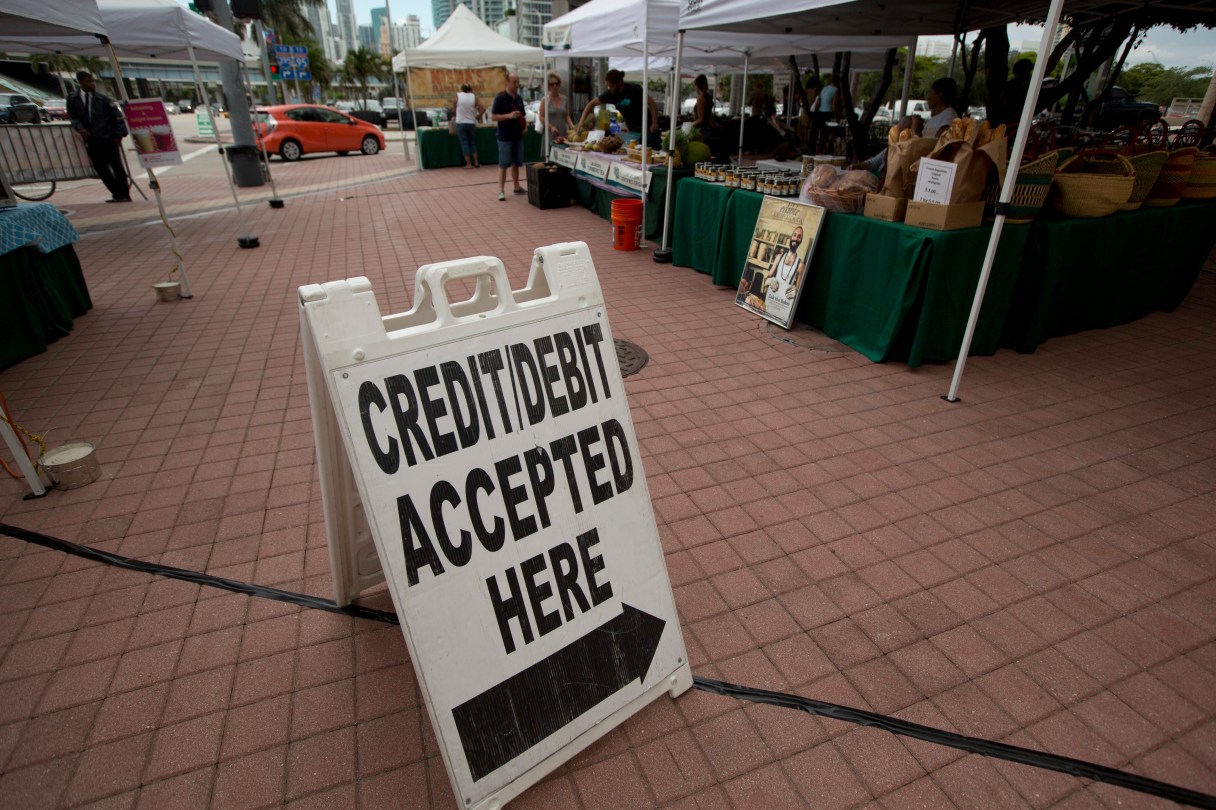
FILE - In this June 8, 2015, file photo, credit card customers are directed to a pay station at the green market in downtown Miami. On Wednesday, June 7, 2017, the Federal Reserve releases its April report on consumer borrowing. (AP Photo/J Pat Carter, File)
FILE - In this June 8, 2015, file photo, credit card customers are directed to a pay station at the green market in downtown Miami. On Wednesday, June 7, 2017, the Federal Reserve releases its April report on consumer borrowing. (AP Photo/J Pat Carter, File) FILE - In this June 8, 2015, file photo, credit card customers are directed to a pay station at the green market in downtown Miami. On Wednesday, June 7, 2017, the Federal Reserve releases its April report on consumer borrowing. (AP Photo/J Pat Carter, File)

WASHINGTON (AP) – American consumers increased their borrowing at the slowest pace in April than they have in almost six years. Credit card spending growth slowed, while borrowing gains for school and autos also cooled.

The Federal Reserve reports that total consumer borrowing rose $8.2 billion, or 2.6 percent, to $3.8 trillion. It was the smallest percentage increase since borrowing declined 3.5 percent in August 2011.

The category that includes student and auto loans increased $6.7 billion, or 2.9 percent – also the smallest increase in that category since August 2011.

Credit card borrowing increased $1.5 billion, or 1.8 percent.

Consumer borrowing is closely watched by economists to determine consumers’ willingness to take on more debt to support their spending. Consumer spending accounts for 70 percent of U.S. economic activity.