
Safety tips to bear in mind
Here are some tips for avoiding problems with bears when enjoying the outdoors or for homeowners in rural areas:› Look large and make a lot of noise and back slowly away should you encounter a bear.› Never run from a bear.› Do not purposefully feed bears.› Store garbage in bear-proof containers or in a manner that is inaccessible to bears.› Do not feed birds between April and January, when bears are most active.› Remove uneaten pet food from outside areas or feed pets indoors.› Do not add greasy foods to your compost piles, or compost in bear-proof containers.› Keep cooking grills clean and stored indoors when not in use.› Report problem bears or any odd behavior to your regional TWRA office.› Visit Bebearaware.org, a national site dedicated to reducing human-bear conflicts.To report a potentially dangerous bear in Southeast Tennessee, contact the TWRA’s Region III office at 800-241-0767.Source: Tennessee Wildlife Resources Agency
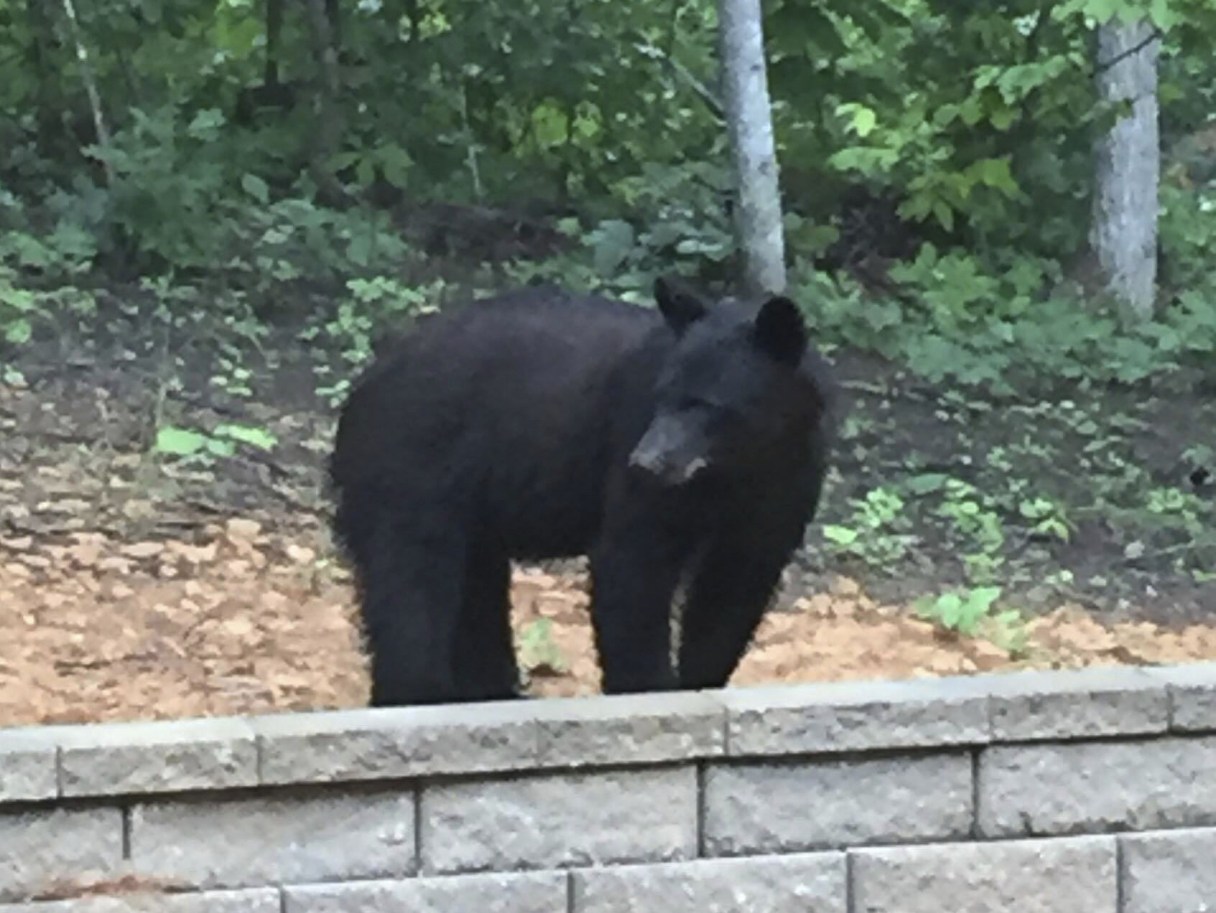
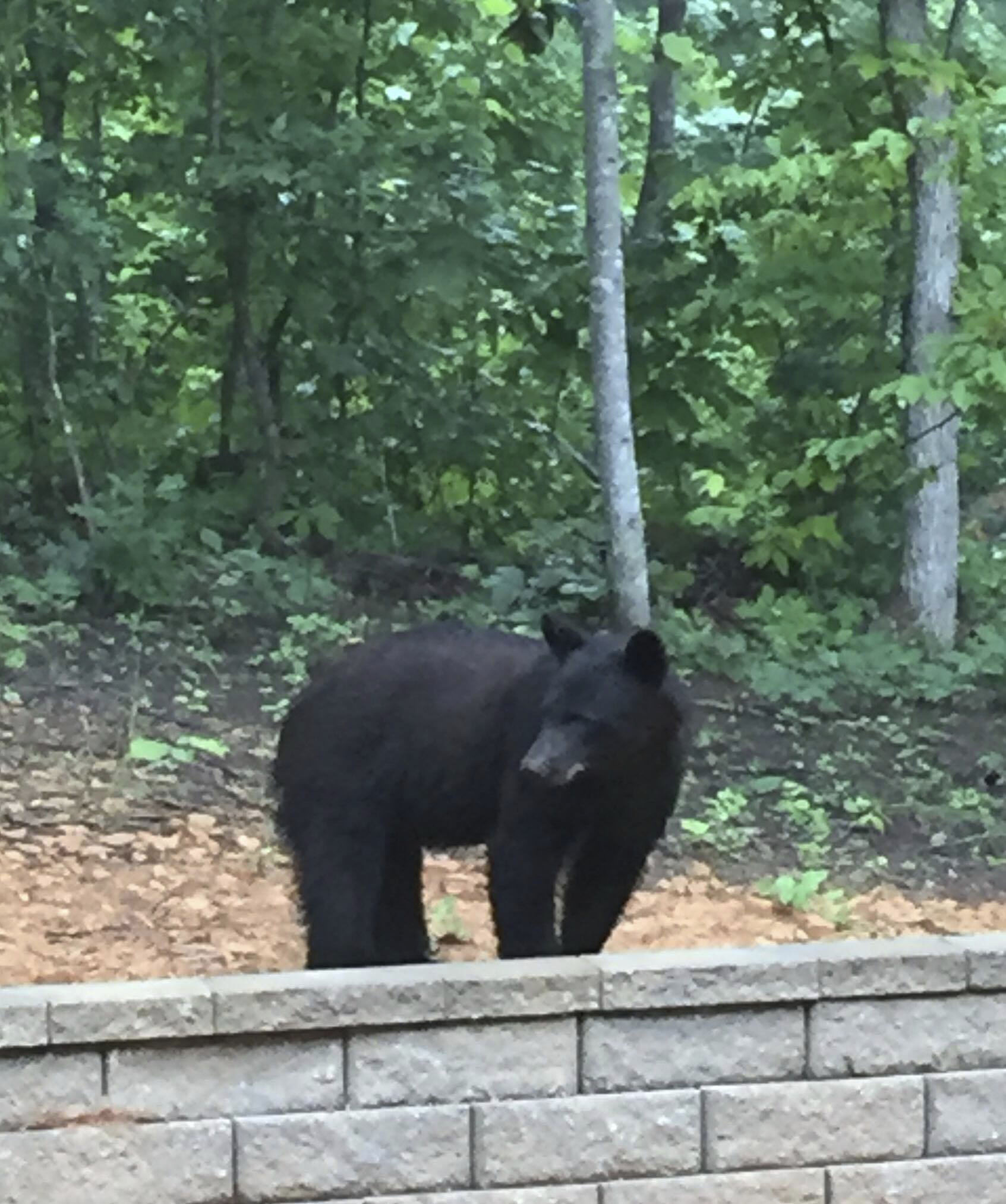 An Apison-area reader who asked not to be named shot this photo of a black bear in the backyard of her home near Apison Elementary School around 8:30 a.m. May 30. The sighting was the second reported to TWRA in the East Hamilton area during the month of May. (Contributed photo)
Less than two weeks after Collegedale Police responded to reports of a bear near Imagination Station, a second bear was spotted last week in the backyard of an Apison homeowner off East Brainerd Road.
The sightings, on May 18 and 30 respectively, have been something of a novelty for community members, who rushed to Collegedale City Hall for updates, local officials said. Tennessee Wildlife Resources Agency biologist Ben Layton said there’s nothing unusual about a bear sighting this time of year.
Every year, TWRA receives about six to eight reports of bears spotted in Hamilton County, Layton estimated. Most of those calls come in the spring, he said, which is when young bears leave their mothers to explore new territory in search of food.
Since many of the mammals emerge from forests framing the eastern border of Tennessee then head westward, Layton said sightings are expected to be more frequent in the eastern part of Hamilton County, up to the Tennessee River, than in the rest of the county.