
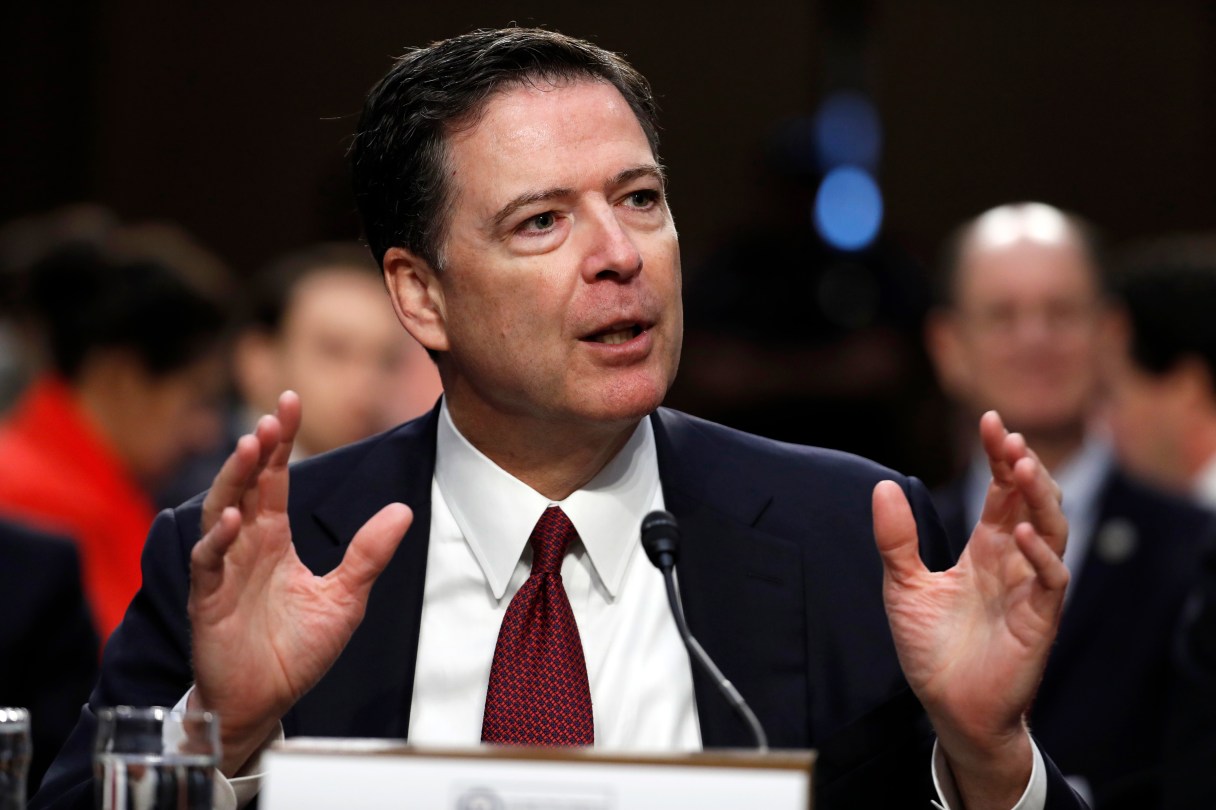
WASHINGTON (AP) – If prosecutors want the building blocks for a claim that President Donald Trump interfered with a federal investigation, legal experts say fired FBI Director James Comey has handed those over by recounting details of interactions that could show the president intended to obstruct justice.
In riveting detail, Comey this week has revealed conversations with Trump that include the president saying he hoped Comey could let go of the FBI’s investigation of a former national security adviser. That’s coupled with Comey’s statement Thursday to a Senate panel that he believes Trump fired him in May to alter the bureau’s investigation of Russia’s role in the 2016 election.
But proving obstruction of justice is difficult even in ordinary circumstances. That’s because a key element in such cases is knowing the intent of a suspect, confessions are rare, and words that seem clear to one person could mean something else to another. Moreover, political and other legal factors decidedly weigh in Trump’s favor.
An experienced former federal prosecutor himself, Comey refused to say whether he thinks Trump broke the law. He twice said that’s up to Special Counsel Robert Mueller to determine.
“That’s Bob Mueller’s job to sort that out,” he said.