
Friday, November 6, 2026Nov 6

This story is free to read.

US bucks trend amid increases for clean energy research

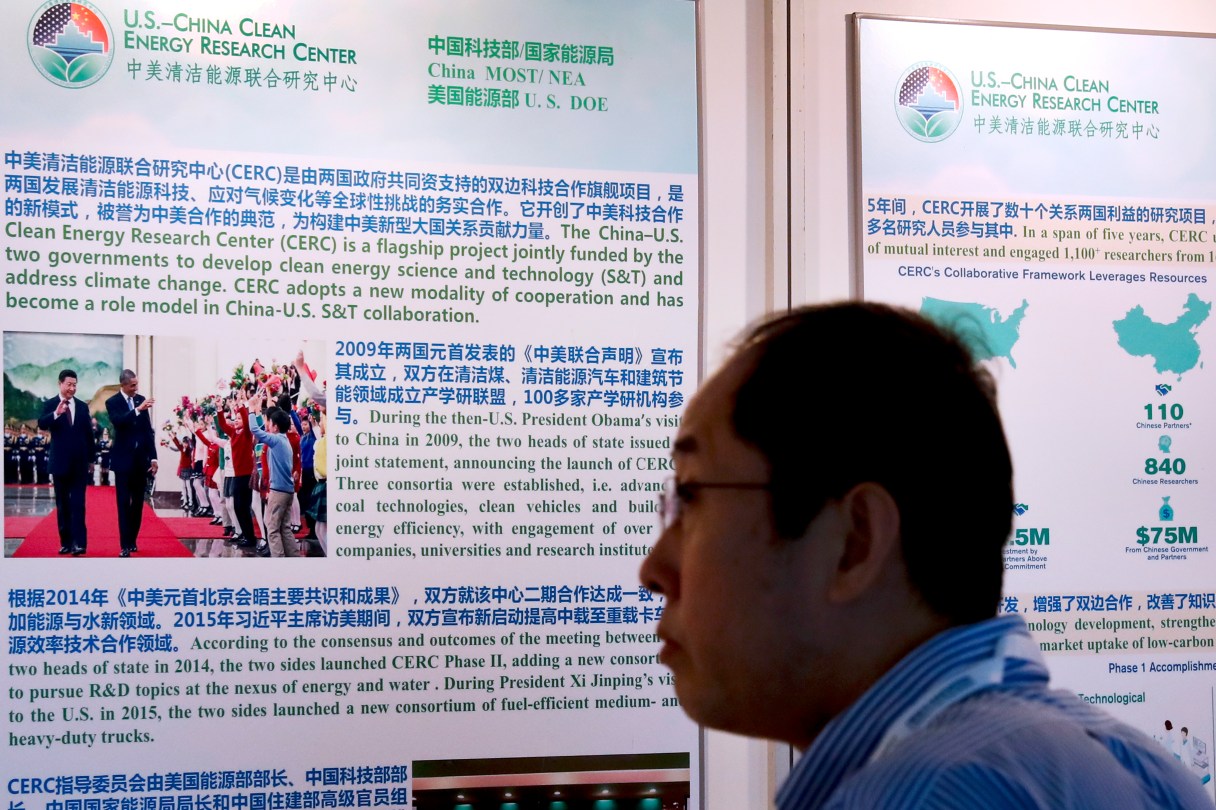
A man visits to the China-U.S. Clean Energy Research Center exhibition booth on display during the China Clean Energy Ministerial conference in Beijing, Thursday, June 8, 2017. America and China have "extraordinary opportunities" to work together on clean energy, U.S. Energy Secretary Rick Perry said Thursday, amid global criticism of President Donald Trump's decision to pull the U.S. out of the Paris climate agreement. (AP Photo/Andy Wong)
A man visits to the China-U.S. Clean Energy Research Center exhibition booth on display during the China Clean Energy Ministerial conference in Beijing, Thursday, June 8, 2017. America and China have "extraordinary opportunities" to work together on clean energy, U.S. Energy Secretary Rick Perry said Thursday, amid global criticism of President Donald Trump's decision to pull the U.S. out of the Paris climate agreement. (AP Photo/Andy Wong) A man visits to the China-U.S. Clean Energy Research Center exhibition booth on display during the China Clean Energy Ministerial conference in Beijing, Thursday, June 8, 2017. America and China have "extraordinary opportunities" to work together on clean energy, U.S. Energy Secretary Rick Perry said Thursday, amid global criticism of President Donald Trump's decision to pull the U.S. out of the Paris climate agreement. (AP Photo/Andy Wong)

BEIJING (AP) – As energy ministers from around the world gather Beijing to report increased spending to help counter climate change, U.S. Energy Secretary Rick Perry has delivered a starkly countervailing message.

India, France, Norway, Canada, Australia and Japan said this week they were on track to double their clean energy research spending.

Perry said that in the U.S., the private sector will have to do more as President Donald Trump promotes fossil fuels and proposes to roll back clean energy spending.

Perry emphasized that government-backed early stage scientific work remained a priority in the U.S., but bringing any breakthroughs to market will be up to private companies.

That’s a sharp departure from past practice and illustrates a new reality emerging across the global energy landscape, where U.S. innovations have long dominated.