
Thursday, November 12, 2026Nov 12

APNewsBreak: Official says more Hanford nuke mishaps likely

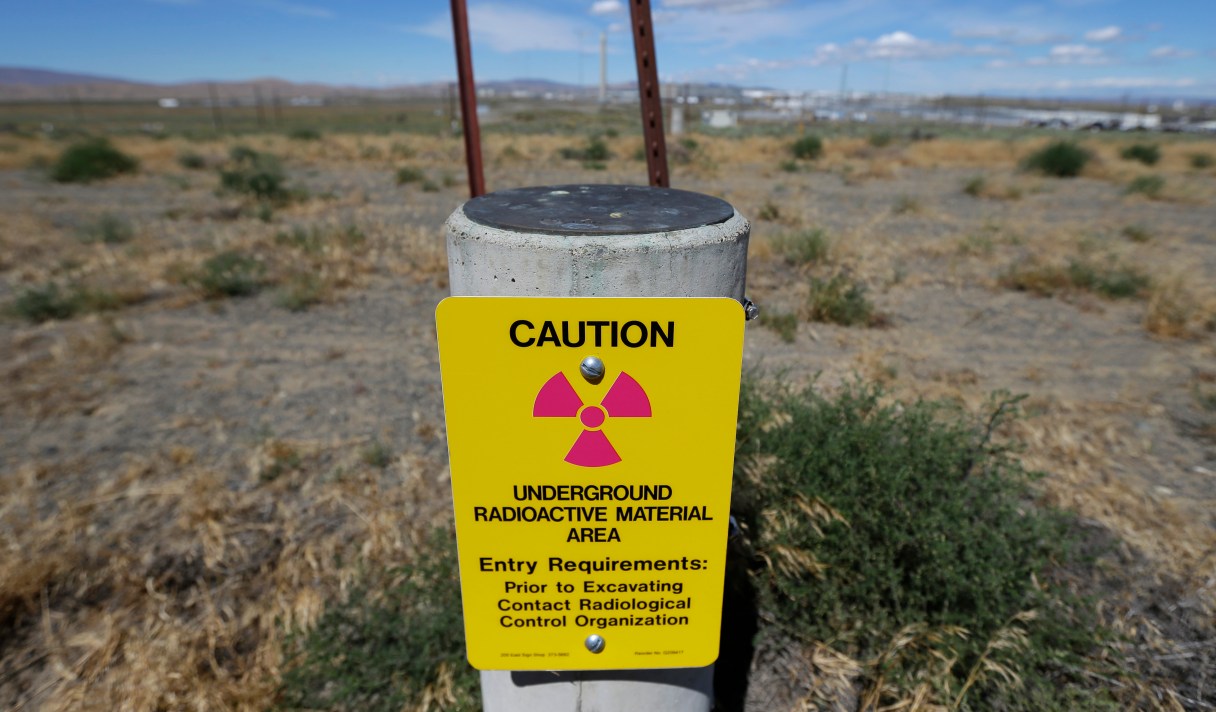
In this photo taken July 11, 2016, a sign warns of radioactive material stored underground on the Hanford Nuclear Reservation near Richland, Wash. The U.S. Energy Department’s top official at Washington state’s severely contaminated  nuclear reservation says future accidental nuclear radiation releases are likely because of aging site infrastructure and inadequate cleanup funding.  Hundreds were evacuated May 9, 2017 when the roof of a 1950s rail tunnel storing a lethal mix of waste from plutonium production collapsed. Tests show no radiation was released. (AP Photo/Ted S. Warren)
In this photo taken July 11, 2016, a sign warns of radioactive material stored underground on the Hanford Nuclear Reservation near Richland, Wash. The U.S. Energy Department’s top official at Washington state’s severely contaminated nuclear reservation says future accidental nuclear radiation releases are likely because of aging site infrastructure and inadequate cleanup funding. Hundreds were evacuated May 9, 2017 when the roof of a 1950s rail tunnel storing a lethal mix of waste from plutonium production collapsed. Tests show no radiation was released. (AP Photo/Ted S. Warren) In this photo taken July 11, 2016, a sign warns of radioactive material stored underground on the Hanford Nuclear Reservation near Richland, Wash. The U.S. Energy Department’s top official at Washington state’s severely contaminated nuclear reservation says future accidental nuclear radiation releases are likely because of aging site infrastructure and inadequate cleanup funding. Hundreds were evacuated May 9, 2017 when the roof of a 1950s rail tunnel storing a lethal mix of waste from plutonium production collapsed. Tests show no radiation was released. (AP Photo/Ted S. Warren)

RICHLAND, Wash. (AP) – Future accidental radiation releases at the largest U.S. site of waste from nuclear weapons production are likely following back-to-back emergency evacuations of workers in May and June because aging infrastructure is breaking down, the top Energy Department official at the site told The Associated Press.

Adding to the likelihood of more nuclear mishaps at the sprawling Hanford Nuclear Reservation is inadequate government funding to quickly clean up the millions of gallons of toxic nuclear waste at the site, said Doug Shoop, who runs the department’s operations office at Hanford.

Hanford has an annual budget of $2.3 billion for cleanup but Shoop said it will cost at least $100 billion to clean up the highly toxic radioactive and chemical wastes on the 580-square mile (1,502 square kilometer) site which produced up to 70 percent of the plutonium for the U.S. nuclear arsenal since it was established in World War II.

“The infrastructure is not going to last long enough for the cleanup,” Shoop said in an interview this week. “It will be another 50 years before it is all demolished.”

Shoop made the comments after hundreds of Hanford workers were evacuated May 9 when the roof of a 1950s rail tunnel storing a lethal mix of waste from plutonium production collapsed. Tests show no radiation was released.