
Thursday, October 29, 2026Oct 29

This story is free to read.

Environment activists deny attacking Dakota Access pipeline

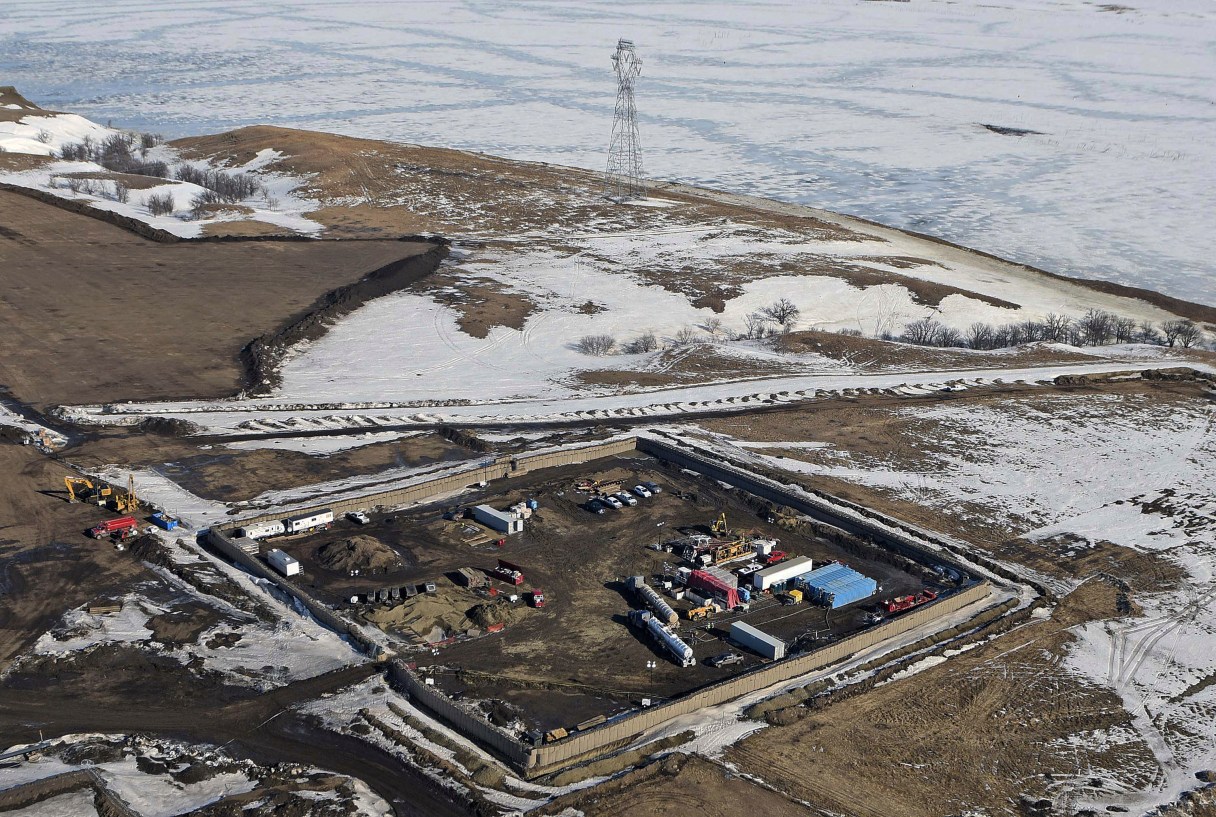
FILE - In this Feb. 13, 2017, aerial file photo shows the site where the final phase of the Dakota Access pipeline will take place with boring equipment routing the pipeline underground and across Lake Oahe to connect with the existing pipeline in Emmons County near Cannon Ball, N.D. Environmental activists who tried to disrupt some oil pipeline operations in four states to protest the pipeline say they aren't responsible for any recent attacks on that pipeline. Dakota Access developer Energy Transfer Partners said in court documents Monday, March 20, 2017, that there have been "coordinated physical attacks" along the $3.8 billion pipeline that will carry oil from North Dakota to Illinois. (Tom Stromme/The Bismarck Tribune via AP, File)
FILE - In this Feb. 13, 2017, aerial file photo shows the site where the final phase of the Dakota Access pipeline will take place with boring equipment routing the pipeline underground and across Lake Oahe to connect with the existing pipeline in Emmons County near Cannon Ball, N.D. Environmental activists who tried to disrupt some oil pipeline operations in four states to protest the pipeline say they aren't responsible for any recent attacks on that pipeline. Dakota Access developer Energy Transfer Partners said in court documents Monday, March 20, 2017, that there have been "coordinated physical attacks" along the $3.8 billion pipeline that will carry oil from North Dakota to Illinois. (Tom Stromme/The Bismarck Tribune via AP, File) FILE - In this Feb. 13, 2017, aerial file photo shows the site where the final phase of the Dakota Access pipeline will take place with boring equipment routing the pipeline underground and across Lake Oahe to connect with the existing pipeline in Emmons County near Cannon Ball, N.D. Environmental activists who tried to disrupt some oil pipeline operations in four states to protest the pipeline say they aren't responsible for any recent attacks on that pipeline. Dakota Access developer Energy Transfer Partners said in court documents Monday, March 20, 2017, that there have been "coordinated physical attacks" along the $3.8 billion pipeline that will carry oil from North Dakota to Illinois. (Tom Stromme/The Bismarck Tribune via AP, File)

BISMARCK, N.D. (AP) – Environmental activists who tried to disrupt some oil pipeline operations in four states last year to protest the Dakota Access pipeline said Tuesday that they aren’t responsible for any recent attacks on that pipeline.

The remarks came in response to allegations that Texas-based Dakota Access developer Energy Transfer Partners made in court documents late Monday. The company said there have been “recent coordinated physical attacks along the pipeline that pose threats to life, physical safety and the environment,” but did not say who was responsible for those alleged attacks.

Company spokeswoman Vicki Granado and company attorney William Scherman didn’t immediately respond to requests Tuesday from The Associated Press for more details. Scherman did say in the court documents that ETP still plans to have oil flowing this week through the $3.8 billion pipeline that will carry North Dakota crude to a shipping point in Illinois.

Jay O’Hara with the Climate Disobedience Center told the AP that Climate Direct Action wasn’t involved in any attacks against the pipeline, and he wasn’t aware of anyone claiming responsibility.

In October, Climate Direct Action activists tried to shut valves on pipelines in North Dakota, Minnesota, Montana and Washington to show support for Dakota Access opponents. Other than that, “we have nothing in the works,” O’Hara said.