
WARSAW, Poland (AP) – Teachers across Poland staged a strike Friday to protest a sweeping overhaul of the education system by the populist government that will see middle schools eliminated this fall. Many fear the change is a pretext for introducing a more nationalistic and old-fashioned curriculum which will leave children less prepared for the modern world.
The education overhaul has become a flashpoint between the ruling Law and Justice party, led by Jaroslaw Kaczynski, and liberal opponents who accuse the powerful party chief of moving the country in an authoritarian direction.
The key change involves eliminating middle schools and returning the country to an earlier, pre-1999 system of having children attend eight years of primary school followed by either high school or vocational school. Currently, there are six years of elementary school followed by middle school and then high school.
Many parents kept their children home from school in solidarity with the teachers and to show their disapproval of the changes, which in some cases will disrupt their own lives, forcing some middle school children to return to elementary schools.
The government says the current system isn’t working well and that children will feel more secure remaining longer in primary schools with teachers they have had since a young age.
Opponents say that everyone is used to the new system now, that it has proven effective and that the changes will introduce unnecessarily chaos. They fear the changes, which are to include more Polish history, is an ideological attempt to create new generation of patriotic Poles that would support the ruling party’s worldview.
The striking teachers also demanded pay hikes as compensation for the extra work they will have in making the transition.
The Union of Polish Teachers, which organized the strike, said 37 percent of schools nationwide took part in the strike. Union leader Slawomir Broniarz said that more wanted to join but teachers faced political pressure not to, alleging there has been “a witch hunt against teachers by the authorities, superintendents and pro-government labor unions.”
Poland’s Education Ministry press office denied that allegation, but otherwise didn’t want to comment, pointing to a statement on its website as its official comment on the matter. The website said the changes, passed by parliament recently, are now a “reality” that must be accepted in order to ensure the well- being of children. The ministry also promised that no teachers will lose their jobs, another major concern of the teachers.
In Warsaw, it was clear that the strike had the support of some schools which weren’t formally on strike. In the city center, there were schools working normally with posters plastered on the entrances saying “we support the strike.”
Though authorities haven’t revealed all specifics of the curriculum overhaul, teachers say they have been told that changes will include more time devoted to history and Polish and less to science, computer science foreign languages.
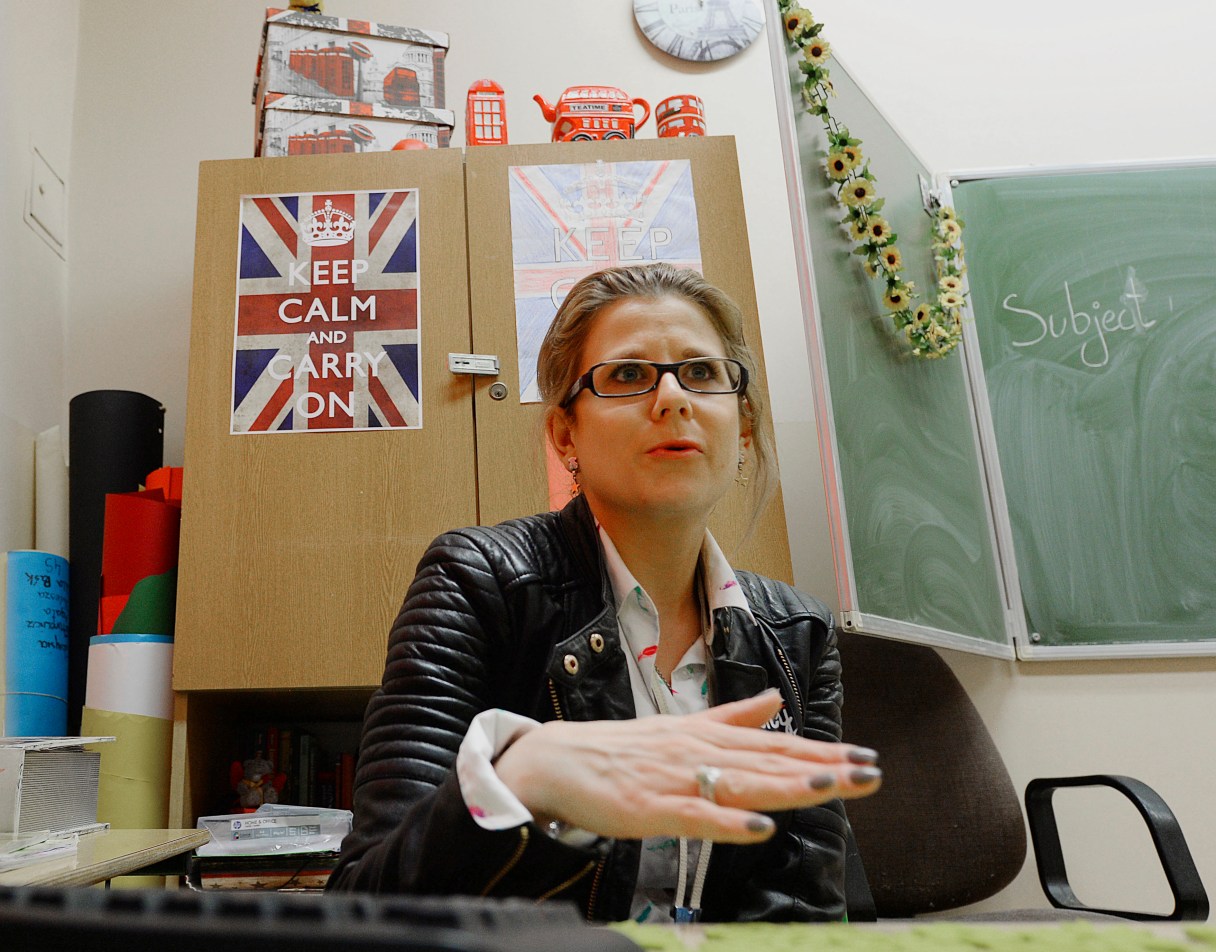
Joanna Kowalska, an English teacher at a middle school who was on strike, said she believes the current system works well and that cutting time devoted to sciences and foreign languages will leave the youth less able to compete in the modern world.
The 36-year-old also says the changes were made too fast and without authorities seeking input from teachers like herself.
“I think that this is happening too fast,” said Kowalska, who spent Friday at school chatting with other teachers or just sitting around. “They are not well prepared, and the teachers are not ready.”