
Thursday, October 29, 2026Oct 29

This story is free to read.

Education startups challenge traditional path to a career

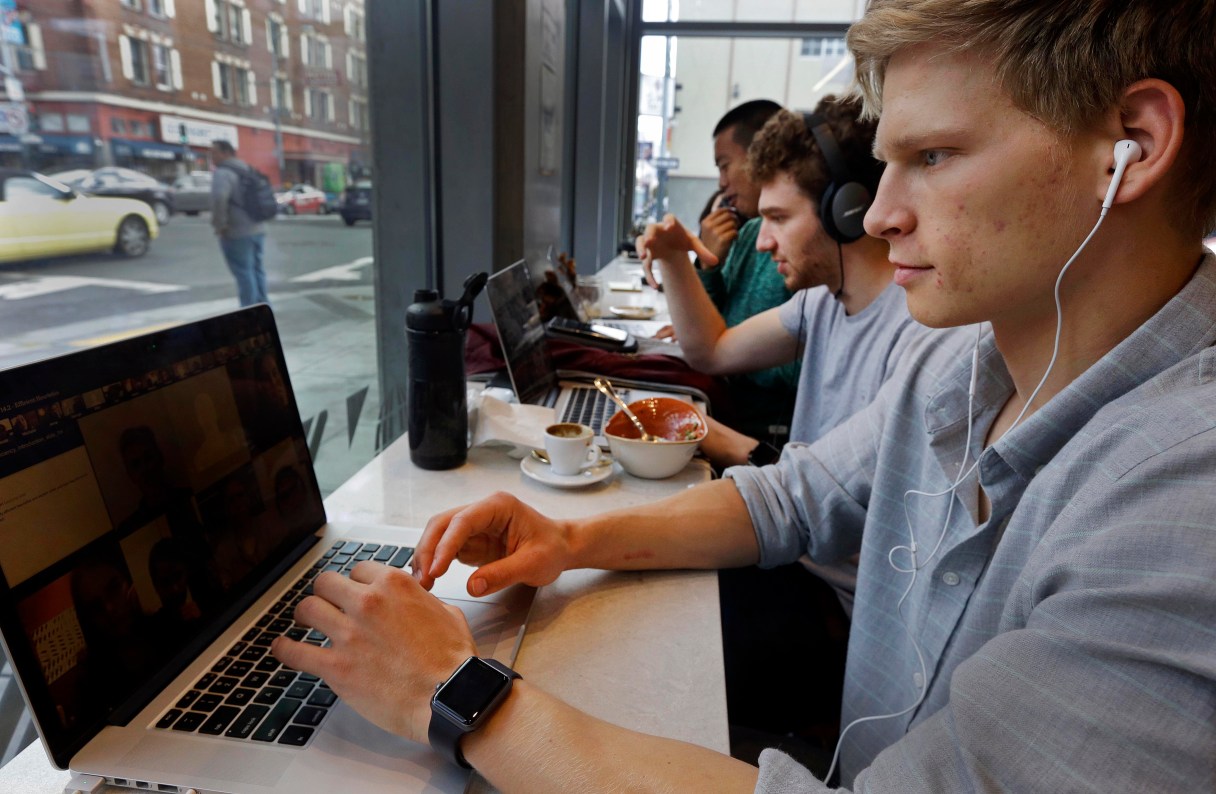
In this photograph taken on Thursday, April 13, 2017, Connor Mitchell, right, works on a computer at a cafe in San Francisco. With college costs rising steadily and with more courses available online for free, some observers are beginning to question the need for a traditional college education that may include lectures on Greek philosophy but burden students with massive debt. Mitchell's university classes take place online through Minerva, he doesn't have any exams and he studies in a different country every year. (AP Photo/Ben Margot)
In this photograph taken on Thursday, April 13, 2017, Connor Mitchell, right, works on a computer at a cafe in San Francisco. With college costs rising steadily and with more courses available online for free, some observers are beginning to question the need for a traditional college education that may include lectures on Greek philosophy but burden students with massive debt. Mitchell's university classes take place online through Minerva, he doesn't have any exams and he studies in a different country every year. (AP Photo/Ben Margot) In this photograph taken on Thursday, April 13, 2017, Connor Mitchell, right, works on a computer at a cafe in San Francisco. With college costs rising steadily and with more courses available online for free, some observers are beginning to question the need for a traditional college education that may include lectures on Greek philosophy but burden students with massive debt. Mitchell's university classes take place online through Minerva, he doesn't have any exams and he studies in a different country every year. (AP Photo/Ben Margot)

WASHINGTON (AP) – Connor Mitchell’s university classes take place online, he doesn’t have any exams and he studies in a different country every year.

Is he looking into the future or taking a gamble?

With college costs rising steadily and with more courses available online for free, some observers are beginning to question the need for a traditional college education that may include lectures on Greek philosophy but burden students with massive debt.

Education startups are offering alternatives – from boot camps, to one- or two-year tracks, to accredited degree programs – and their founders say these options will give students a more relevant education in today’s job market, and at a lower price.

But some experts caution against betting on a narrow, practical education geared toward a specific field that is in demand today but could leave them unprepared for the jobs of tomorrow. They also say most applicants still need a college degree from an established institution to get a good job.