
Tuesday, November 10, 2026Nov 10

Nuke waste debate: Turn it into glass or encase in cement?

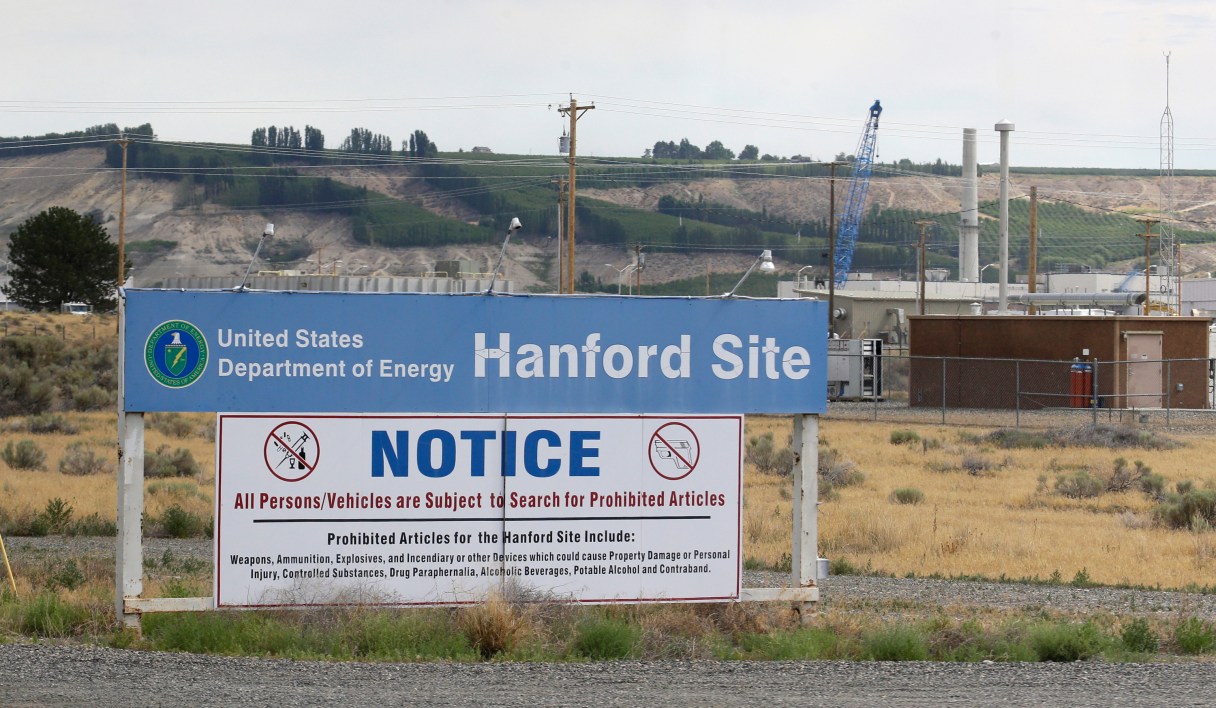
FILE - In this July 9, 2014, file photo, a sign informs visitors of prohibited items on the Hanford Nuclear Reservation near Richland, Wash. A new report says Congress should consider authorizing the Department of Energy to use grout to stabilize some of Hanford's radioactive waste, rather than a more expensive plan to turn it into glass. (AP Photo/Ted S. Warren, File)
FILE - In this July 9, 2014, file photo, a sign informs visitors of prohibited items on the Hanford Nuclear Reservation near Richland, Wash. A new report says Congress should consider authorizing the Department of Energy to use grout to stabilize some of Hanford's radioactive waste, rather than a more expensive plan to turn it into glass. (AP Photo/Ted S. Warren, File) FILE - In this July 9, 2014, file photo, a sign informs visitors of prohibited items on the Hanford Nuclear Reservation near Richland, Wash. A new report says Congress should consider authorizing the Department of Energy to use grout to stabilize some of Hanford's radioactive waste, rather than a more expensive plan to turn it into glass. (AP Photo/Ted S. Warren, File)

SPOKANE, Wash. (AP) – Congress should consider authorizing the U.S. Department of Energy to study encasing much of the nuclear waste at the nation’s largest waste repository in a cement-like mixture instead of turning it into glass logs, according to a new report from the U.S. Government Accountability Office.

Doing so before burying the waste would be less expensive than a process called vitrification to turn the waste into the glass logs, said the report issued Wednesday.

The process called grouting might also allow waste at the Hanford Nuclear Reservation in a remote part of southcentral Washington state to be treated more quickly, the report said.

The waste is left over from plutonium production for nuclear weapons, including the bomb dropped on Nagasaki, Japan that led to the end of World War II.

The Energy Department replied that it agreed with the office’s recommendations but Washington state officials still believe the best way to safely deal with the waste and protect the environment is by turning it into glass.