
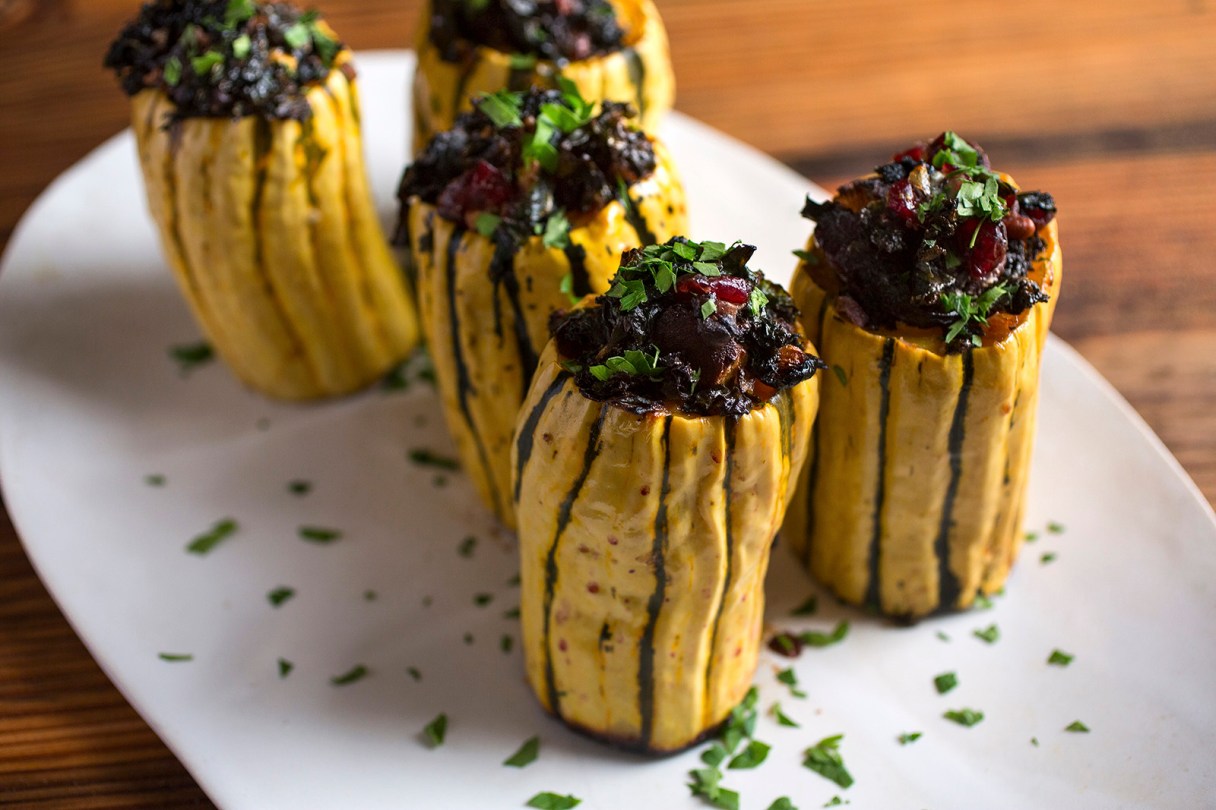
Planning a really good menu is the stealth approach to being a really good cook. What leaves an impression is not only the dishes you can make, but also how they taste, look and feel when assembled into a meal.
-Avoid repeating ingredients. If you are serving pecan pie for dessert, don’t put out spiced pecans as an hors d’oeuvre. Both may be delicious, but the pie just won’t be as appealing by the time dessert rolls around.
-Variety is important at Thanksgiving. You’re likely to be collecting guests with different tastes, allergies and aversions. If vegetarians and vegans are present, you can and must plan for them. (See the Special Diets section below.)
-Think about colors. The basic palette for Thanksgiving is heavy on dishes that are white (mashed potatoes, creamed onions) and brown (turkey, stuffing, gravy). It needs the ruby red of cranberry sauce, the warm orange of pumpkin pie and sweet potatoes, or a rosemary squash casserole to make it interesting. Add something green and snappy, like a lemon-garlic kale salad.
-Think about texture. If you have a creamy vegetable side dish, add one that’s roasted or caramelized.