

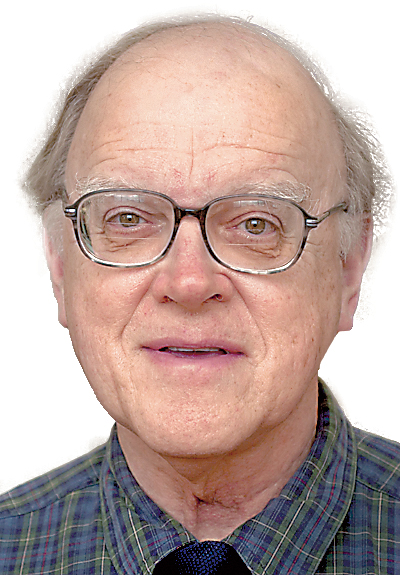
 Dr. Clif Cleaveland
The grim statistics from mass murders accumulate. On Oct. 1, a new record for victims was attained in Las Vegas when a single gunman opened fire on a crowd at an outdoor music festival: 58 victims, to date, and 527 wounded. More than 50 people suffered critical injures. Some of the injuries were due to the rush of people trying to escape the carnage. Temporary crosses, erected soon after the disaster, commemorate the dead. A permanent memorial, which lists the names of those killed, will likely be dedicated at some future date in a prominent location near the site of the attack. Yearly ceremonies will commemorate the dead.
The wounded will fade from public memory. Their lives and the lives of their families and friends will be forever changed. The physical wounds may heal with scars marking the sites of entry and exit of bullets. Some wounds will leave permanent impairments including loss of limbs, brain and spinal cord injury and permanent damage to chest and abdominal organs.
Clinical details of injuries to individuals are generally not released. On Oct. 9, The Washington Post detailed the injuries sustained by a 54-year-old woman who had been shot at the Las Vegas concert. Upon striking her body, the high-velocity bullet shattered, sending fragments into her lungs and abdominal organs. Her daughter suffered a flesh wound of her arm. The two were separated until the daughter could visit her wounded mother hours later in a hospital. A week after the shooting, the mother still required ventilator support for breathing. Deeply sedated, she showed little movement save for her eyelids. Her family maintained an exhausting vigil at the hospital. Most accounts of the injured victims will be known only to family and friends.
Consider the tolls from other mass murders:
» Pulse nightclub, Orlando, 2016: A 29-year-old security guard opened fire in the crowded nightspot, leaving 49 dead, 58 wounded.
» Virginia Tech University, 2007: A 23-year-old undergraduate male killed 32, wounded 17.
» Sandy Hook Elementary School, 2012: A 20-year-old male fatally shot six staff members and 20 children after murdering his mother.
» Luby’s Restaurant, Killeen, Texas, 1991: A 35-year-old man drove his pickup truck though the front of the establishment before attacking patrons, killing 23 and wounding 27.
» McDonald’s restaurant, San Ysidro, Calif., 1984: A 41-year-old gunman killed 21 and wounded 19 during an 80-minute rampage.
» University of Texas-Austin, 1966: A 25-year-old Marine veteran and senior engineering student opened fire from a campus tower, leaving 17 dead, 31 wounded. One of the wounded finally died as a consequence of his injuries in 2001.
Follow-up information on the fate of people wounded in these mass murders is sparse.
In additional to physical injuries, psychological trauma for victims, loved ones, citizen rescuers, first responders and hospital staffs may persist for prolonged intervals. Survivors of earlier shootings report flashbacks and related terrors that suddenly intrude and dominate their thinking. They may fear open spaces or crowds. Bouts of severe depression may follow. They may experience “survivor’s guilt,” questioning why they survived while others died. Years of counseling may be needed to address their complex traumas.
Families may be disrupted by the injuries. Future plans may be foreclosed. Medical expenses may accumulate for years after the attacks that led to injury. There may be no return to normality.
For the media, the big story is the attack and the fatalities. Within a few days, other stories dominate the headlines. Information on the subsequent lives of survivors would remind us of the continuing impact of violent attacks. Perhaps sustained awareness of the enormous, diverse costs of mass violence would prompt legislation that might reduce the likelihood of similar disasters in the future. At the very least, we would be reminded that “thoughts and prayers” for the victims must continue long after they are attacked.
Contact Clif Cleaveland at ccleaveland@timesfreepress.com.