
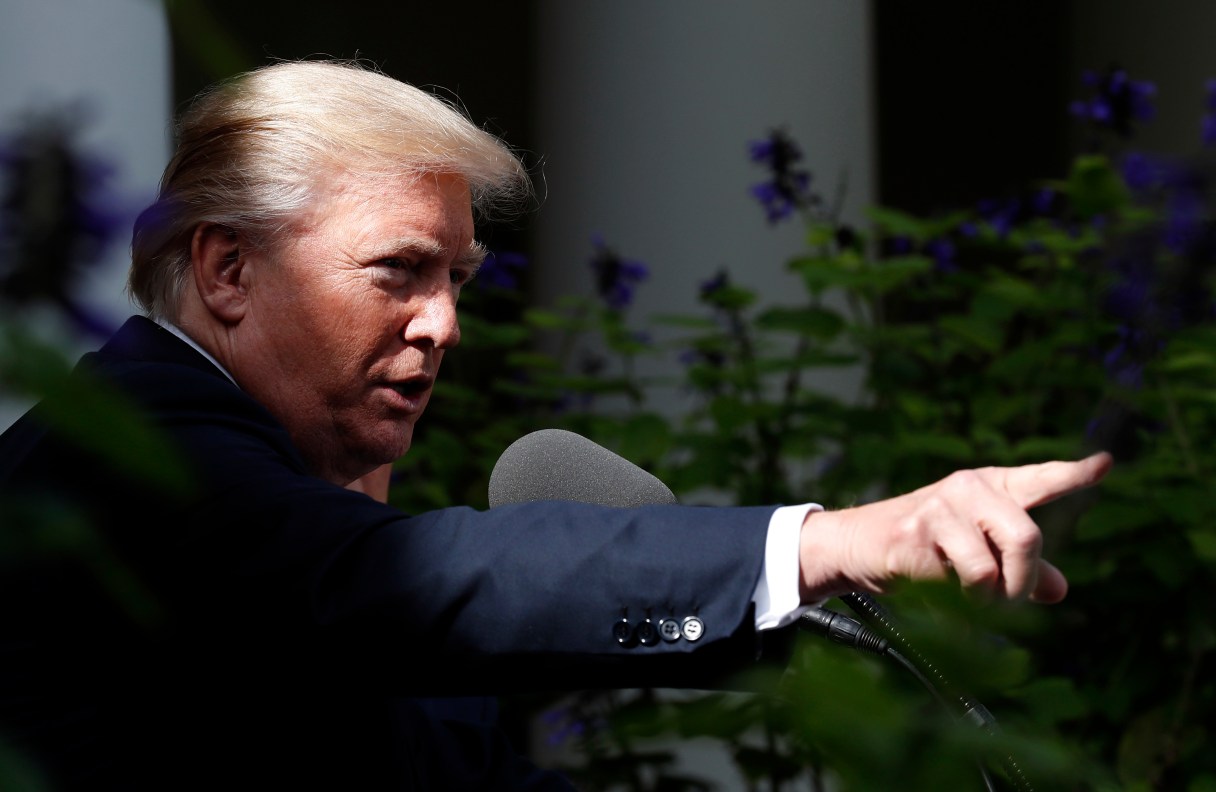
WASHINGTON (AP) – For U.S. presidents, meeting the families of military personnel killed in war is about as wrenching as the presidency gets. President Donald Trump’s suggestion Monday that his predecessors fell short in that duty brought a visceral reaction from those who witnessed those grieving encounters.
“He’s a deranged animal,” Alyssa Mastromonaco, a former deputy chief of staff to President Barack Obama, tweeted about Trump. With an expletive, she called Trump’s statement in the Rose Garden a lie.
Trump said in a news conference he had written letters to the families of four soldiers killed in an Oct. 4 ambush in Niger and planned to call them, crediting himself with taking extra steps in honoring the dead properly. “Most of them didn’t make calls,” he said of his predecessors. He said it’s possible that Obama “did sometimes” but “other presidents did not call.”
The record is plain that presidents reached out to families of the dead and to the wounded, often with their presence as well as by letter and phone. The path to Walter Reed and other military hospitals, as well as to the Dover, Delaware, Air Force Base where the remains of fallen soldiers are often brought, is a familiar one to Obama, George W. Bush and others.
Bush, even at the height of two wars, “wrote all the families of the fallen,” said Freddy Ford, spokesman for the ex-president. Ford said Bush also called or met “hundreds, if not thousands” of family members of the war dead.