
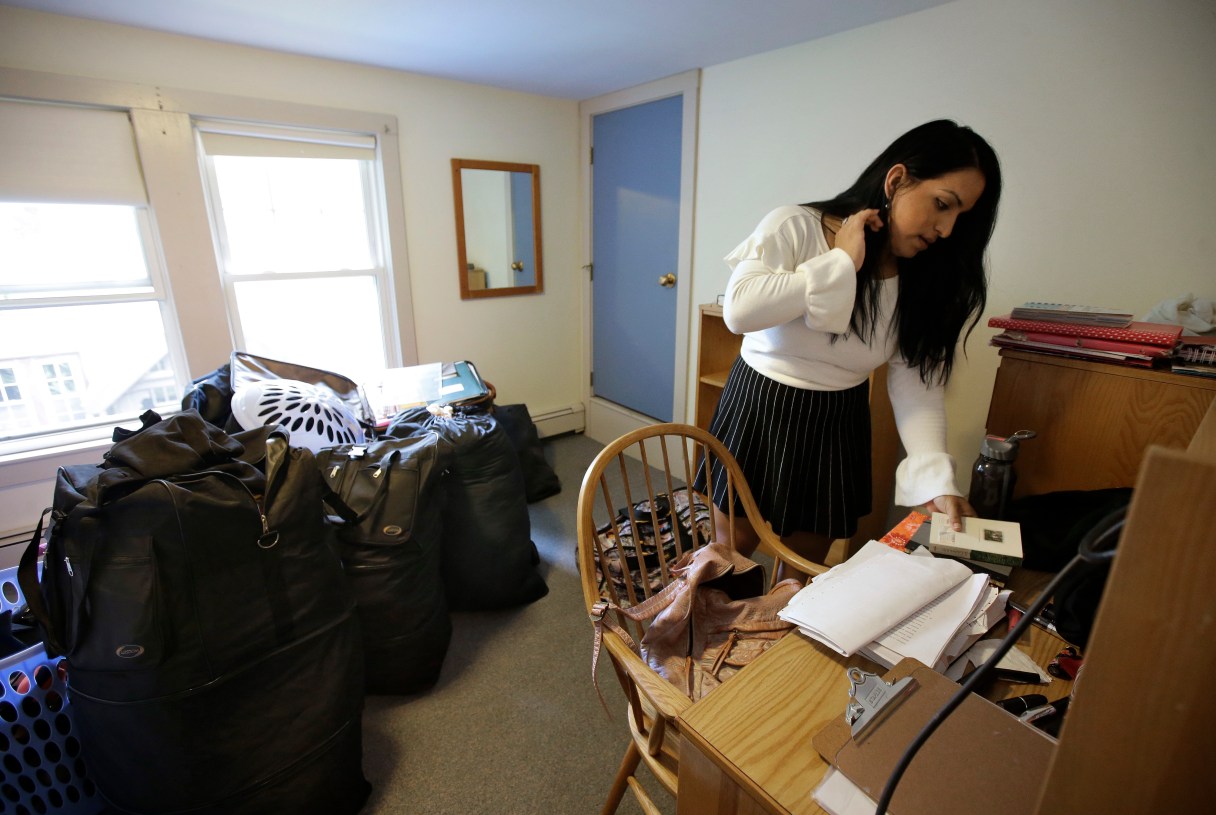
WELLESLEY, Mass. (AP) – Until last year, Ninotska Love would have been barred from attending Wellesley College. She’s an accomplished student who has persevered through hardship, but under longstanding rules, the college would have rejected her.
Now the rules have changed. This week, Love will become one of the first transgender women to attend Wellesley in the school’s 147-year history.
“For me to be accepted to one of the best colleges for women in the nation, it is a big validation of the person that I have become. At first I couldn’t believe it,” said Love, 28, who was born in Ecuador but fled to the U.S. in 2009 after being kidnapped and threatened because of her gender identity. “I’m so thankful to be here.”
Her arrival on campus reflects a quiet but momentous shift that’s taking place at a wave of women’s colleges that have begun allowing trans women. On Tuesday, Spelman College in Atlanta became the latest to say it will accept students who identify as women, “regardless of their gender assignment at birth.” But even as many schools embrace shifting views on gender, some have been reluctant to change amid lingering differences over the role of women’s colleges.
At least nine women’s colleges have moved to allow trans women since 2014, starting with Mills College in Oakland, California. Joining Wellesley in 2015 were Smith, Bryn Mawr and Barnard colleges, the last of the so-called Seven Sisters women’s colleges to make the change. Spelman, a historically black college, announced its new policy will take effect for students enrolling in the 2018-2019 academic year.