
Monday, November 2, 2026Nov 2

This story is free to read.

Irma lost some oomph over Cuba before its assault on Florida

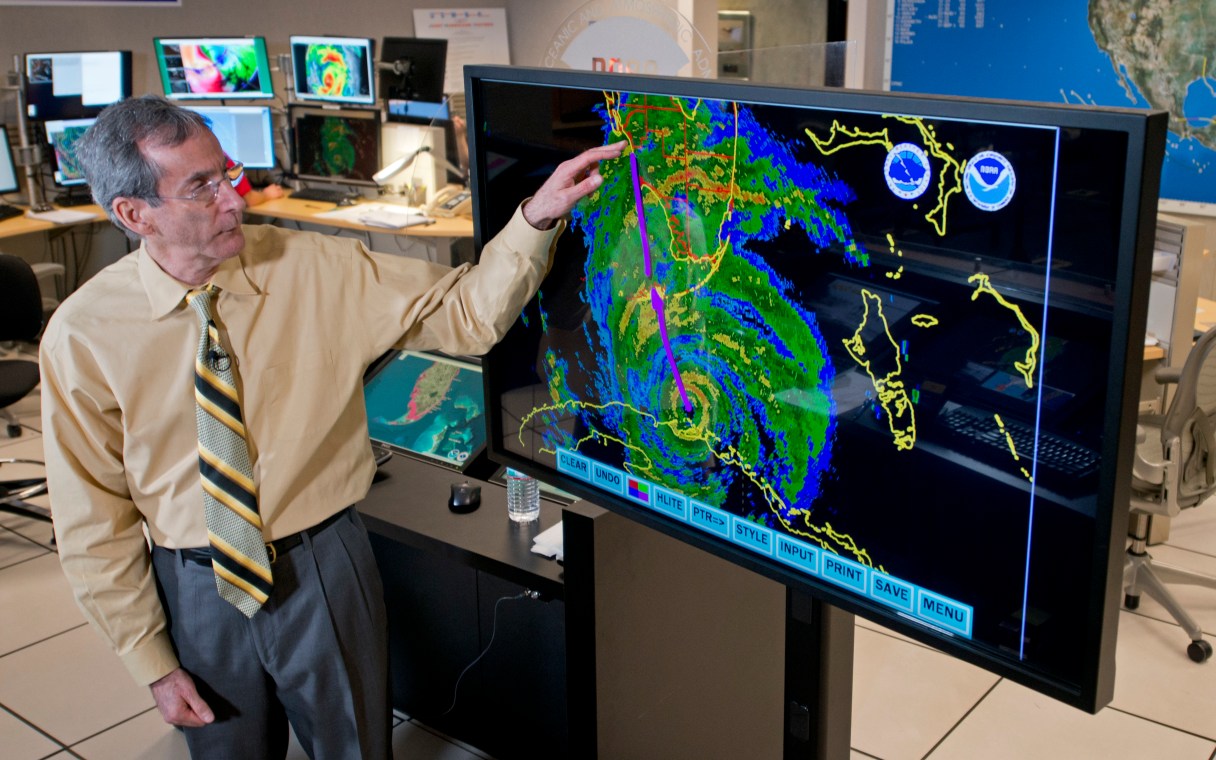
Ed Rappaport, the acting director of the National Hurricane Center, draws a line to illustrate the projected track of Hurricane Irma up Florida's west coast Saturday, Sept. 9, 2017 during a television interview. (AP Photo/Andy Newman)
Ed Rappaport, the acting director of the National Hurricane Center, draws a line to illustrate the projected track of Hurricane Irma up Florida's west coast Saturday, Sept. 9, 2017 during a television interview. (AP Photo/Andy Newman) Ed Rappaport, the acting director of the National Hurricane Center, draws a line to illustrate the projected track of Hurricane Irma up Florida's west coast Saturday, Sept. 9, 2017 during a television interview. (AP Photo/Andy Newman)

Before crashing into Florida, Hurricane Irma set all sorts of records for brute strength, flattening islands in the Caribbean and swamping the Florida Keys.

Irma’s assault came after Harvey flooded Houston, for the first time the U.S. was hit by two Category 4 storms in the same year.

Irma hit Florida as a big wide beast, but not quite as monstrous as once feared. It still raked much of the state with devastating storm surge, winds and rain.

But the once-Category 5 storm lost some of its oomph approaching the U.S. mainland after running into the northern Cuba coast. Its winds dropped to a potent 115 mph when it made its second landfall on Marco Island, down from its 185 mph (297 kph) peak.

____

Follow Seth Borenstein on Twitter at @borenbears. His work can be found here .