

On Aug. 25, almost 74 years after his death in the invasion of Betio Island in the Tarawa atoll, the body of Marine Cpl. Henry Andregg Jr. was returned to his native Tennessee for burial with full military honors in Chattanooga’s National Cemetery. Andregg, of Whitwell, served as a driver of an amphibious tractor, a vehicle that played a pivotal role in the costly victory in the three-day battle, Nov. 20-23, 1943.
Betio, in the Gilbert Islands of the South Pacific, had an airfield and a garrison of 2,500 elite Japanese Marines and 2,200 Korean laborers. The island’s importance rested in its value as airbase and staging area for subsequent U.S. invasions of other enemy-held islands.
The hot, overcrowded transports bearing the 2nd Marine Division embarked almost two weeks before the invasion from Wellington, New Zealand.
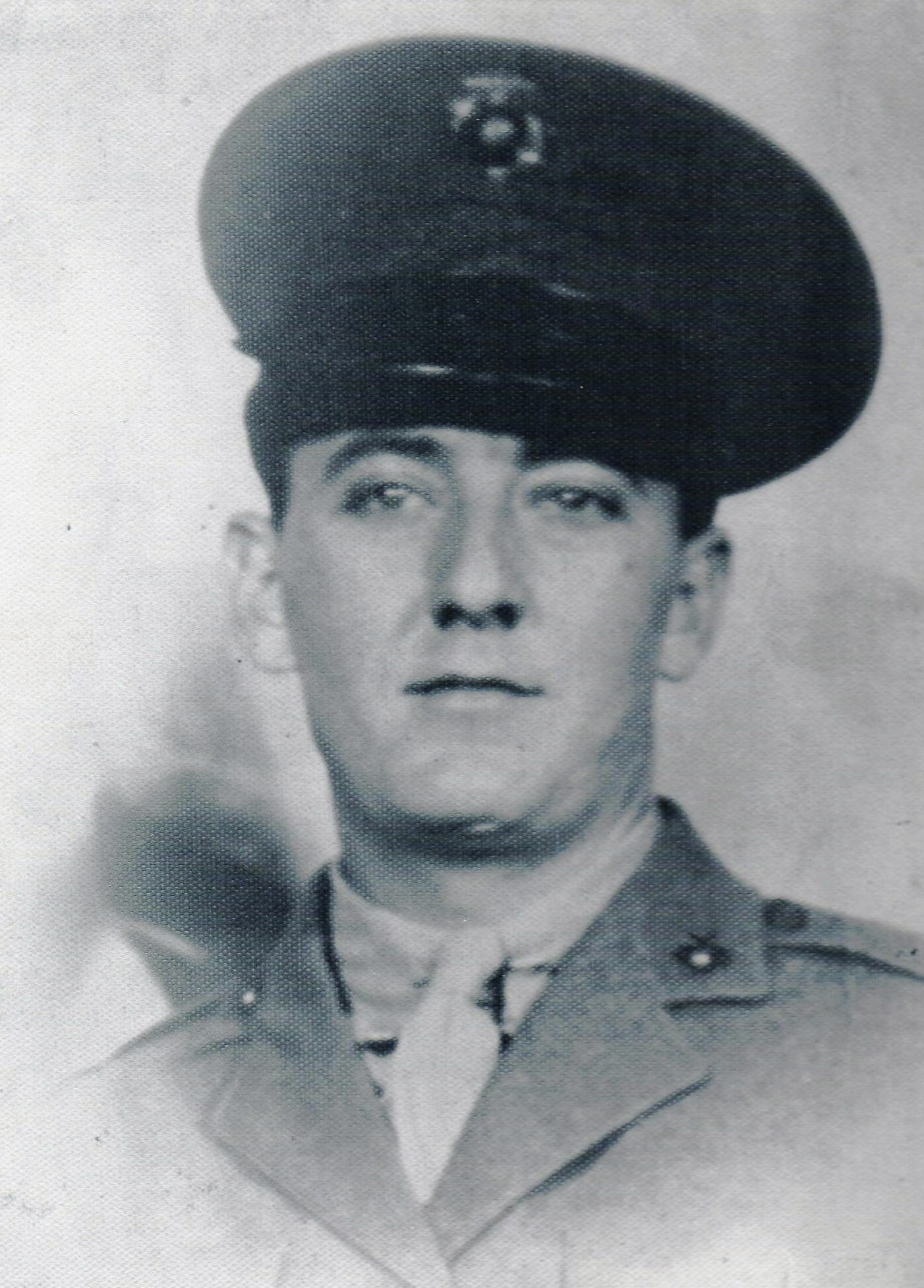 Cpl. Henry Andregg Jr.
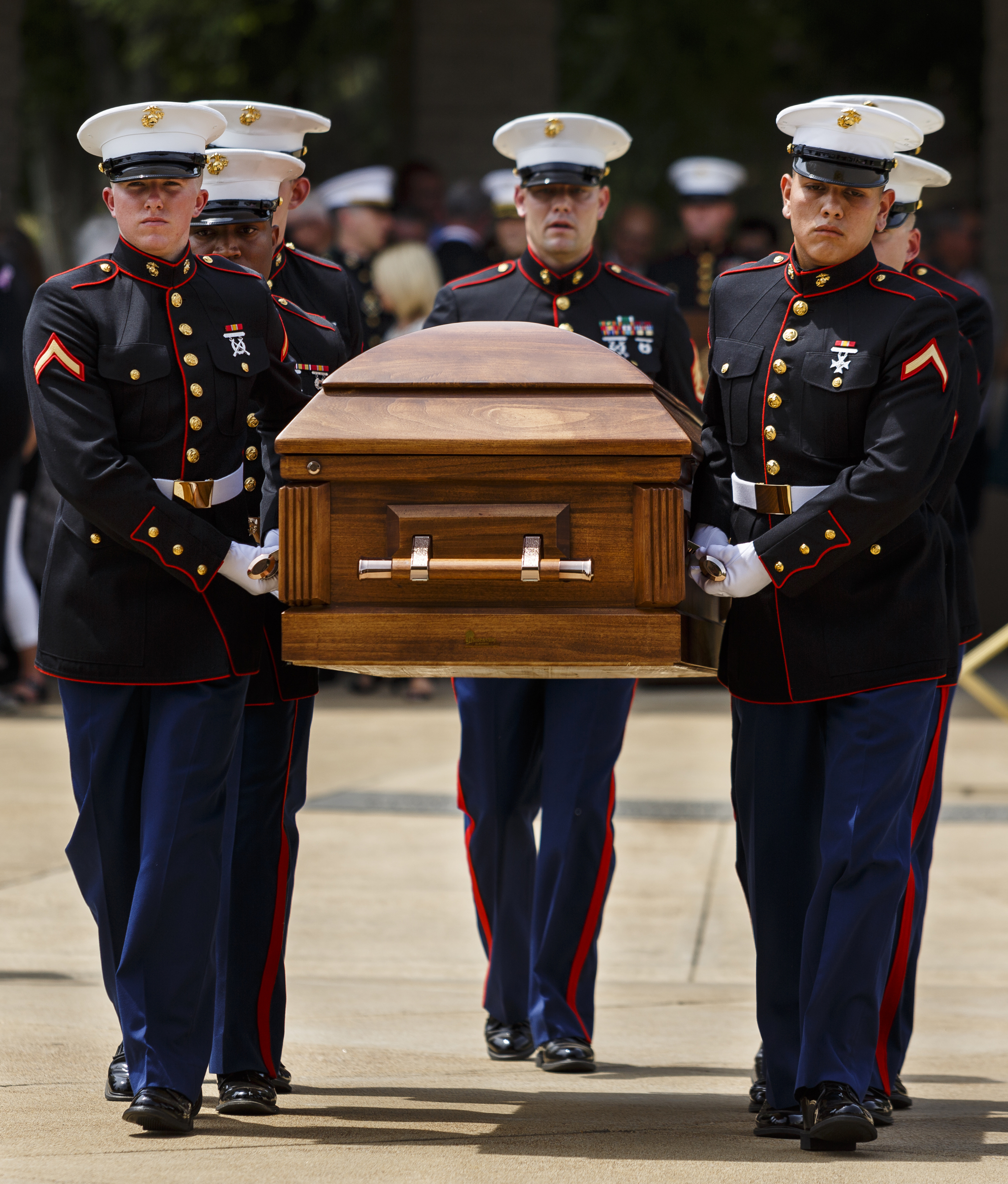 U.S. Marines bear the casket of Cpl. Henry Andregg, Jr., of Whitwell, Tenn., from his funeral with full military honors at the Chattanooga National Cemetery for burial on Friday, Aug. 25, 2017, in Chattanooga. Cpl. Andregg was killed during the Battle of Tarawa in World War II’s Pacific Theater, but his remains were only recently identified through DNA testing. Previously interred at the National Memorial Cemetery of the Pacific in Honolulu, Cpl. Andregg was returned home for burial nearly 74 years after his death.
 Dr. Clif Cleaveland
On Nov. 20, following heavy bombardment of Betio by ships and carrier-based aircraft, the first wave of landing craft set out for the targeted beaches at 9 a.m. Marines had already endured hours in their small boats. Many of the Higgins boats, which carried the majority of the invading force, ran aground on barely submerged coral reefs more than half a mile from shore. Their ramps were dropped in water that rose to the shoulders of disembarking Marines. They were immediately exposed to a murderous crossfire from well-fortified bunkers that had survived the pre-invasion bombardment. Many Marines never reached shore. Others had to abandon their weapons and packs. Radios were lost or damaged, limiting contact with supporting ships.
Marines held a narrow strip of beach bordered by a 3- to 6-foot seawall constructed of palm logs. Their commanding officer suffered multiple wounds but continued to lead. Ammunition, water, food and medical supplies were limited. Most medics in the landing force had either been killed or wounded. Wounded Marines who could hold a weapon continued to fight. Any attempt to advance over the seawall failed. Despite supporting gunfire from naval ships and repeated air attacks, the Japanese defenders could not be dislodged. The invaders were trapped.